
Dear friend,
The riddle first, as the tradition demands. Back in the old town a man who had not missed a day at his own door in eleven years was called steady, and the word was meant kindly. Nobody asked what the years had been building.
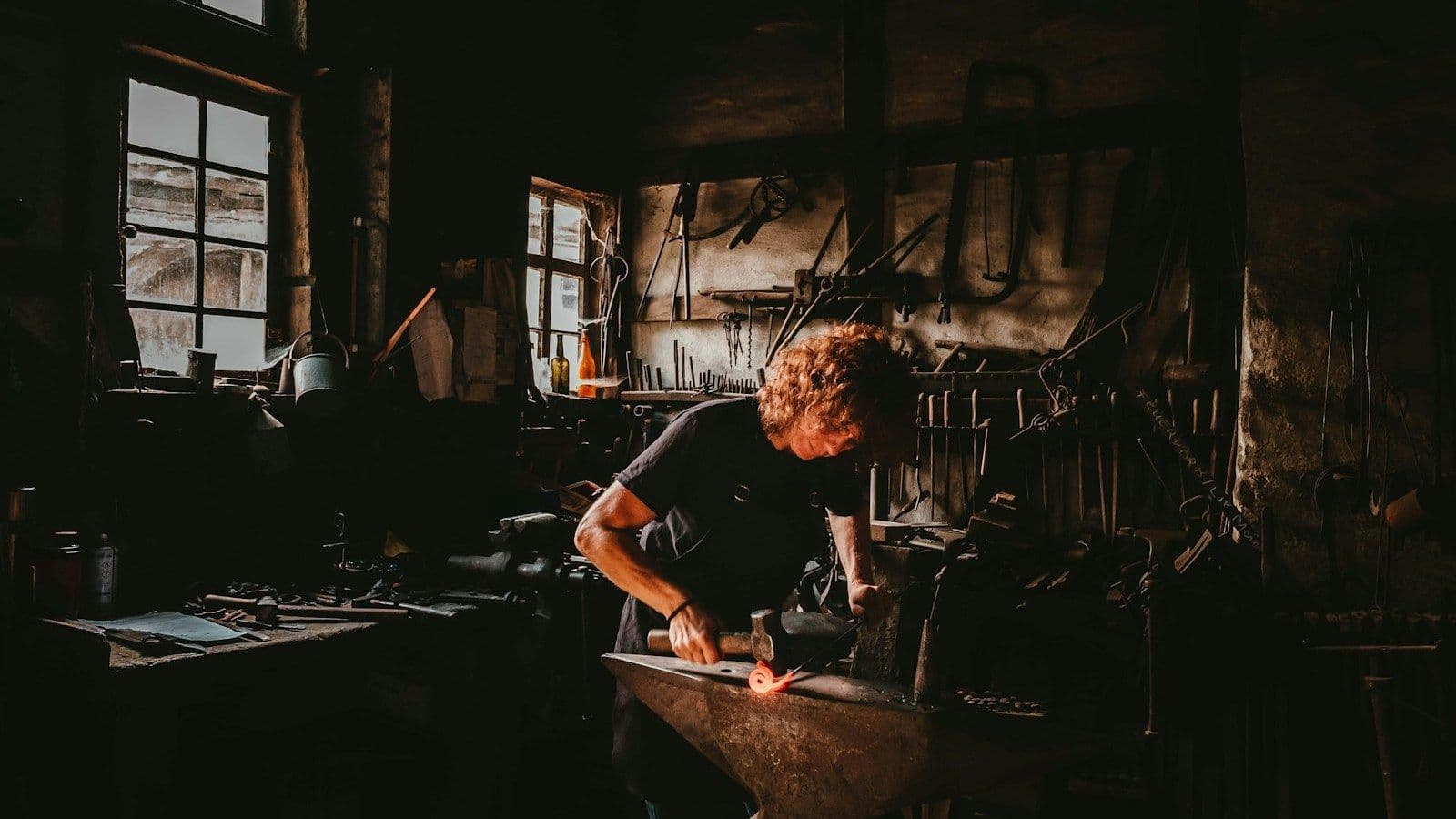
Two farriers at the same crossroads, the same anvil and the same coke in the same sort of forge.
The same farmers, the same hunting season, the same boy sweeping the floor at six.
One of them was never away from his fire for a single working day.
One shut his gate for six days in the June and went off to the coast.
Same trade, same crossroads, same pair of hands, and the second man the busier by Christmas.
Which of them found out what his trade was resting on?
Hold your answer. Story time.
The Story
Both forges stood at the same crossroads in the town I have never named, each fire banked overnight and drawn up at half past five. Both men were good, and the farmers could not have said which they preferred.
The first farrier was present. That was his reputation and he had earned it, and a farmer who came at any hour of any working day found him in his apron. A great deal lived in his head and nowhere else. He knew that the grey at the top farm went lame on a narrow web, and that the spare rasps were in the box under the bench rather than the drawer. He never wrote a line of it down. Why would he. He was there.
The second farrier did something in the June that the crossroads talked about for a fortnight. He shut his gate for six days and took his wife to the coast. He had made arrangements, and respectable ones: a journeyman from the next town to keep the fire in, the boy to help, a notice on the post. He did not go to rest, though he rested. He went to find something out.
He came back on the Monday and spent two hours on a list. Twenty-two things had gone wrong or unanswered in six days. The journeyman had not known what to charge for a set of four with clips, and guessed low. He had not known about the grey, had shod it narrow, and it had come back. Two farmers were turned away because nobody could say whether the man was free on the Thursday, there being no book in which that was written.
Twenty-two things, and not one a surprise once written. He spent the autumn on them. A sheet of standing prices nailed up where a stranger could read it. A ruled book with a line to a horse: the farm, what it wears, what it last cost. A day book with the week ahead in it, so anybody could answer whether Thursday was free.
The first farrier was called away in the February, five days, a family matter and no choice in it. His gate stood shut. Four farmers went the nine miles to the other crossroads, because a horse wanting a shoe will not wait on a man's convenience, and three of the four never came back. He lost nobody through want of skill. He lost them because his trade had never been asked whether it could stand on its own, and the first time it was asked the answer came in the worst week of his year, the only week such questions get asked by accident.
The Lesson, Since You've Earned It
The only way to find out what depends on you is to not be there. You cannot work it out by thinking. You have tried, and you produced a comfortable list of three or four things, when the real one has twenty-two on it.
The reason is plain once said. A dependency is invisible to you precisely because you satisfy it. Forty times a day you answer a question, find a thing, decide a price, and each act is so automatic that it does not register as work, let alone as a thing your trade would miss. You are inside the habit, and a habit cannot be inspected from inside. Absence is an instrument, and the only one that reports what actually stopped rather than what you suppose might.
The list exists either way. The second man read his in June with a pencil in his hand. The first read the same list in the February, nine miles off, and paid three customers for it. You are not choosing whether to be tested. You are choosing the week.
When you have the list, grade it in three. There are things only you know, which are a problem of writing rather than of skill: a price, a term, where the rasps are. An afternoon with a sheet of paper settles most. There are things only you can do, which want teaching or arranging, and fewer of them than your pride suggests. And there are things only you will bother to do, which are the interesting ones, because some matter a great deal and some were never missed at all, and before the week you were gone you could not tell those apart.
This is not the same as handing your work over, which has its own letter, nor a counsel of putting everything into other hands: there is judgement in your trade that cannot be bought at any wage, and that remains true. The test does not ask you to delegate. It asks you to find out, in writing, what is stored only in one man's memory and presence. Most of it is not judgement. Most of it is a price, a name, a key on a nail.
Two cautions. Do not run the test in your busiest week: a trial that costs a customer is a loss with a lesson attached, and the lesson is free in a quiet one. And do not conclude from a smooth week that nothing rests on you. A short absence reveals only what falls due inside it, and the quarterly matters hide behind six days.
Three questions, for the week in front of you:
- What day this month will I be genuinely out of reach? Put it in the book now, a whole working day, and tell nobody they may fetch you. If you can be fetched you will be, and you will learn nothing.
- What would stop first? Write your guess before you go and put it away unread. The gap between that and what happened is the honest measure of how well you know your own trade.
- Which of the faults is only a sheet of paper? Do those in the week you come back, while the annoyance is fresh. The rest, one at a time across the year.
The Answer to the Riddle
Which of them found out what his trade was resting on?
The second, and he found it out for the price of six days he enjoyed anyway. Both forges rested on one man. Only one of the two knew which parts, and that is the whole of the difference, because a fault written down can be mended in an idle hour, while a fault never seen will choose its own moment.
The verse:
The fire that is drawn by the one pair of hands,
comes up at the usual hour,
till the week those hands are a long way from home,
and the trade finds the end of its power.
Until next time. Go and write one date in your book this month when you will be out of reach for a whole working day, and tell nobody.
The Best Time for Trying was Yesterday...
Ben B. Tilley
P.S. There is a second use for the list. If you ever come to sell what you have built, no buyer is purchasing your hands, and every item living in your memory alone is a deduction from the figure he offers. The sheet nailed up for a journeyman in June is the sheet that makes your next man useful in a fortnight. You are not writing it for the holiday. The holiday is only how you find out what to write.
Also in the archive: Settled in February, The Hour Nobody Claimed and The Day He Stopped the Wheel.