
Dear friend,
The riddle first, as the tradition demands. Back in the old town there were two men who ground corn on the same water, and the whole difference between them was what they did in a week when nothing at all was wrong.
Two millers on the same stream in the town I have never named, the same wheel and the same pair of French stones.
Both ground for the same twenty farms at the same toll, and neither ever gave short measure.
Both knew that a stone goes smooth with use and must be lifted and cut again.
One lifted his when the meal began to run warm and the bakers began to grumble.
One lifted his on the first Tuesday in May, with nothing whatever the matter.
Same stream, same stones, same bill from the millwright. Whose wheel was turning in September?
Hold your answer. Story time.
The Story
The two mills stood a mile apart on the same stream, each with its own leat and its own wheel under the gable, and the same grey dust on every beam. Both ground for the same twenty farms at a toll of one sack in twenty, and both men could tell by the feel of the meal in their fingers what the stones were doing to it.
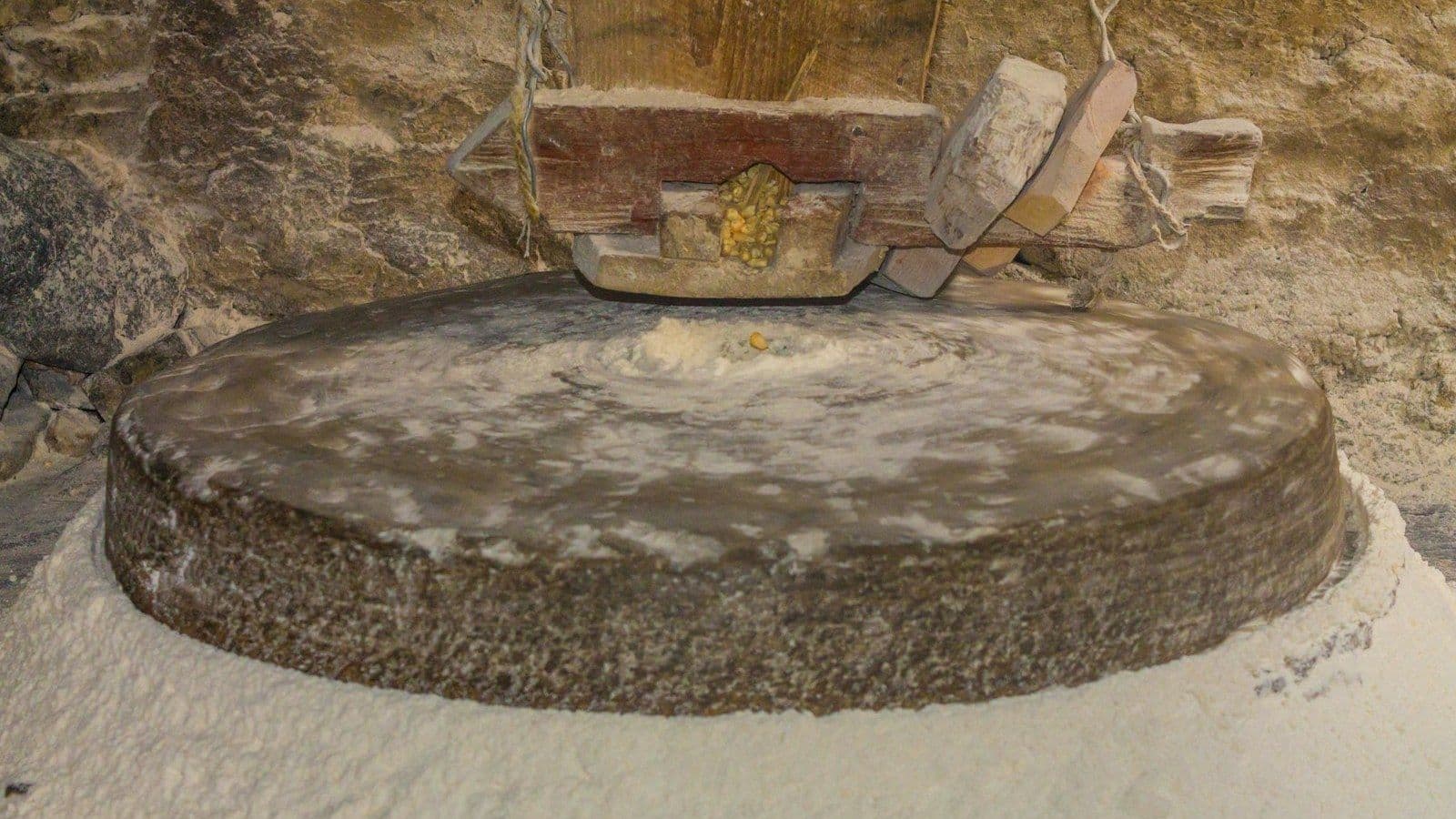
You will want to know what a miller has to keep up, since the matter turns on it. A millstone does not grind by rubbing. Its face is cut into furrows, and the sharp edge of each shears the grain while the channel carries the meal out and keeps it cool. Use wears those edges away, and a smooth stone presses instead of cutting, so the meal comes off warm and the loaf made of it stands lower in the tin. The remedy is old. Lift the runner stone, lay it face up, and cut every furrow again with a mill bill, testing with a staff rubbed in red raddle so the high places show in paint. A day and a half of dirty work with the wheel standing still.
The first miller dressed his stones when the stones told him to. This was neither idleness nor ignorance but thrift, and it had an argument behind it. Why pay out a day and a half for work the stones have not asked for? He could read a sample of meal as well as any man in the county, and twice he had got an extra season out of a pair that a nervous miller would have lifted in the spring. His rule was the oldest rule in trade. Mend what is broken and leave alone what is working.
The stones told him in the second week of September. They had been telling him since the middle of August, in the way these things do, a little warmer, a little duller, nothing a man would stop a wheel for. Then the harvest came in all at once, with carts in his lane from first light, and a baker in the town sent back two sacks saying the bread was close and heavy and he would take no more of it. So he stood in his own doorway in the best fortnight of his year and chose between grinding poor meal through the month that paid for his winter and stopping the wheel in the week the whole parish wanted him. He stopped it on the Thursday and was two days and a half about it. The carts went up the valley, and three of those farms were still going up the valley the next summer.
The second miller kept a line at the back of his toll book that had nothing to do with money. It said: stones dressed, first Tuesday in May, and under it a date for every year he had been at the mill. May is a poor month for a miller. The old corn is ground, the new is not cut, and nobody comes up the lane. So on the first Tuesday he shut his sluice, lifted the runner and spent his day and a half in the dust whether the stones had earned it or not. Some years he came down off the stone floor sure he had wasted a day, and said so to his wife, who had heard it before. In September his wheel turned every hour of daylight.
Be fair to the first man. Over twenty years he very likely bought fewer days of dressing than his rival, and he was the better judge of a stone. His error was not how many days he spent but which days, and he never saw it, because the September he lost looked to him like bad luck in a busy season rather than the price of a rule he had chosen himself.
The Lesson, Since You've Earned It
Everything your trade leans on is either on a date or on a surprise, and a surprise will choose your busiest week. That is not a gloomy turn of phrase but arithmetic. Things wear out by use rather than by the calendar, and your use is not spread evenly over the year. It gathers where the work gathers. The belt parts in the week the machine runs longest. The van goes in the month you are doing twice the miles. The man who knows how the job is done is laid up in the fortnight you could least spare him. A breakdown is not an accident that arrives at an awkward hour. It is caused by the same load that makes the week worth having.
Now count what a failure costs, because the repair bill is the smallest part of it. Both millers paid the millwright the same shillings. What the first paid on top was a fortnight of poor meal gone out under his own name, two days and a half of weather he could not get back, a baker who had publicly refused his flour, and three farms that found out in his absence that the mill up the valley was perfectly convenient. The same work, bought in two markets. One man bought it with a Tuesday nobody wanted. The other bought it with the best Thursday of his year and threw in his good name to close the deal.
This is why the thing cannot be left to judgement, which is the part most traders will not accept. In a quiet week your judgement says there is no hurry, and it is right. In a busy week it says not now, and it is right again. Judgement is never wrong in the moment and always wrong by the year, because it is asked the question in the moment every time. So the decision must be taken once, by the version of you that has an afternoon to think, and written down as a date, which is the only form in which a decision survives a busy Thursday. I have written before about the fault that costs you a minute twenty times a day, and that sort you can feel, which is what mends it. The faults in this letter are quieter. They cost you nothing until the morning they cost you a week.
Your trade has fewer millstones in it than mine and more things that fail without a sound. The copy of your records nobody has taken off the machine since the spring. The automatic thing that sends your reminders. The one vehicle, the one computer with all your work on it, the one person who knows how the invoicing is done. Most of these give you no warm sack of meal by way of warning, which makes them worse than a stone: an automatic thing that has stopped gives no sign, and must be made to prove that it ran. So name the things whose stopping would stop your week. The list is shorter than you fear.
Two cautions. The first is that a date is not free. A calendar with forty entries on it is a second trade you have given yourself, and you will abandon it by Christmas. The test is not whether a thing can fail, since everything can, but whether its failing stops the week. Dress the stones and let the window catch alone. The second is the opposite error, rarer but real. A stone dressed too often is a stone worn out early, and there are trades where the examining does more harm than the wearing. Set the interval from your own record of how long the thing has lasted, not from the figure that soothes your conscience.
Three questions, for the week in front of you:
- Which three things, if they stopped tomorrow morning, would stop my week? Not inconvenience it. Stop it. Write them down, because an unwritten list of this kind quietly loses its worst item.
- When was each last seen to, and where is that date written? If you must think about it, the answer is longer ago than you suppose. Memory reports the last time you worried about a thing, not the last time you did anything to it.
- Which is the quietest week in my next three months, and what have I put in it? If the answer is nothing, you do not own a quiet week. You own an unspent one, and it will be spent for you in September.
The Answer to the Riddle
Same stream, same stones, same bill from the millwright. Whose wheel was turning in September?
The second man's, every hour of daylight. He paid the same money for the same day and a half of dressing, and bought it in May, when his time was worth almost nothing and no cart in the parish was looking for him. The first bought it at harvest prices, with a fortnight of warm meal in front of it and three lost farms behind it, and never saw that bill written out in full, because nobody sends you one.
The verse:
A stone goes smooth by grinding and not by the turning year,
And so it fails you soonest in the week it worked the most.
Then buy your idle Tuesday when the lane is bare of carts,
And keep your whole September for the grinding and the toll.
Until next time. Go and write one date in your book against the thing whose stopping would stop your week, and put that date in a week when nobody wants you.
The Best Time for Trying was Yesterday...
Ben B. Tilley
P.S. Keep the dates in one place, and keep them even when the news is dull, because the record earns its keep the second time round rather than the first. A page of dates at the back of the book tells you in a line that the stones went two Mays without lifting and the meal was poor in both Septembers, which is the only way an interval ever gets set correctly. Guesswork sets it too long every time, the guess being made by a man standing in front of a thing that is still working.
Also in the archive: The Hour Nobody Claimed, Before the First Ladder and One Joint in Twenty.