
Dear friend,
The riddle first, as the tradition demands. Back in the old town, where the saw pits were dug at the top of the yard and two sawyers cut the same oak out of the same wood.
Two sawyers at two pits, the same pitsaw and the same yard gate.
Both worked their six days, and neither lost a week to weather or to illness.
Both bought their winter oak standing, from the same woodman up the valley.
One walked up on the first Monday in July and came back with nothing in his hands.
One meant to walk up all summer, and went at last in the second week of November.
Why did one of them saw all winter at a profit the other could not find?
Hold your answer. Story time.
The Story
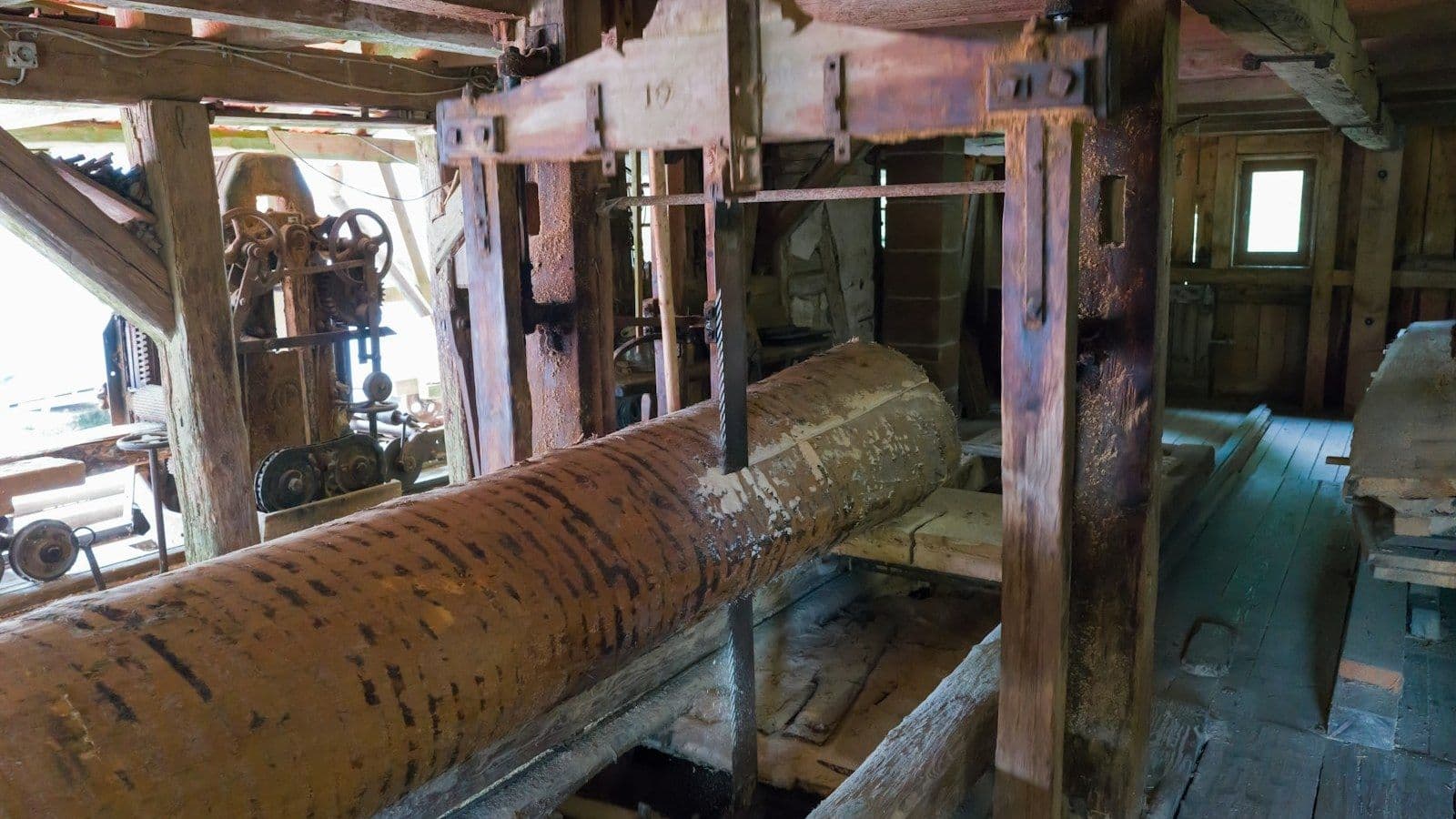
Two sawyers, in the town I have never named. A pit dug the length of a baulk, a man above on the timber and a man below in the dark with his hat pulled down against the dust, the long saw going down and coming back, and the sawdust rising round the lower man's boots by the hour. Either of them could open an oak butt into boards that lay flat and dried true, and the yard knew it.
Their oak came off one estate, two and a half miles up the valley, where a woodman marked the trees that would come down that winter. He did his marking through July. A man at his elbow then could say which butts he wanted, have the straight ones put by, and settle a price before the frost brought every builder in the county up the same lane. A man arriving in November got what was left, at what was left of a price.
The first sawyer walked up on the first Monday in July. He lost the morning, and he lost a small job of elm that came to the gate while he was out and went elsewhere. He came back having cut nothing, earned nothing and carried nothing. He had been at next February.
The second sawyer meant to go, and was not idle when he failed to. A wheelwright wanted three feet of ash by Thursday. A horse was down in the lane and four men were wanted to get it up. His saw wanted filing and setting, which is an hour a man cannot skip. Every one of those had a person attached to it, standing in the yard, waiting. The woodman up the valley stood nowhere. He was marking trees, as he did every July, and he would still be there next week.
He went in November. The straight butts were spoken for. What remained was shaky at the heart or waney at the edge, and the price was no longer a July price, three builders and a coffin maker being after the same trees. He paid one and ninepence the cubic foot where the other man had settled at one and threepence, and he paid it for worse wood, which is to say for more waste, and in March he turned away a job wanting wide clean boards because he had none.
Sixpence a foot across a winter's cutting is near ten pounds. The morning the first man lost in July cost him eight shillings and a job of elm. He was not the cleverer sawyer. He was the one who gave an hour to the only work in his whole week that nobody had asked him for.
The Lesson, Since You've Earned It
Work that nobody is standing in front of you asking for will be done first or it will not be done at all. Not done badly, and not done late. Not done.
Urgency is not a quality that lives inside a piece of work. It is supplied from outside, by whoever is waiting, in proportion to how awkward that person can make your afternoon. The customer at the gate is urgent. The telephone is urgent. And the work that decides what trade you will be running in a year has, by its nature, nobody attached to it: the supplier seen in good time, the price not reviewed since spring, the old customers who have not heard from you. Nobody is inconvenienced tomorrow if you leave it. So it never loses the contest. It is never entered into the contest. The day fills from the front, and you make no decision at all, which is why it feels as though none was available.
Most unclaimed work deserves its fate, and I shall come back to that. But a certain kind carries interest, and that kind is worth the first hour. Ask what the delay waits on. If it waits on you alone, it costs the same in October as in July, and it can sit. If it waits on somebody else's calendar, the price rises while you are busy: the woodman marks his trees whether or not you are there, the customer chooses another man, the three months of a rise you did not announce in January are three months nobody gives back. That is the whole test, and it takes ten seconds. Does this get dearer if I leave it, and who makes it dearer.
Then why the first hour rather than some hour. Partly because the early one is the only part of the day you own outright; after the doors open, the day belongs to whoever walks through them. Mostly because of what becomes of a man's judgement by five in the afternoon. Put the same two tasks before him then and the easier wins, and it wins by what sounds like reasoning: better done properly tomorrow, better done when the yard is quiet. The yard is never quiet. This is the same trouble as four jobs opened at once, none of which pays you until one is finished, and it has the same cure, which is sequence rather than effort.
Two cautions. First, unclaimed is not the same as important. Much work goes unasked for because it does not matter, and a man who solemnly gives his first hour to it has found a tidier way of not working. Apply the test honestly, and whatever fails it goes on the list or off the books. Second, first does not mean long. Half an hour before the shutters go up, one task, named the night before so the morning has nothing to decide. The man who sets aside a whole morning has not reformed his habits, he has found a respectable reason to open late, and the trade that pays him is still at the gate. Who is buying the rest of your day is a separate question, and a good one, but not this one.
Three questions, and the first will take you about a minute:
- What have you moved from one day to the next more than three times? Find the item that keeps migrating. It is almost never small and never urgent, which is precisely why it has been able to migrate. Write it where you will see it before breakfast.
- Does it get dearer if you leave it, and who makes it dearer? Name the thing that moves without you: a season, a supplier committing his stock, a customer deciding. If nothing moves, it is not first-hour work, and you may stop feeling guilty about it today.
- Who was standing behind each hour you worked yesterday? Put a name against every one. If every hour carries somebody else's name, your trade is not being run by you. It is being run, competently and in good faith, by whoever happened to arrive.
The Answer to the Riddle
Why did one sawyer cut all winter at a profit the other could not find, with the same saw, the same pit and the same wood to buy from? Because one gave the first hours of a July Monday to an errand nobody had asked him for, while the other spent that July on work people were waiting on, every hour of it honest and every hour of it chosen for him. By November the trees were marked and the straight butts gone, and no industry afterwards could buy July back.
The verse:
Two sawyers kept the one yard and both of them worked hard,
One walked up in the sunshine, one walked up in the frost,
The oak was all bespoken by the time the second came,
A morning given willingly, or else a winter lost.
Until next time. Go and write down tonight the one thing you have carried from day to day for a fortnight, and do it tomorrow before you open your doors.
The Best Time for Trying was Yesterday...
Ben B. Tilley
P.S. There is a further reason this work is so easily left. Its reward arrives as an absence. Nobody thanks you for the winter you did not spend buying dear, the customer who did not drift away, the quarter that was not a scramble. You cannot feel it, because nothing happened. Work whose only evidence is a thing that failed to occur will never be pulled forward by appetite, and must therefore be pulled forward by the clock.
Also in the archive: Settled in February, The Rent Already Paid and The Habits of the Hungry Year.