
Dear friend,
The riddle first, as the tradition demands. Back in the old town two makers of implements wanted the same farm, and both knew precisely what was wrong with it.
Two implement makers in the town I have never named, the same patterns and the same foundry.
Both wanted the farm on the hill, and both knew its seed drill sowed badly.
One went up and proved it, on a measured acre, grain by counted grain.
One wrote four lines in October about the new weighing at the corn market.
Same trade, same castings, the same farmer and the same bad drill.
Why did the man who was right in every particular never get the order?
Hold your answer. Story time.
The Story
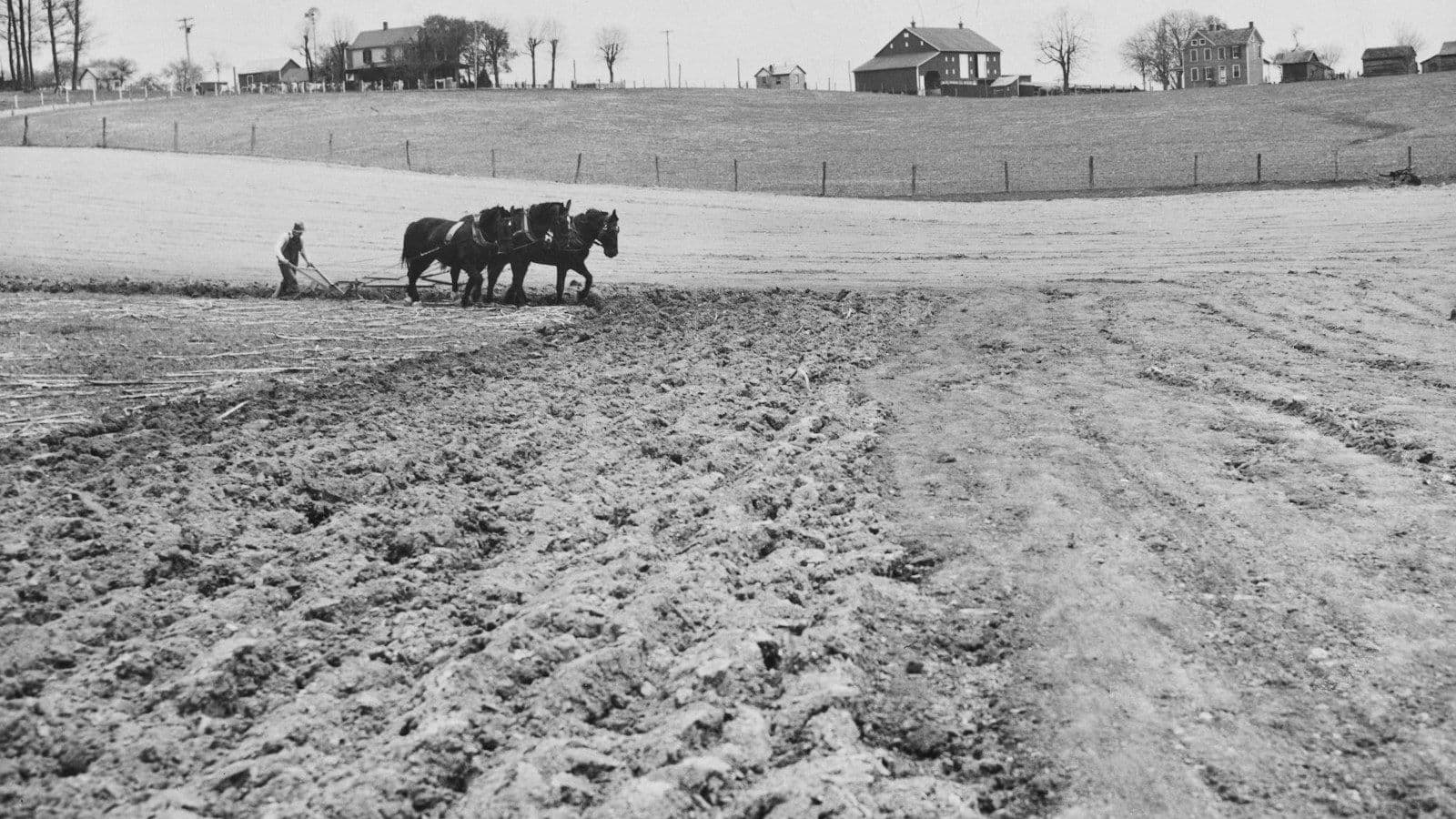
The drill had come out of a dispersal sale nine springs before, at a little over eleven pounds. The farmer drove it home in front of half the parish and said at his own gate that it was the best eleven pounds he ever laid out. Several men agreed. One did not, and said the coulters were worn past setting, and that man has been quietly resented ever since.
The drill sowed thin at the headlands and heavy down the middle. Every April the farmer's man said so, and every April the farmer answered that it wanted setting properly, and spent a Sunday filing the coulters. The crop came up patchy, which he put down to the season, and in fairness some of it was.
The first implement maker went up in March with a measuring frame and a square of sailcloth. He sowed a measured acre, lifted the cloth, and showed the farmer what the drill had put down at the two ends and what it had put down in the middle. Then he did the arithmetic for nine springs, and the sum came to more than a new drill twice over.
The farmer looked at the cloth a long while. Then he observed that the ground had been wet that morning, and that any drill will scatter on a wet headland. He was perfectly civil, and he bought nothing. For a twelvemonth he told the story of the sailcloth at market, and he defended that drill harder in the year after the demonstration than in the eight before it.
The second maker did nothing for a year. Then in the October the merchants on the quay began weighing the bushel and docking a few pence on any sample that came in uneven. He wrote four lines and sent them up with the carrier.
The merchants are docking uneven samples this year, and an uneven sample starts at the drill. I have one on the cart that sets the same across its whole width. I shall be past your gate on Tuesday, and you may run it in your own ground before you decide anything.
He ran it in the farmer's ground on the Tuesday and took the order on the Wednesday. Mark what the farmer told his neighbours afterwards, and he told them often: the trade has changed, you cannot sow as we used to with this new weighing. He was quite right, and he had unsaid nothing.
The Lesson, Since You've Earned It
A man who has defended a thing for nine years is not weighing your drill against his drill, he is weighing it against the sentence he would have to say out loud, and he will go on paying for the drill as long as the drill is the cheaper of the two. The first maker priced everything in that field except the sentence.
Understand what an old decision becomes. It is not a view a man holds, to be set down when a better one appears. It was taken in front of people, and defended every spring since in small ways he has long forgotten. By the ninth year the drill is not a machine in a shed but a piece of his judgment standing where the parish can see it, and to attack it is not to argue but to present a bill.
Which is why the strongest proof often does the most harm. Your evidence sets the size of the climb-down, so the better you argue the more a man must surrender to agree, and the harder he holds. The sailcloth did not loosen the farmer, it recruited him. A man handed an unanswerable case about his own judgment does not change it. He changes the subject, and next time he is readier.
So do not reopen the old decision. Replace it with a new one. Somewhere outside the man there is a change, and your work is to find it and put it in the first line: the market pays differently, the rule came in at Michaelmas, the next parish has gone over. A change in what can now be had serves as well. Either kind turns the purchase from a confession into a response, and a man may follow the market anywhere without having been wrong about anything.
Attend to who the sentence is owed to, since it is not owed to you. It is owed at his own table, or to the man who said the coulters were worn, so furnish him with words he can carry into those rooms, as you would give any customer a reason he can repeat upstairs. And know your rival here. It is another year of putting up with it, twice as strong when a man's own word holds the door.
And when he buys, let the defence stand. The temptation then is to be proved right out loud, and the man who yields to it has bought one order and sold the next ten years.
Two cautions. The change must be real, since manufactured news is detected quickly and spends the only thing you own in that parish. If nothing has changed the letter is not due: write the date in your book and look again at the turn of the year. And do not use any of this where the fault is dangerous. A rotten ladder, a cracked flue: say it plainly, say it in writing, and take the resistance. Some faults are worth losing an account over.
Three questions, for the week in front of you:
- Which of my long-standing noes is a man guarding a sentence? Go down the names that have not bought for years and write beside each the words he would have to say if he bought tomorrow. Where there are none, the matter is probably money.
- What has changed since he decided, that did not come from me? One line, outside him: a price, a rule, a season, a method newly possible. That line is the approach; the rest is a date and a cart at his gate.
- Where am I the man guarding the sentence? The supplier you keep because you chose him, the arrangement you defend because you built it, the price you set in a different year.
The Answer to the Riddle
Why did the man who was right in every particular never get the order?
Because proof was the one thing that farmer could not accept. Every grain counted on the cloth was a charge laid against his own judgment, and the cost of agreeing had been rising since the day he drove the drill home. The other man never mentioned the drill's history at all. He brought news from the quay, and news costs a man nothing to act upon.
The verse:
A man will stand by a bargain
Long after it ceases to pay,
Bring proof, and he argues till Michaelmas,
Bring news, and he orders today.
Until next time. Go and write down one customer who has said no for years, and the one thing that has changed since he said it.
The Best Time for Trying was Yesterday...
Ben B. Tilley
P.S. It serves in the other direction too. When you must raise a price or alter a practice, give your customers the outside change rather than your revised opinion. The tannery has put up its leather; the new rate came in at the quarter day. An outside change asks nobody to have been wrong, least of all the man you are writing to, who has a sentence of his own to keep.
Also in the archive: The Date in November, The Hot July and The Ones Who Went Quiet.