
Dear friend,
The riddle first, as the tradition demands. Back in the old town two men went hunting for the same half day, and only one of them thought to look outside his own trade for it.
Two wheelwrights in the town I have never named, the same elm and the same ash.
Both wanted a day off the making of a wheel, and both went looking for it.
One spent his evenings studying every wheelwright within nine miles.
One spent half an hour in the cooper's yard, waiting on a brine tub.
Same trade, same timber, the same want of an hour.
Why did the man who studied his own trade hardest come home with nothing?
Hold your answer. Story time.
The Story
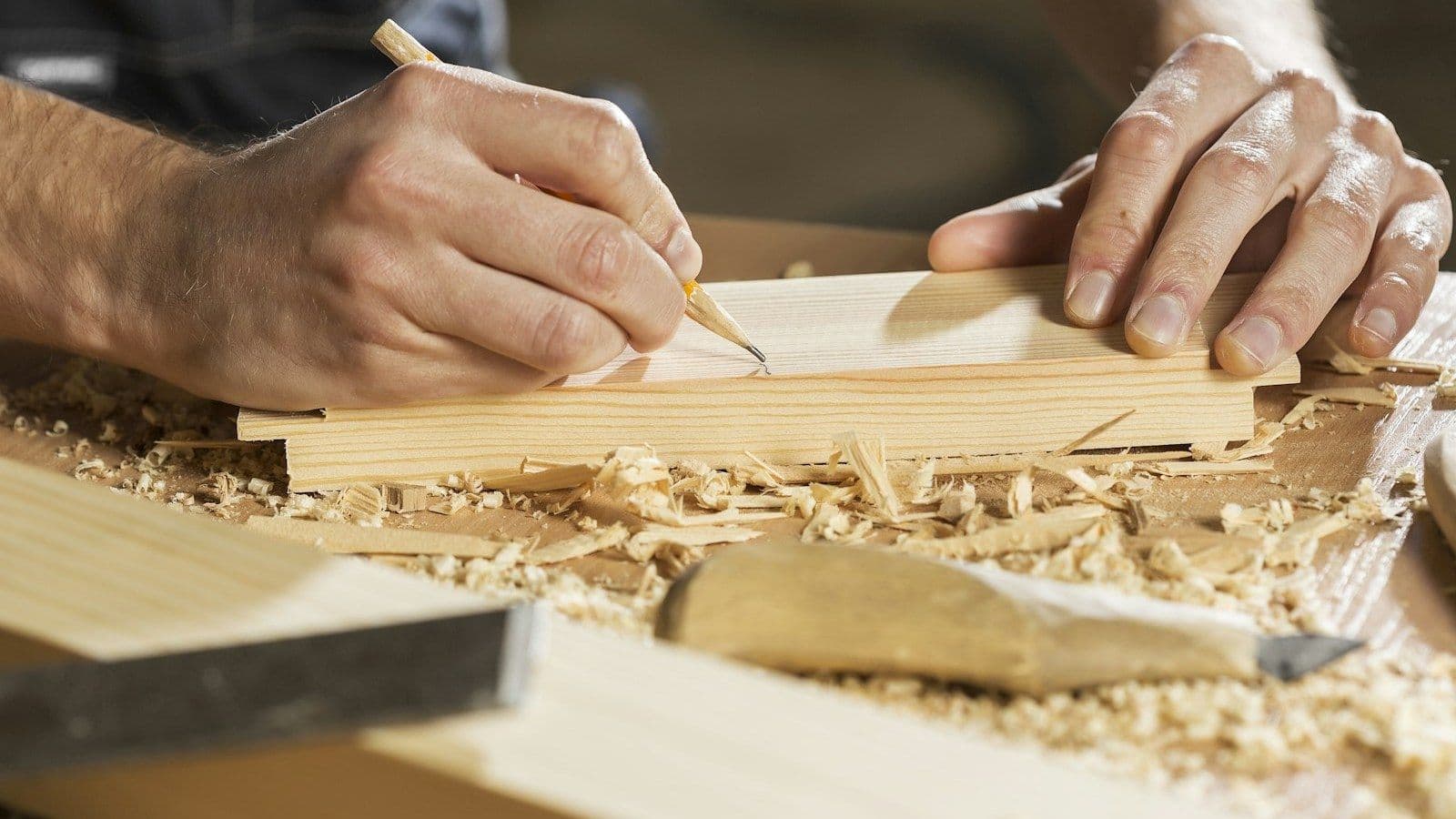
The trade is wheelwrighting. An elm hub bored for the spokes, oak spokes driven and wedged, ash felloes bored to take the spoke ends, and an iron tyre heated in a fire of shavings and shrunk on until the wheel groans and sits true. Both had served their time, and neither was idle.
Both had the same trouble, and it was always the felloes. Each felloe is a section of the rim, and the holes bored in it must meet spoke ends already standing in the hub. So a man measures, pares, carries the piece across the shop, tries it, finds it a shaving out, and carries it back to pare again. A wheel took two days as often as not, and one in a batch came out a little out of true, and the smith said nothing but fought the tyre on.
The first wheelwright did what a sensible man does. He went looking at wheels, got underneath other men's wagons in the carriers' yards on market day, studied a Lincolnshire wheel at the fair. He came home each time with the same finding. Everybody did it much as he did it: same order of work, same tools, same two days to the wheel. He concluded, fairly enough on the evidence, that the trade was as far along as the trade got, and that another wheel a week would have to come out of his own evenings. It did, for four years.
The second wheelwright had a brine tub on order, the cooper was behind, and he had half an hour to stand about in the yard with nothing to do. So he watched the cooper raise a cask, and what he saw was this. The cooper never once measured a stave against the cask. He had a pattern stave hanging on a nail and a pair of compasses, and he worked each new stave to the pattern and not to the barrel. And before he dressed them at all he stood the lot of them inside an iron truss hoop, which held every stave upright and in its place while his two hands did the work. Nothing was carried across the yard to be tried and carried back. The cask came together because the pattern was right, not because the cooper kept checking.
The wheelwright went home and sat with it. Within the month he had cut a thin oak pattern for the felloes of each of his three common wheel sizes, with the spoke holes marked on it, and screwed a cradle to his bench that would hold a felloe dead still while he bored. He worked to the pattern, as the cooper did, and trusted it.
It took a fortnight to stop distrusting it. After that a wheel took him a day, and his wheels came up truer, which the smith remarked on, and for that smith a remark was a speech. He had got his half day out of a yard with not one wheel in it.
Mark it closely. The first man looked hard and honestly in the one place where the answer could not be. The second looked where nobody had used it up.
The Lesson, Since You've Earned It
Whatever is good in your trade is already in every workshop in your trade, and the methods that would make you uncommon are sitting in trades you have never stood still and watched. The men you study most carefully are the men least able to help you.
Rivals watch rivals. Any improvement in a trade is noticed, envied, copied badly, copied properly, and within a few years it is simply how the trade is done. The stock of advantage inside a trade is used up continuously by the very men you measure yourself against, which is the limit of studying a rival properly and the reason the first wheelwright found nothing. He was searching a field picked over daily by men as sharp as himself.
Between trades there is no such picking over, because there is no traffic. No cooper has ever had reason to care how a wheel is bored, so a method ordinary in coopering since before anybody's grandfather is still worth half a day to a wheelwright, and will go on being worth it.
Your trade is yours alone in one respect only, which is your material and the skill of your hand. The rest of your day is made of jobs every trade on earth has: holding the work steady, quoting before you know everything, chasing money, teaching a newcomer. Each has been properly solved by some trade that was forced to solve it. Coopers settled pattern and holding because a cask must be watertight at the first filling and cannot be tried on the customer. Their necessity is your windfall. You have two hunting grounds and use only one.
Work it deliberately, though. Write down your three worst half hours of the week, the ones that are pure friction and no craft, and carry them about as questions. You enter four or five other trades a month as a customer, watching the counter and never the back room. Ask the man how he does the thing you came about. He will tell you at length, nobody having ever asked him.
Two cautions. Borrow the mechanism and not the apparatus. A truss hoop is no use to a wheelwright, and what crossed the yard was the notion of holding the work and trusting a pattern. And do not let this become sightseeing: one borrowing still in use at Christmas beats five admired, and you can carry one change at a time in any case.
Three questions, for the week in front of you:
- Which of my difficulties is not peculiar to my trade at all? List the three that cost most time and strike out any turning on your own material and skill. What remains, some other trade has already settled.
- Whose place of work have I stood in this month with my eyes open? The printer's, the garage, the builders' merchant. Name what was happening behind the counter.
- What did I see lately and dismiss because it is not how my trade does things? That dismissal is the whole of the matter. Go back and ask the man why he does it so.
The Answer to the Riddle
Why did the man who studied his own trade hardest come home with nothing?
Because every wheelwright for nine miles had already been studied by every other, and anything worth having had long since become common property. The other man stood half an hour where a good method had lain in plain sight for fifty years, nobody with a wheel to make having ever been standing there.
The verse:
Your rivals have rifled each other
Till nothing is left to be found,
But the yard where they never go looking
Has the answer still lying around.
Until next time. Go and write your worst half hour of the week on a slip, and carry it into the next workshop you enter.
The Best Time for Trying was Yesterday...
Ben B. Tilley
P.S. It runs the other way as well. The thing you do as a matter of course, and would be ashamed to call a method, is often the answer to a standing difficulty three doors down. Tell him. It costs you nothing, since he will never make a wheel, and the man who is told a method generally tells you one back.
Also in the archive: The Half-Page He Did Not Buy, Eleven Things in March and Twelve Men and Two.