
Dear friend,
The riddle first, as the tradition demands. Back in the old town a shop window was the whole of most traders' advertising, and a handsome one was held to be a thing done properly once and then let alone.
Two milliners, the same short street, the same bonnets at the same prices.
Both dressed a window the town agreed was a credit to the trade.
One spent a whole day on hers in April and left it standing until September.
The other pulled hers apart every Friday morning and set it out again by noon.
Neither window was the handsomer, and the same women walked past both.
By Michaelmas one had half again the other's trade. Which, and why?
Hold your answer. Story time.
The Story
Two milliners in the town I have never named, on the street that runs from the coaching inn to the church. Both had learned the trade properly, both bought ribbon from the same traveller, and both had a window of four panes with a shelf at the height of a woman's chin.
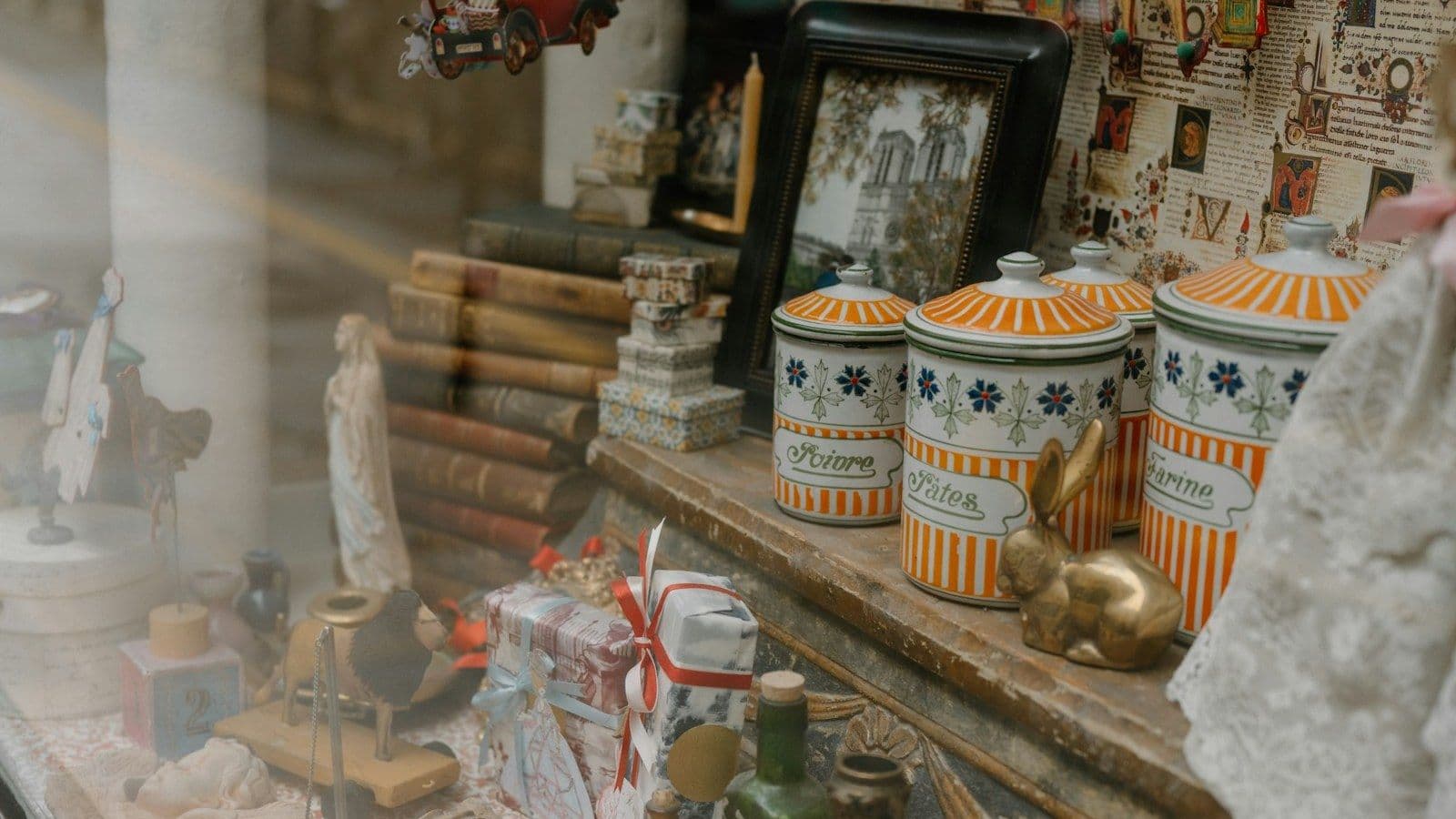
The first dressed hers for the spring on a Tuesday in April and gave the day to it. Straw bonnets on turned stands at three heights, blue silk gathered at the corner, wired flowers, and a mirror at the back so that the light came twice. She judged it four times from the road, once in the rain. It was the better piece of work by any measure, and the curate's wife called it the prettiest thing in the street. There it stayed until September, and nothing in it spoiled.
The second was the poorer window dresser of the two and knew it. What she did instead was an hour on a Friday morning before the shop filled. One bonnet forward and two put away. The hat boxes in a tower one week and in a row the next. Once in August, nothing but a single bonnet on a stand in an empty window, which she thought afterwards a mistake. Some Fridays the window was plainly worse than the week before, and she minded less than you would expect, because by Friday it would be something else.
Now consider the street. Perhaps fifty households used it five and six times a week, to the butcher and the pump and the school gate and back. They were the women who would buy a bonnet in that street if they bought one anywhere, and they passed both windows hundreds of times before September. They stopped at the April window after a fortnight, and thereafter passed it as you pass the clock in your own hall, not one able to say she had stopped looking.
The Friday window was never the same window twice, so it was never old enough to disappear. A woman on an errand would catch at the edge of her sight that something had moved, and look, and in looking be told again what was sold there and what it cost. A certain number of those glances became bonnets.
The better milliner said that autumn that the town had no taste. The strangers off the coach, who saw her window once, agreed with her.
The Lesson, Since You've Earned It
A thing that never changes stops being seen by the people who see it most. The eye is not a clerk keeping a record of the street. It is a watchman, and a watchman reports movement. What stood there yesterday and stands there today was attended to long ago and filed, and filing is the end of looking. That is no rudeness in your customers, but the only arrangement by which anybody gets down a street at all.
The consequence runs the opposite way to what you would guess. The audience that goes blind to you first is the one nearest you: your neighbours, your regulars, the people who open everything you send. They are the likeliest to buy again and to say your name to somebody else, and their eyes have quietly retired you. Nor will you be told, there being no complaint to answer and no falling off to put a finger on.
You may feel a contradiction here. I have argued before that a thing said once has barely been said at all, and now I appear to say that a thing left standing goes unread. Both are true, and the difference is the audience. The stranger has not yet heard you once, and for him repetition is the whole of the work. The neighbour has heard you so often that she no longer hears you, and for her it is the trouble itself. You need not choose: keep the message and move the surface it arrives on. The second milliner never altered a word of what her window said, which was bonnets, this street, these prices, come in. She altered the arrangement, and the arrangement is what the eye watches.
So be plain about which part of your trade is the message and which is the surface. The message is what you are known by and must not move: your name, your mark, the claim you have made your own, the colour of your yellow wheels. Those are not advertising so much as the handle people carry you by, and a handle that keeps changing shape gets put down. The surface is everything in front of it: which piece of work is at the top, which job you describe this week, what is in the first line of the letter. Moving those costs nothing but the hour.
Two cautions. Change is not improvement, and motion will not rescue a bad message: a window altered fifty times a year which never said what was sold would have been invisible in fifty ways. Put the message right first, then move it about. The second is that in one or two trades steadiness at the front door is part of what is sold, and the undertaker who redresses his window weekly will unsettle the street; there let the changing part be the work and the news rather than the frontage. But let something change, for the law does not spare you on account of your dignity.
Three questions, for the week in front of you:
- What do the people who pass me most often see? Name it exactly: the board outside, the window, the first screen of your page, the top of your letters.
- When did I last alter it? If you cannot put a date to it, your regulars can no longer see it.
- What part of it could I change in an hour, on my own? Anything wanting a printer or another man's decision gets done once, called a policy, and left standing until September.
The Answer to the Riddle
Neither window was the handsomer and the same women walked past both, yet by Michaelmas one had half again the other's trade. Which, and why?
The Friday one. The April window was the better window and was seen by the fewer people, because the households of that street had finished looking at it by the end of April and went past it all summer without raising their eyes. The worse window was seen every week, and seen by the only women who were ever likely to buy a bonnet.
The verse:
The finer window took a day and stood until the frost,
And all who passed it day by day had long since let it go.
The eye attends a difference and will not read the same,
So shift a thing on Friday if you want the street to know.
Until next time. Go and change one thing in the first place your regular customers look, and write next Friday in the book to change it again.
The Best Time for Trying was Yesterday...
Ben B. Tilley
P.S. The same law has you inside it. You stopped seeing your own front door years ago, which is why the faded card and the price that has been wrong since spring are both still there and both still invisible to you. Once a month, walk up to your own premises as a stranger would and write down the first three things you notice.
Also in the archive: The Sign Nobody Read, The Faces He Took Down and Four Doors Either Side.