
Dear friend,
The riddle first, as the tradition demands. Back in the old town, two photographers kept a glass case beside the door, and the whole of the difference between their years hung inside it.
Two photographers in one town, the same camera and the same chemicals.
Both hung their work in a case where every passer-by could study it.
One filled his case with everything he was able to do.
One took down fourteen pictures in an afternoon and left the hooks bare.
Both were busy by Christmas, and only one of them was paid properly.
Which man was choosing his customers, and which was being chosen?
Hold your answer. Story time.
The Story
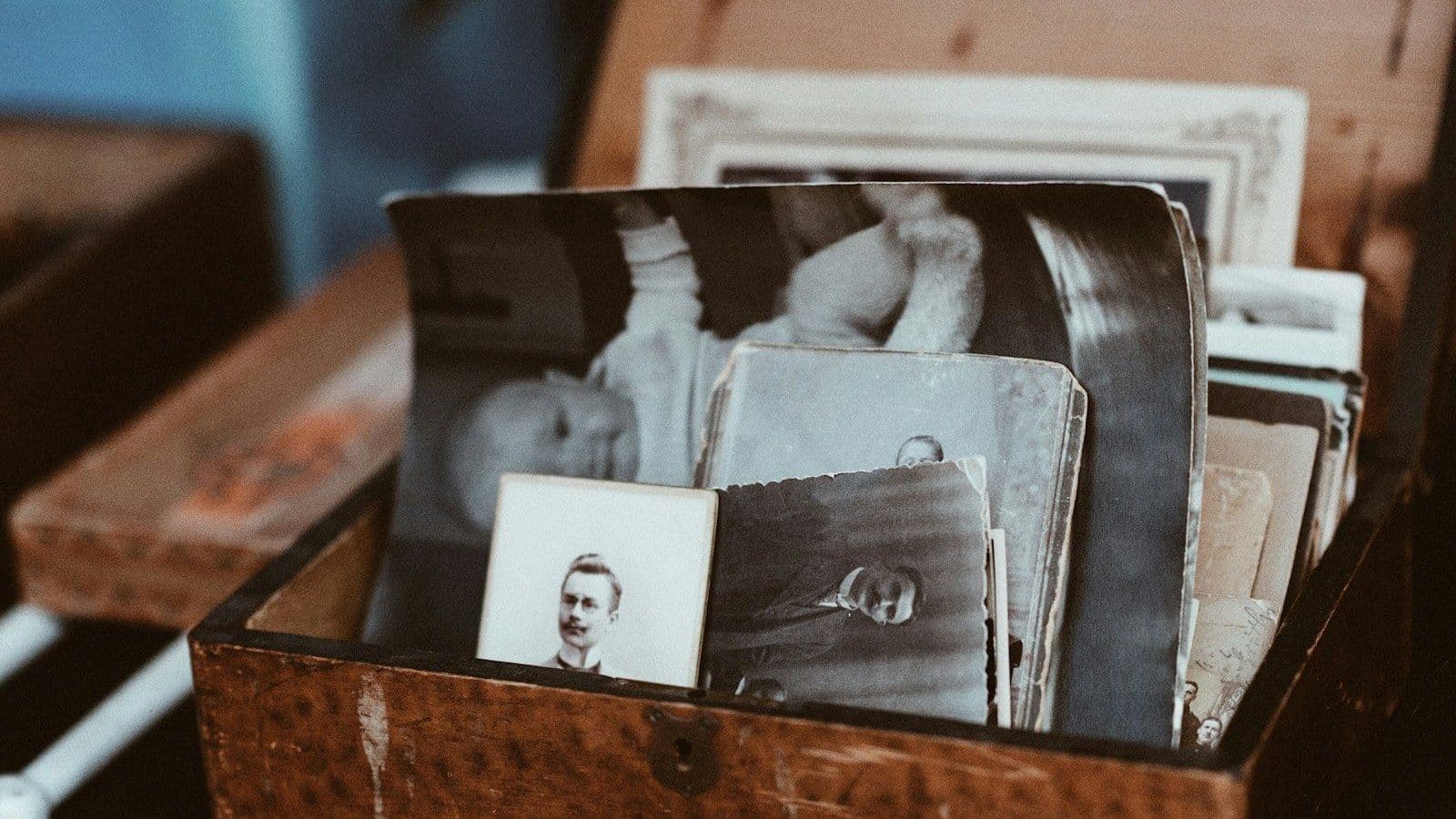
Two photographers, in the town I have never named. Both had taken the trade up late, both worked in a first-floor room with a north light and a painted cloth for a background, and both were good. Neither man was a fool nor a rogue, which is the only sort of story worth telling. Each kept a glass case screwed to the wall beside his street door, and in the case he put his work, because that is what the case is for and every photographer in the county did the same.
The first man's case held twenty-three pictures. Four sixpenny cards of single faces, the sort a servant girl buys on her afternoon off. Two of the same tinted, at a shilling. A terrier on a cushion. Three wedding groups, a ship's officer in his uniform, a baby on a fur rug, a shopfront with the proprietor in the doorway with his arms folded, a cricket eleven, two views of the church, and a tradesman at his bench with his tools laid out in front of him. His reasoning was sound and I have never been able to fault it. A case must stop a stranger, and twenty-three chances to stop a stranger are better than nine. More than that, a man walking past ought to find in there whatever thing he happens to want, and be able to point at it.
And they did point at it. They pointed at the sixpenny cards, because the sixpenny cards were there to be pointed at. Through that autumn he had eleven sitters on a good day, nine of them wanting a card of a single face, and he was in the darkroom until nine at night with his hands in the fixing bath, and there was nothing much left at the end of the quarter. He would have told you, and did tell people, that the public wanted cheap portraits and that was the trade now.
The second man had the same case and nearly the same twenty-three pictures. One wet Tuesday in October he stood in the street and looked at it for a long while as a stranger would, and then he went and fetched a cloth and took fourteen of them out. He kept four family groups, two wedding parties, the tradesman at his bench, a farmer standing at the head of his horse, and a portrait of an old woman in her own parlour chair, taken in her own house with her own things behind her. Nine pictures in a case built for twenty-three, and he did not trouble to move the rest along to fill the gaps, so two hooks hung bare for the whole winter.
He had not stopped making sixpenny cards. The price list was inside on the counter, sixpence at the top of it, and anybody who asked got one made and got it made well. He had stopped offering them to the street.
Fewer people came up his stairs that month. He counted, because he was frightened. Seven in his first full week against the eleven a day the other man was running at. But of the seven, two wanted a family group at two guineas, one wanted his shop photographed for a catalogue, and one asked whether his mother might be taken in her own parlour, which she might, for a fee that covered the journey and the morning. By February he was going out to houses two days a week and was known for the parlour portraits, because a thing seen nine times in one case is remembered and a thing seen once among twenty-three is not. He worked fewer hours than his rival and ended the year with something in the bank.
The Lesson, Since You've Earned It
You will be asked for whatever you have put where strangers can see it, and for very little else. Your display is not a list of your abilities. It is an instruction, and people follow it exactly.
Consider what a stranger is actually doing when he looks at your work. He is not auditing your capability and deciding what to commission. He has no idea what is possible and he does not want the labour of inventing a job for you. He is looking for something he can ask for without embarrassment, and the easiest thing to ask for is the thing already in front of him with a price under it. Show him a sixpenny card and you have told him, in the plainest language there is, that asking for a sixpenny card is a normal thing to do here. He will do the normal thing. Nearly everybody does.
There is a second machine working alongside the first. A piece of expensive work shown among cheap work is read as the exception, the day you were lucky or the customer was rich. The same picture shown among eight of its own kind is read as the rule, which is what you wanted said. Nobody arrives at that conclusion deliberately. The eye does it on the way past.
This is why the complaint about the market is so often a complaint about a case screwed to one's own wall. A man who shows ten jobs, two of which he would be glad of and eight of which he takes merely to fill a Friday, has published a document that recruits Fridays. The remedy is the same remedy as naming the work you will not take, arrived at from the other side, and it is better evidence, because a thing you can be shown having done is believed where a thing you say about yourself is discounted.
Mark also that the drift runs one way on its own. The cheap job is the one easiest to photograph, quickest to describe and most plentiful, so a display left to assemble itself fills up from the bottom, every year, without anybody deciding that it should.
Two cautions. The first is that this governs what you display, not what you sell. The second photographer did not abolish the sixpenny card, and you should not abolish the small job that pays your rent in a thin month. Keep it on the list, keep doing it properly, and stop recruiting for it. The distinction matters, because a trade that cuts off its cheap work and its cheap advertising in the same week has made two decisions and will never know which one hurt. The second caution is the one that undoes most people. A narrowed display brings fewer enquiries before it brings better ones, and the drop comes first. Count the shape of what comes in rather than the quantity of it, and give the change a full season. Measure a narrowed window by the number of callers in its third week and you will put the fourteen pictures back, having proved nothing except that you were frightened, which you knew already.
Three questions, and the first takes four minutes:
- Of your last twenty enquiries, how many asked for the work you actually want more of? Write the twenty out and mark them. If the proportion offends you, go and look at what you have been showing, because the two numbers are nearly always the same number.
- What is the cheapest or smallest piece of work a stranger can see you do, and where exactly can he see it? The page, the van, the examples on the wall, the pictures you send with an estimate. That item is doing more work than you think, and it is not working for you.
- Which three jobs would you want the next ten enquiries to be about? Name them, then make those three the whole of what a stranger meets first. Not most of it. The whole of it.
The Answer to the Riddle
Which man was choosing his customers, and which was being chosen?
The first was chosen, politely and daily, by whoever walked past, and the thing they chose was always the cheapest item he had hung up. He mistook that for the verdict of the public on his trade. The second chose, by the simple method of leaving in view only the work he was willing to be asked for, and he paid for the privilege with four weeks of a thinner diary and two bare hooks he had to look at every morning.
The verse:
He hung up all that he could do
And wondered at his year,
For strangers ask for what they see
And nothing else comes near.
Until next time. Go and take one piece of cheap or unwanted work out of the place where strangers look at you, and put in its place a job you would be glad to be asked for tomorrow morning.
The Best Time for Trying was Yesterday...
Ben B. Tilley
P.S. The same rule governs your mouth as governs your glass case. When a stranger at a gathering asks what sort of work you do, you reach for an example, and most men reach for the most recent one or the easiest one to explain. That example is a display with an audience of one, and it is answered exactly as the case by the door is answered. Choose the job you cite before you are asked, and use the same one until you are sick of it.
Also in the archive: What He Would Not Paint, The Potter Who Made Fewer Things and Nine Dairies and Six Hundred Handbills.