
Dear friend,
The riddle first, as the tradition demands. Back in the old town a quarry was a standing account for any bootmaker who could get at it, since slate eats leather the way salt water eats iron.
Two bootmakers in one town, the same lasts and the same oak-tanned hide.
Both wanted the men at the slate quarry, ninety of them, and a pair ruined every five months.
Both took a pitch at the Saturday market on the quarry road and stood there the whole summer.
Both sold eleven pairs in all, and both knew by August that eleven was not ninety.
Same trade, same quarry, the same market and the same eleven pairs.
One of them took the pitch again the next summer. What did the other one take?
Hold your answer. Story time.
The Story
Two bootmakers in the town I have never named. Both worked at a bench with one man under them, both bought hide off the same tanner, and both made a boot nailed and clumped and plated at the toe that would stand up to work. Two miles out along the north road there was a slate quarry with ninety men in it, and a quarryman standing all day on wet slate wears a pair out in five months. Nobody in the town had ever got much of that trade.
Both bootmakers reasoned it out the same way, and the reasoning was sound. The quarry road met the market square, and the men walked down it on a Saturday with their money on them. So each of them in his turn took a pitch as near that road as the clerk would allow, two shillings the Saturday and a licence for the season, and stood out there from eight until four with a rail of boots hung by their laces, a trestle, a price board and a stool for the measuring. The weather comes at you sideways in that square. You learn the quarry hooter from two miles off, and you watch the men come down in ones and twos with slate dust in the creases of their faces, and walk past.
Eleven pairs in a summer. That was the figure, for both men, in their different summers.
The first bootmaker took the pitch again. He had paid for the licence, and learned the trade of standing a stall, which is a real trade. The second summer he had a better board painted. The third he came down four shillings on a pair of quarry boots, which is most of what a bootmaker has to come down, and added a Wednesday. By the end of it he had a settled opinion, which he would give you over a pot of beer, that quarrymen will not pay for a decent boot.
The second bootmaker did something duller. In the August he wrote one line inside the cover of his order book: ninety men at the slate, their boots and their mending. He wrote nothing about a market pitch. Then he walked up the north road on a Friday evening to find out why eleven.
He found it out in about an hour. A boot has to be fitted, and a man will not sit on a stool in the open square with his stocking off and his feet black, in front of thirty men he works beside. A quarryman's Saturday money is spoken for by noon. And a boot for slate wants nailing particular to slate, which nobody at a stall had asked any of them about.
He tried a second route that autumn, a notice in the pay office offering to measure any man at the shop of an evening. Four pairs. A man who has been on slate since six does not walk two miles into town to be measured.
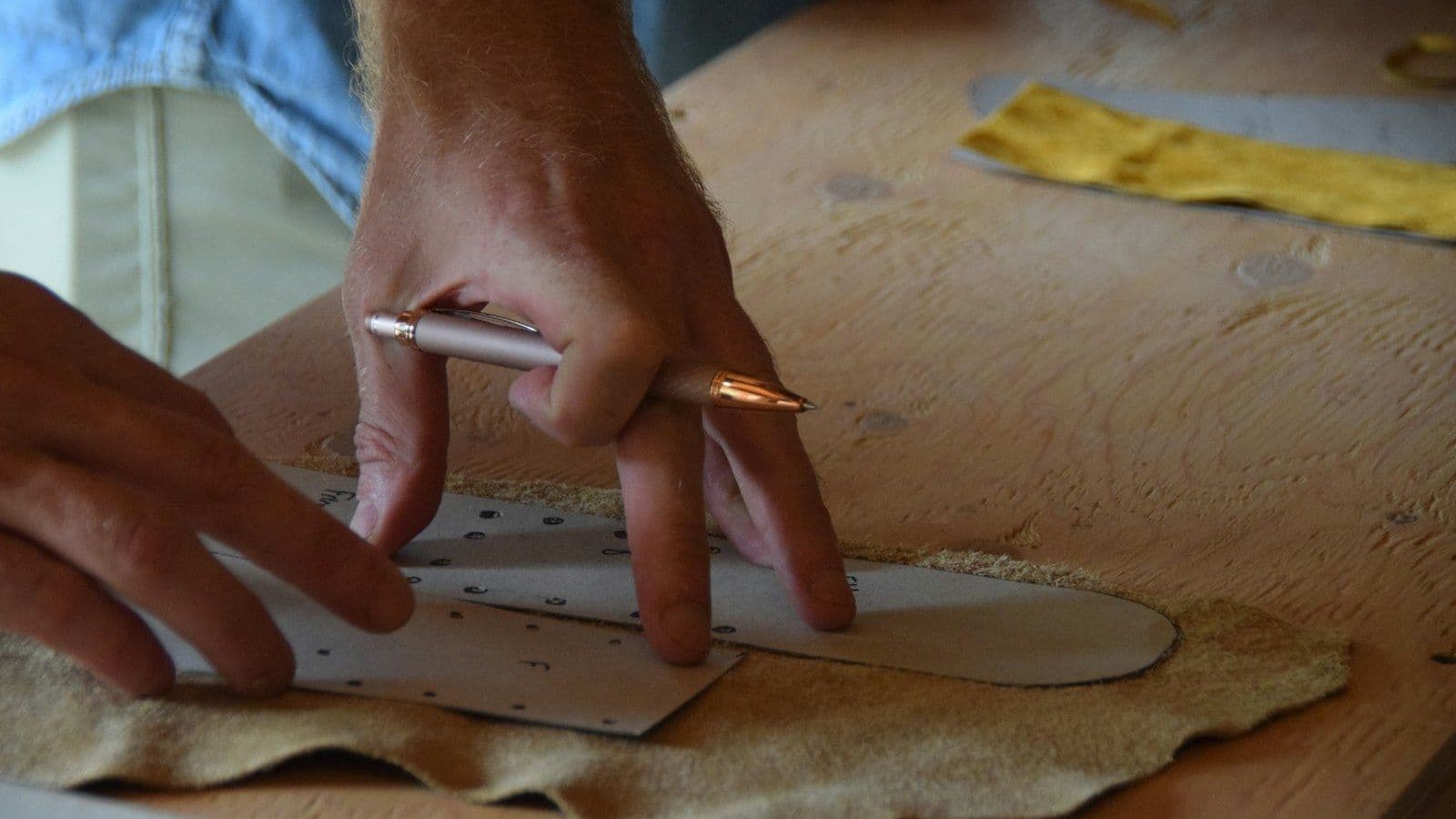
The third route was the weighbridge hut. At the end of the shift the men queued at the gate while the day's tally was entered, standing under a tin roof for ten minutes with nothing to do. He got the clerk's leave to be there on a Friday, and came with a box, a strip of paper and a pencil, and measured feet while the men waited. The finished boots went up a fortnight after, the worn ones came away in a sack and came back mended the week following. Inside a year he had the greater part of those ninety men, and the mending with them.
Be fair to the first bootmaker. He was not idle and he was not a fool. He stood out in weather that would send most men home, he sharpened every part of what he was doing, and his boots were as good. His whole error was that he had come to think the market pitch was what he was persisting at.
The Lesson, Since You've Earned It
Persistence is owed to the aim and never to the method, and the two get confused because only one of them has ever cost you anything. An aim is a sentence. It has no licence fee, no painted board, no three summers of standing in the rain behind it. A method has all of that, which is why, when you sit down to ask whether to keep going, the thing that presents itself with the receipts attached is the method, and you answer the question about that instead.
The first bootmaker was not asking whether to go on wanting the quarry trade. He was asking whether to give up two shillings a Saturday, a licence and the standing he had already done, and a man who asks himself that has handed the decision to money he has already spent. Every improvement he made was an improvement inside the method, and none of them touched the reason the men walked past.
So here is the test, and it takes a minute. Write what you are after in one sentence that names no route. Ninety men at the slate, their boots and their mending. No stall, no van, no window, no Saturday. If you cannot say what you are after without saying how you are going at it, you have not got an aim. You have got a habit with an aim somewhere inside it, and when the habit fails you will conclude the aim was never there.
The second thing is that a failed route hands you information about the aim, but only if you have kept the aim to apply it to. Eleven pairs is a finding. It says these men do buy boots, and will not be measured in public on their own time, which is most of the way to the weighbridge hut. To the man who had made the pitch the point of the exercise, those eleven pairs said only that it had been a poor summer, and three poor summers said quarrymen are no good. A fact, made into a verdict on the wrong thing.
There is a fair argument on the other side and it deserves saying properly. Most methods fail from being half done rather than from being wrong. A route changed every six weeks never reaches the point at which it would have begun to work, and a man forever trying something new has found a respectable word for restlessness. But the remedy is not stubbornness by temperament. It is to settle, before you begin, how long this route gets and what it must show you. Then changing it is a rule you are keeping rather than a mood you are in, and so is holding to it, which is the part people forget.
Two cautions. An aim can be wrong as well, and wants looking at once or twice a year, but never in the hour a method has just failed, or you will change both together and be left knowing nothing about either. And moving costs real money: tools, learning, the licence you do not get back, the people who had got used to finding you where you were. Count that first, and be suspicious of how good a fresh start feels, because the pleasant part of any route is the part before it gets dull, and the dull part is where the trade is.
Three questions, for the week in front of you:
- Can I write what I am after in one sentence with no route in it? Do it now, on a card. If every attempt comes out with a stall or a platform or a Thursday in it, cut until only the people and what they are to get from you are left.
- What am I doing that I cannot remember choosing? The route you inherited from your trade, or settled on in your first year, is the likeliest to be sitting where your aim should be. Name it aloud as a route and see whether you still believe in it.
- If this way of doing it were forbidden on Monday, what would I do by Friday? Whatever you answer is your second route, and you have just discovered you already knew it. The useful question is why it is not running alongside the first.
The Answer to the Riddle
One of them took the pitch again the next summer. What did the other one take?
A strip of paper and a pencil up to the weighbridge hut at the quarry gate, on a Friday at the end of the shift, where ninety men stood about with nothing to do and a man could be measured without an audience.
The first kept his method for three summers and lost the aim. The second kept the aim and got through three methods in a year to reach it. One line in an order book was the whole of the difference.
The verse:
One kept the pitch and lost the men,
one kept the men in mind;
the aim is what you hold by force,
the road you leave behind.
Until next time. Go and write on one card the thing you are actually after, in a sentence with no road in it, then list the three roads to it and start the one you have never tried.
The Best Time for Trying was Yesterday...
Ben B. Tilley
P.S. On the day you leave a route, write it on a card with the date and the one thing it showed you. Not a verdict, a finding. In a thin month the mind goes back to the route it knows best, for the comfort of knowing it, and a card beats memory in that argument. The date matters too, since no route is condemned for ever, and a thing that failed for a written reason can be taken up again the week that reason stops being true.
Also in the archive: Eleven Things in March, The Decision He Made Four Times and The Hour Nobody Claimed.