
Dear friend,
The riddle first, as the tradition demands. Back in the old town, two watchmakers were handed the same tired watch, and the whole difference between them happened after the case came off.
Two watchmakers in one town, the same bench and the same eyeglass.
Both opened a watch that was losing four minutes a day.
Both found the same worn hole and the same oil gone to gum.
One told the owner exactly what he had found, plainly and truly.
One turned the lamp around and said nothing until she had looked herself.
Which of the two was believed?
Hold your answer. Story time.
The Story
Two watchmakers, in the town I have never named. Both had served seven years, both kept a bench under a north window, and both were honest men who would have been insulted to be told so, which is the only sort of story worth telling. In the same wet week each was handed a watch, come down from a father, losing four minutes a day.
Each took the case off and found the same thing. Oil gone to a dark gum, brass dust where there should have been none, and a pivot hole worn out of round, with another following it, so the wheel ran drunk in its bearing and wore everything it touched.
The first man put the watch down and told her. A thorough cleaning, three and six, and while it was apart he ought to bush two of the holes, another four shillings, and leaving them would be a false economy. Every word true and kindly meant. She said she would have the cleaning, and they would see how it went.
She came back eight months later with the watch stopped and the wheel chewed about, which was eleven shillings and a fortnight without it. She paid, and privately wondered whether the cleaning had begun the trouble. He had lost four shillings, then eleven, then the household, and would have told you nobody spends money on watches nowadays.
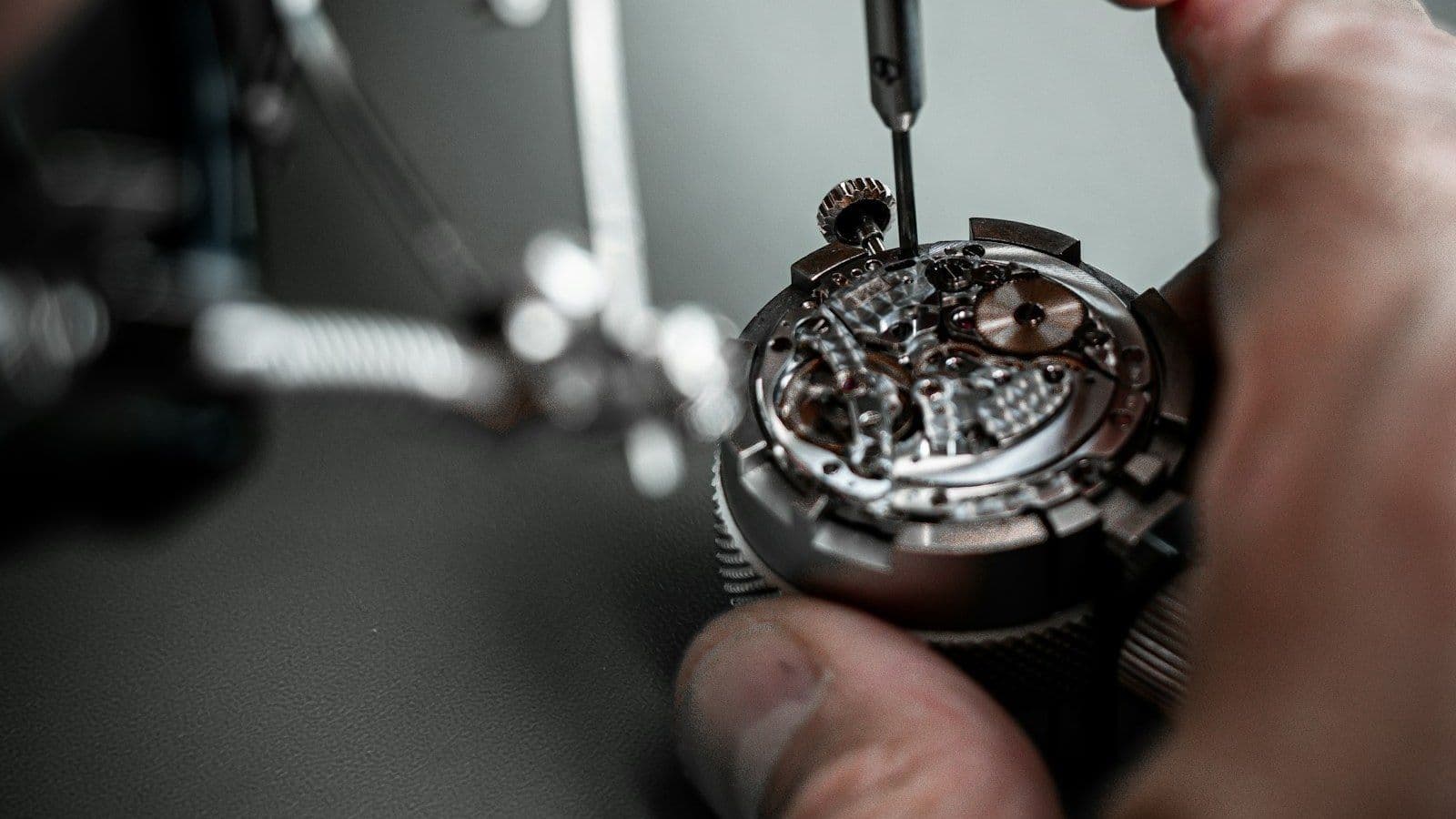
The second man found the same fault and did not say the sentence. He swung the lamp round, set the movement on a block, and asked the lady to come to his end of the counter. He gave her the eyeglass and taught her to hold it against her cheekbone and shut the other eye, which everybody gets wrong at first.
Then he pointed, with a brass pointer rather than his finger, at a hole that was sound. Round as a coin, with a clean ring of oil in it. Then he moved the pointer a quarter of an inch, to the hole that was not, and said only: that one, and the one beneath it. She could see it perfectly well. An oval where a circle should have been, a scored crescent where the wheel had leaned, the oil about it black and gritty.
He took the glass back and wrote a ticket. Cleaning, three and six. Two holes bushed, four shillings. And underneath, that the second item would wait a twelvemonth but not two, since after that she would be buying a wheel at eleven shillings. She paid the seven and six, and told people in her own kitchen for years about the little oval hole she had seen herself.
The Lesson, Since You've Earned It
A fault your customer has only been told about is an opinion he must weigh against your interest in telling him, and a fault he has seen for himself is simply a fact. They look identical from your side of the counter and nothing like the same thing from his.
Begin with why the sensible customer says no. He is given a diagnosis by the one man in the room who gets paid if it is believed. He cannot inspect the evidence, does not know the trade, and has heard all his life of the man who finds something extra. Having no way to tell an honest finding from a profitable one, he applies the only rule left him: discount whatever happens to suit the person saying it. Your good name does not save you from that rule. The work is refused on the shape of the conversation rather than on the money, and the shape is yours to change this week.
Letting him look does not make you more persuasive. It removes you from the question. The worn hole is not an assertion to be weighed against your motives. It is a hole. The two of you are now on the same side of the bench examining one object, and nothing in it requires anybody to be trusted. It is the machinery beneath proof beating every claim, pointed at the problem rather than at your workmanship. What a man has seen he also owns, and will defend at his own supper table against his own thrift.
Mark one detail, which most trades leave out. He showed her the sound hole first. A fault shown alone is a picture a layman cannot read, and he will nod politely and remain unconvinced. A fault shown beside its healthy neighbour explains itself. Give the eye something to compare, then stop talking.
Those few minutes are open to every trade in our own century. Photograph what you find while you are still in the house and show it there, not that evening attached to an estimate, by which time you are again a man with an invoice to write. Keep the part you took out and put it in the customer's hand.
Two cautions. A glass makes a fault vivid, and a vivid fault can be sold where it has no business being sold. Show only what you would have mentioned had you been paid to inspect and nothing for the repair, and say each time what may be left alone and for how long. The man who will tell you what does not need doing is believed when he says a thing must be done now. The second caution undoes good men: do not talk while they are looking. Argue over the top of the evidence and you have handed it back to the department of opinion.
Three questions, the first answerable on the way to your next job:
- What is the one fault in your trade a customer can never see for himself? It is nearly always the thing you are most often disbelieved about. Work out what it would take to put it in front of him before you leave, rather than afterwards in writing.
- In your last five jobs where you found something unasked for, how did the customer come to know of it? A sentence on the doorstep, a line in an estimate, or something he looked at. Mark which he agreed to.
- What do you carry that lets another person see what you see? A torch, a glass, a meter, the camera in your pocket, the old part kept rather than thrown in the van. Choose one and use it on the next job.
The Answer to the Riddle
Which of the two was believed?
The second, and not because he was the more honest. They were equally honest, which is rather the point. The first asked to be believed, obliging a woman who knew nothing of watches to judge his character on no evidence at all, and she declined, as you would have done. The second arranged matters so that believing him was unnecessary.
The verse:
He told her of the worn-out hole
And asked her for her trust;
The other turned the lamp about
And let her see the dust.
Until next time. Go and settle, before this evening is out, the one thing you will carry so the next customer with a trouble he cannot see may look at it himself.
The Best Time for Trying was Yesterday...
Ben B. Tilley
P.S. Some will look and still say no, which is their right. Write one line on the estimate saying what was shown and when, and hand them a copy. If the thing fails in a year you are the man who showed them and let them decide rather than the man who never told them, and the difference between those is a customer.
Also in the archive: Most People Ask Me That, Four Inches of Earth and The Smear on the Hall Paint.