
Dear friend,
The riddle first, as the tradition demands. Back in the old town there were two masters who taught the pianoforte, both patient, both thanked in writing by the mothers who paid them, and the whole difference between them was a window with nine letters pinned in it in the hands that wrote them.
Two music masters in the town I have never named, the same scales and the same hired room.
Both taught well, and both were thanked in writing by the mothers of the parish.
Both set that thanks where a stranger might read it before he knocked.
One had his printed, nine testimonials in one handsome even type.
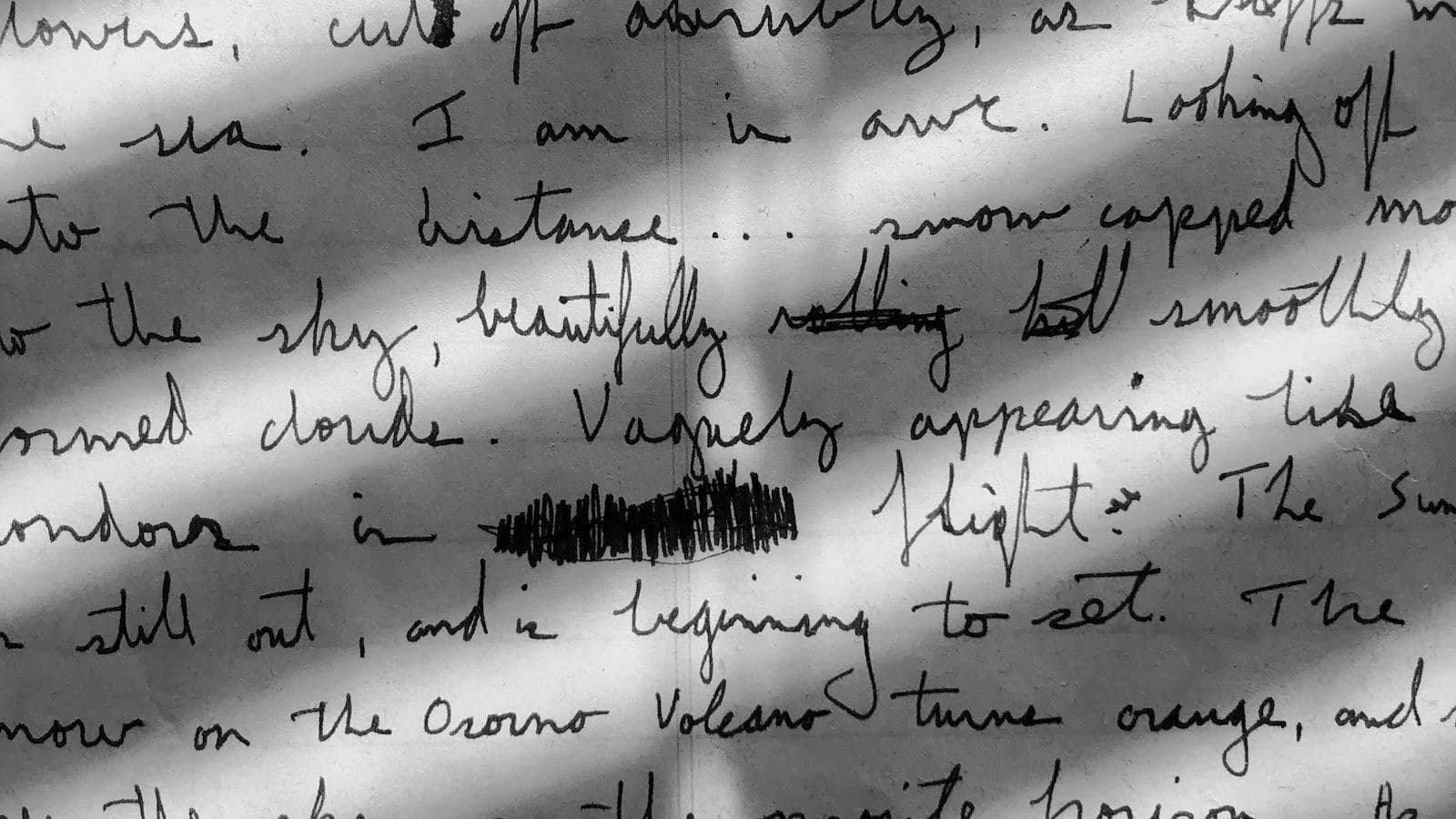
One pinned up the letters themselves, blots and crossings-out and all.
Same trade, same praise, same window. Whose quarter was full by Michaelmas?
Hold your answer. Story time.
The Story
Both men taught in a hired room above a shop, eighteen shillings a quarter, two half hours a week. The same upright piano with a candle sconce screwed to it, the same smell of wax and damp wool, the same scales going up and down through the floor while a mother waited in the passage with her gloves in her lap. Both were good at the work, and both had a parlour window on a street where people walked to church.
The first master gathered his good words and treated them with respect. He copied them out in his own neat hand, corrected the grammar of one, shortened another that wandered, and had the nine of them set up by the printer on a handsome card, each of four lines, each ending with a sentence recommending him to any parent of the town. The card went in the window under a brass rail. In two years he never saw a stranger stop in front of it for longer than it takes to glance at a thing and walk on.
The second master asked for something else. He asked each mother to write a few lines saying what had worried her before her daughter began and what the girl could do now, and he asked leave to show it. Then he pinned the letters in his window, behind glass, exactly as they came. One was on blue paper. One was written on the back of a chandler's bill. One had a line crossed out and set down again above it. One said plainly that he was dear, dearer than the other master, and that the writer had grudged it until the Christmas her girl played two carols for a grandmother who had not come downstairs in a year. Under each he had written the name, the street and the month, and the words shown with her leave.
People stopped. They read the whole wall, then read one of them twice, and they came up the stairs quoting a sentence out of the window, usually the one about the carols. By Michaelmas he was full, with four names waiting for January, and the mothers in his window had not written a word more warmly than the mothers on his rival's card.
Be fair to the first man. His praise was real and his pupils did as well. He tidied the letters because printed matter ought to look well and a blot looks like carelessness. He was not dishonest by so much as a comma. He simply converted nine pieces of other people's evidence into one piece of his own.
The Lesson, Since You've Earned It
A stranger does not first weigh your proof, he first decides who wrote it, so praise is believed in the exact measure that you have plainly left it alone. Every claim a reader meets is discounted by its suspected author, and yours he discounts to nothing. Not because he thinks you a liar, but because he knows what a man says about himself. A customer's words are worth more than your own for one reason, and it is not that they are warmer. It is that they came from somewhere else, and every improvement you make moves the authorship back towards you.
Consider what uniformity tells a reader. Nine recommendations of the same length, in the same type and the same vocabulary, each arriving at the same closing sentence, are not nine witnesses. They are one hand copying nine times, and he knows it before he has worked out how he knows it. The polish you applied out of pride is read as the fingerprint of the only person with a motive to write any of it. Whereas every oddity in the second master's window proved there had been nine separate kitchen tables.
So the oddities are the mechanism and not the charm. A man writing praise for himself invents warmth, since warmth is what he wants. He does not invent the back of a chandler's bill, nor the admission that he is dearer than the fellow across the square. Those are the marks of a woman with her own business in her head, who got to the point when she was ready. Leave them in. The digression is the proof and the compliment is merely the content.
Then give the reader something he could check. A name, a street, a month. He will not walk round and ask, in nineteen cases of twenty, but the invitation works whether it is taken up or not, because a claim that can be tested need not be. I have argued before that an exact figure is believed where a boast is discounted, and this is that law in different clothes. A letter signed by a satisfied customer of this parish is an anonymous letter. A letter signed with a surname and a street is a witness.
Most of it is settled before a word is written, in the manner of your asking. Ask for a testimonial and you will be sent compliments, which are useless to you and faintly embarrassing to the writer. Ask what the trouble was before you came, and what she can do now that she could not do in the spring, and you will be sent a story with facts in it. That is the argument of the letter about asking for proof instead of praise, and it applies doubly here, since words you did not have to improve are words you will not be tempted to improve.
Two cautions. The first is that nothing here permits you to invent, to embellish or to move a word. You may cut a letter at a full stop and mark the cut, and there your liberty ends. A fabricated witness is a fraud whatever the custom of your trade, and one conversation on a Sunday undoes it. The second is that leave must be asked for the thing you actually intend. Say that the letter itself will be shown, ask what she wishes to be called and whether the street may appear, and keep her answer. Some will give the name and not the number of the house, and that is her business.
Three questions, for the week in front of you:
- Where are the actual words I was sent, and can anybody see them? Letters, notes, messages on a screen. In a drawer they do nothing for the stranger deciding about you on Thursday.
- Which three customers would write me something true this week if I asked properly? Not your three fondest. Your three most recent, whose trouble is still fresh enough to describe.
- What have I tidied out of the proof I already show? Count how many of your good words sound as though one person wrote them.
The Answer to the Riddle
The same scales, the same hired room, the same nine mothers and the same praise, set in the same window on the same street. Whose quarter was full by Michaelmas?
The second, and his advantage was not in the words. It was that he had visibly kept his hands off them. The card said nine true things in a voice that could only have been the master's own, and so said nothing a stranger could lean on. The blue paper, the crossing-out and the surname with a street beneath it said one thing between them, and it was the only thing in question.
The verse:
The praise you set in even type is praise that reads as yours,
For nine good words of equal length were plainly cut by one.
So pin the letter as it came, the crossing-out and all,
And put a name and street beneath, and let the stranger judge.
Until next time. Go and write to three recent customers asking what the trouble was before you came, and ask leave to show the reply exactly as it is sent.
The Best Time for Trying was Yesterday...
Ben B. Tilley
P.S. The same law governs praise given in public, where you cannot edit a syllable and should not wish to. When a customer writes something awkwardly kind where strangers read it, the worst answer you can make is the smooth voice of a firm. Answer in your own, naming the job and the week. A reply that sounds like a man is further proof that the thing above it was written by somebody else.
Also in the archive: The Mason's Witnesses, Eleven Years of Weather and Two Piles at Breakfast.