
Dear friend,
The riddle first, as the tradition demands. Back in the old town, two wallers quoted the same price for the same wall, and only one of them was believed.
Two wallers, the same stone from the same quarry, the same eight shillings a yard,
The same hands, near enough, and the same willingness to work in November.
One carried a book of good words, copied out fair, and opened it at every gate.
One carried a card with three farms on it, and told the man to go alone.
By spring the second had built four walls to the first man's one.
Why was the plain card believed where the fair book was not?
Hold your answer. Story time.
The Story
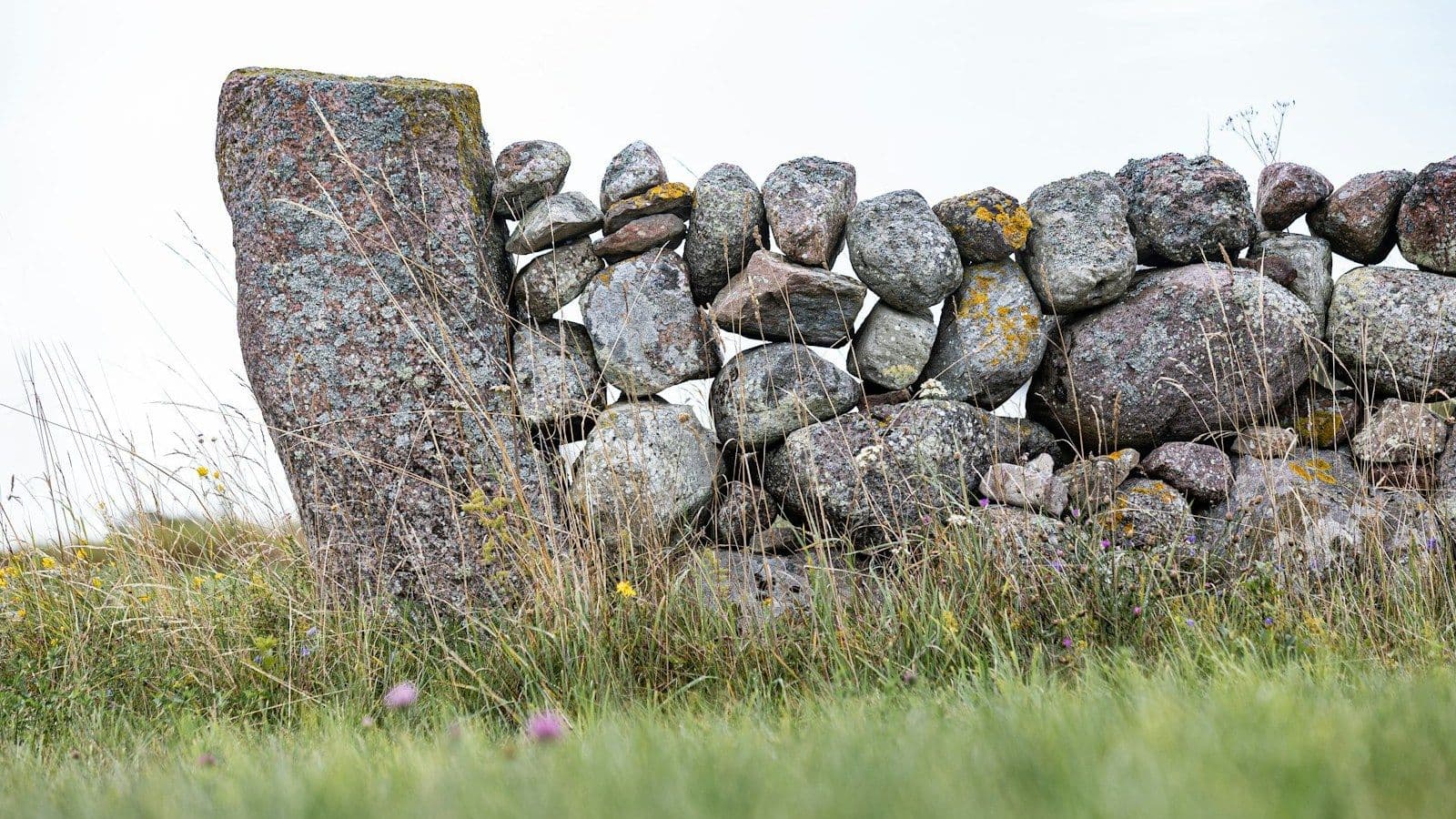
Two wallers in the town I've never named. Field boundaries, garden walls, the long runs along a lane, all of it dry stone laid without a spoonful of mortar, a trade where the whole of the skill is buried inside the thing and cannot be seen from the road. Both asked eight shillings a yard for a wall five feet high with a cope on top. A farmer on the high ground wanted two hundred yards of it, and had both men up to look at the ground on the same wet Tuesday.
The first waller brought his book. A ledger with a marbled cover, and in it eleven letters from customers, copied out fair. Warm letters. A first-rate craftsman. Most obliging and clean in his habits. The waller stood at the kitchen table while the farmer read them, turned the pages for him, and said which jobs they referred to. The farmer read all eleven, said they were very good, thanked him, and kept his own counsel.
The second waller walked the line of the lane, put his hand into the bank where the old wall had slipped, and gave the same price. Then he took out a card written in pencil. On it were three farms, each within six miles, with what he had built at each and the year. The oldest was eleven years old. He said the farmer should go and look at them, and go alone, and knock at the house and ask what he had been like to have about the place for three weeks.
The farmer went on the Sunday and got to two of the three. He walked an eleven-year-old wall in a field of ewes and found it true, the cope unbroken, the ends squared, and one stretch where frost had lifted two stones and somebody had put them back properly. At the second farm the woman came out to the gate and talked to him for a quarter of an hour. She said the man had swept the lane every evening before he went home, had asked before he shifted the sheep, and had charged for one day fewer than he worked, on account of rain. The work was let by the Wednesday, and by spring the second waller had three more walls on the strength of that card, two of them from men who never visited a farm on it.
Be fair to the first man. There was nothing dishonest in his book, every word of it was earned, and his walls stood as well as his rival's. He simply carried his proof with him, chose which of it to show, and stood over it while it was read.
The Lesson, Since You've Earned It
Proof you hold in your hand is read as advertising. Proof you hand over and then walk away from is read as fact. A new customer's difficulty is not that he lacks praise of you. Praise is easily got. It is that he cannot tell what praise was left out, and he knows that you can. Every good word you carry arrives with a silent question attached, which is what else is there and why am I not seeing it. A book of eleven letters cannot answer it, being itself the thing under suspicion.
An address answers it, and does so before the customer has gone anywhere. Tell a man to go by himself and ask whatever he likes, and you have given up all control of what he will hear, and he understands that you have. Nobody sends a stranger unaccompanied to a door he is afraid of. That is the whole mechanism, and why half the people you offer it to never go. This is asking for proof instead of praise, carried one step further, to where you are no longer the man holding the evidence.
There is a second gain, and most trades never notice it. What the farmer learned at that gate was not that the walls were sound. He learned about the swept lane, the sheep, the day not charged for. You would never have put those in a letter about yourself, partly because they sound like boasting and mostly because you have stopped seeing them. Your customers know things about your trade you have gone blind to, and the way to find them is to send somebody to ask. It is the doubt no sentence of yours can reach, and the cure is always something real, as I argued in my letter on the small piece of real work.
Two cautions. First, this is spent goodwill, so spend it carefully. Ask each customer for leave, say how often you expect to trouble them, and keep three or four names in rotation so that no one door takes all the knocking. A good customer turned into an unpaid clerk will stop answering, and you will have swapped somebody who pays you for somebody who is only thinking about it. Second, put recent work on the card, not your finest from a decade ago. Three addresses are three verdicts you cannot edit, and if you are reaching back eight years for a job you would be content to have inspected, that is not a difficulty with your marketing.
Three questions, and the last one is the one most trades have never answered:
- Whose door would you send a stranger to this week, unaccompanied and unbriefed? Write the names down. If the list is empty, or if you would want to ring ahead first, you have learned something more useful than advertising advice.
- What would that person tell him that you would never have said yourself? Go and find out by asking. Whatever it is belongs in your own words afterwards, being what your customers noticed and you did not.
- Does every claim you make carry a place, a year or a figure a stranger could test? A wall standing eleven winters is a claim only weather can make. A first-rate craftsman is one anybody can make, which is why it is worth nothing.
The Answer to the Riddle
Why was the plain card believed where the fair book was not?
Because the second waller gave up control of it. The book was his, chosen by him and read in front of him, and proved only that he was a man who could collect eleven kind letters. The card proved something he could not arrange, which is that there were three houses within six miles where a stranger might turn up unannounced and ask whatever he pleased, and he was content not to be there. What the farmer bought was not the wall. It was the willingness to be checked.
The verse:
One waller brought a book of praise, and held it while it was read,
One waller brought a card of farms, and let the man go alone.
The book said he was first-rate, in eleven careful hands,
The wall said nothing whatever, and stood eleven winters.
Until next time. Go and write down three customers a stranger could visit without you, and ask one of them today for leave to send him.
The Best Time for Marketing was Yesterday...
Ben B. Tilley
P.S. A card like that works on the man who carries it as well as on the man who reads it. Once you have told three households that strangers may call and look at what you did, you have agreed that any job of yours may be walked over by somebody you never met, years after the money was paid. It tends to show at the far end of the wall, the end nobody stands at while the work is going on.
Also in the archive: The Mason's Witnesses, The Glazier's Hammer and Let Them Try It.