
Dear friend,
The riddle first, as the tradition demands. Back in the old town, where two scythe makers ground the same steel, and only one of them spent a shilling on men who could not buy from him.
Two scythe makers in one town, the same steel and the same four and sixpence a blade.
Both sold through ironmongers in a dozen market towns, and neither sold to a mower direct.
Both set aside eleven pounds to become better known.
One spent his on the men who stocked the blades.
One spent his on the men who swung them, who could not buy from him at all.
By haymaking the shopkeepers chased one of them and haggled with the other. Which, and why?
Hold your answer. Story time.
The Story
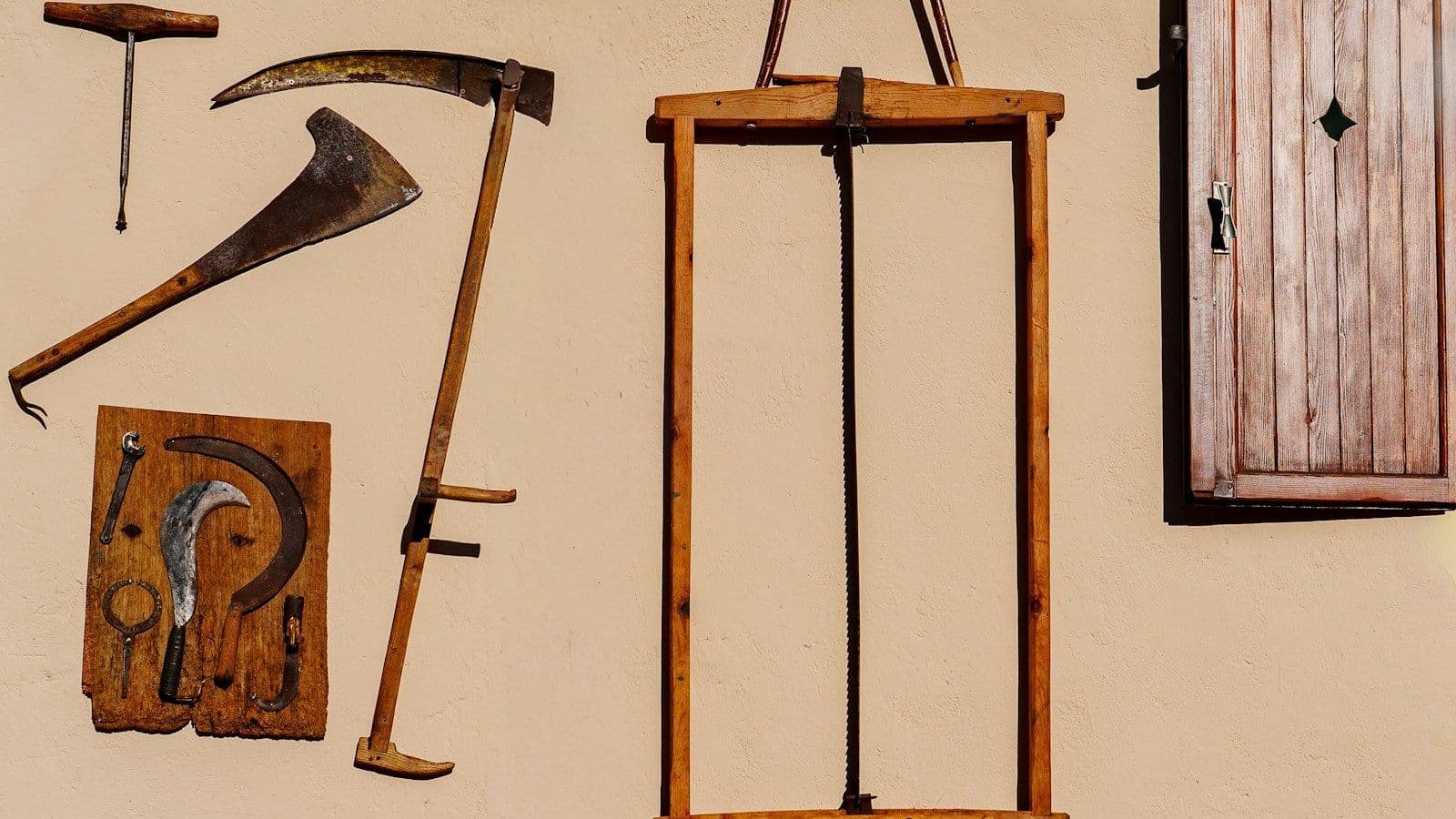
Two scythe makers, in a town I have never named. Both worked a long low shed by the water, a grindstone turning in a trough. Both bought the same crucible steel, and both sent out a blade that held its edge through a wet July. Neither had a shop. Their blades went in bundles to ironmongers in a dozen market towns, and hung on a rack from May. Neither was the better maker, and both had eleven pounds put by that spring to become better known.
The first maker spent his on the ironmongers. He went round the lot of them, stood dinners at the ordinary, had a case made with the blades on green baize, and took a penny in the shilling off any man who would have a dozen. It was courteous and perfectly sensible. Every shopkeeper in the county thought well of him by June.
The second maker spent his on mowers, who could not buy a blade off him if they tried.
He had a thousand cards printed, headed with the question a mower actually asks: how do you know a blade that will hold its edge. Then three tests, for a man standing in a shop. Strike it behind the heel and listen for the note that rings on after a poor one has died. Look along the back for the taper, which should carry thin to the point. Ask for a stone, take two strokes, and watch whether the edge comes up or rolls. At the foot, one line and no boast: blades of my making carry a wheatsheaf behind the heel.
He moved the stamp to earn that line. It had always gone on the tang, hidden by the ring once a handle was fitted. Now it went large on the flat, on the side a man looks at while whetting. The cards went out free, in bundles of fifty, to every ironmonger who would have them.
What followed took a summer and a half. Men walked into shops and asked for the wheatsheaf. An ironmonger who had none watched a man buy his stone and his rake elsewhere in the same ten minutes. By the second haymaking the wheatsheaf hung on nearly every rack in the county, at the full four and sixpence.
Be fair to the first maker, who was not the idle one. His reasoning was sound as far as it went: the ironmonger decides the rack, so spend the money there. But what he bought was goodwill, and goodwill is the one thing in a trade that anybody may buy from anybody. The next traveller with twopence in the shilling had it by Michaelmas, and the penny went on being given away for ever.
The Lesson, Since You've Earned It
When other people sell your work for you, your advertising belongs with their customers and not with them. They have earned your courtesy and your prompt delivery. They have not earned your advertising, because advertising creates a want, and nobody in the middle of a chain is paid to create a want for your name.
Consider what the man in the middle is for. His work is to meet a want that already exists in his town, at the least risk to himself. If a want exists for a wheatsheaf he will get one, rather than watch the rest of the errand leave his shop. If none exists he will sell whatever hangs on the rack, and would rather it were the line that pays him most. A preference you have bought can be outbid; a request made across his counter cannot, because it does not arrive as a preference. It arrives as an instruction.
There is the only answer to the sentence that costs small makers most: I have something just as good here. It is answered by a man who came in not for a scythe but for a wheatsheaf, because somebody had troubled to teach him the questions by which his trade should be judged.
You are not in the scythe trade, I know. But somebody else hands your work to whoever finally uses it. The shop that stocks what you make. The main contractor whose van stands in the drive while your work goes into the wall. In both, the man who comes to want your work and the man who orders it are different people, and nearly all your effort goes to the second. It is the error set out in a letter on standing beside the trade that makes your customers.
The case against is better than it looks. There are forty ironmongers and forty thousand mowers, and eleven pounds buys something real with forty men and a whisper with forty thousand. The answer is not to dispute that arithmetic but to refuse the spread: the asking need only be loud in a few shops, and a shopkeeper asked three times in one week for what he does not stock remembers it. Take four towns, not forty.
Two cautions. First, advertise to their customers, do not take their customers. A card telling a mower where to buy direct will empty every rack in the county by spring. It must send him into the shop and not past it, and arrive in bundles, as a gift. Second, this magnifies and does not remedy: a want created for an ordinary blade only means the ordinariness is found out faster.
Three questions, and the first wants doing before the week is out:
- Who holds your work last, and has your name ever reached them? Not the firm that pays you, but the person who finally uses the thing.
- What of yours travels the whole way? A stamp where the eye falls, a label, a card in the box, one sentence the man handing it over always says. If nothing travels, you are stocked and not known.
- What would somebody need to know to ask for you by name? How to tell good work of your kind from poor, and what your mark looks like. Both fit on a card.
The Answer to the Riddle
By haymaking the shopkeepers chased one of them and haggled with the other. Which, and why?
The second, because he had put a question into the mouths of the men who used the blades, and that question walked into the shops by itself all summer at no further cost. The first had bought the favour of forty men, which is for hire by the season. One had to persuade the rack every year. The other had it persuaded for him.
The verse:
The favour of the counter is rented, not owned,
And a penny in the shilling will move it.
But teach the man mowing to ask for your mark
And the shopkeeper writes to you for it.
Until next time. Go and write the one card that tells whoever finally uses your work how to judge it, and what your mark looks like.
The Best Time for Trying was Yesterday...
Ben B. Tilley
P.S. Make your mark askable. The wheatsheaf did half its work because a mower could ask for it across a noisy counter without feeling a fool. A long name, an odd spelling, or a mark that lives only on a screen fail the same test: a tired man will not say it aloud to a stranger. Settle on the words a customer would use to ask for you, then put them on the thing itself.
Also in the archive: The Man Who Sold the Horse, The Yellow Wheels and The Small Brass Plate.