
Dear friend,
The riddle first, as the tradition demands. Back in the old town, in the autumn the new foundry opened below the bridge, two men sold the same kitchen range at the same price, and only one of them sold any.
Two range makers, the same iron and the same fire,
The same price chalked on the same slate by the door.
One asked six pounds ten, and was told it was too dear.
One asked a pound, then half a crown each Monday after.
By Christmas one had fitted nine ranges and one had fitted two.
Which of the two was the dearer?
Hold your answer. Story time.
The Story
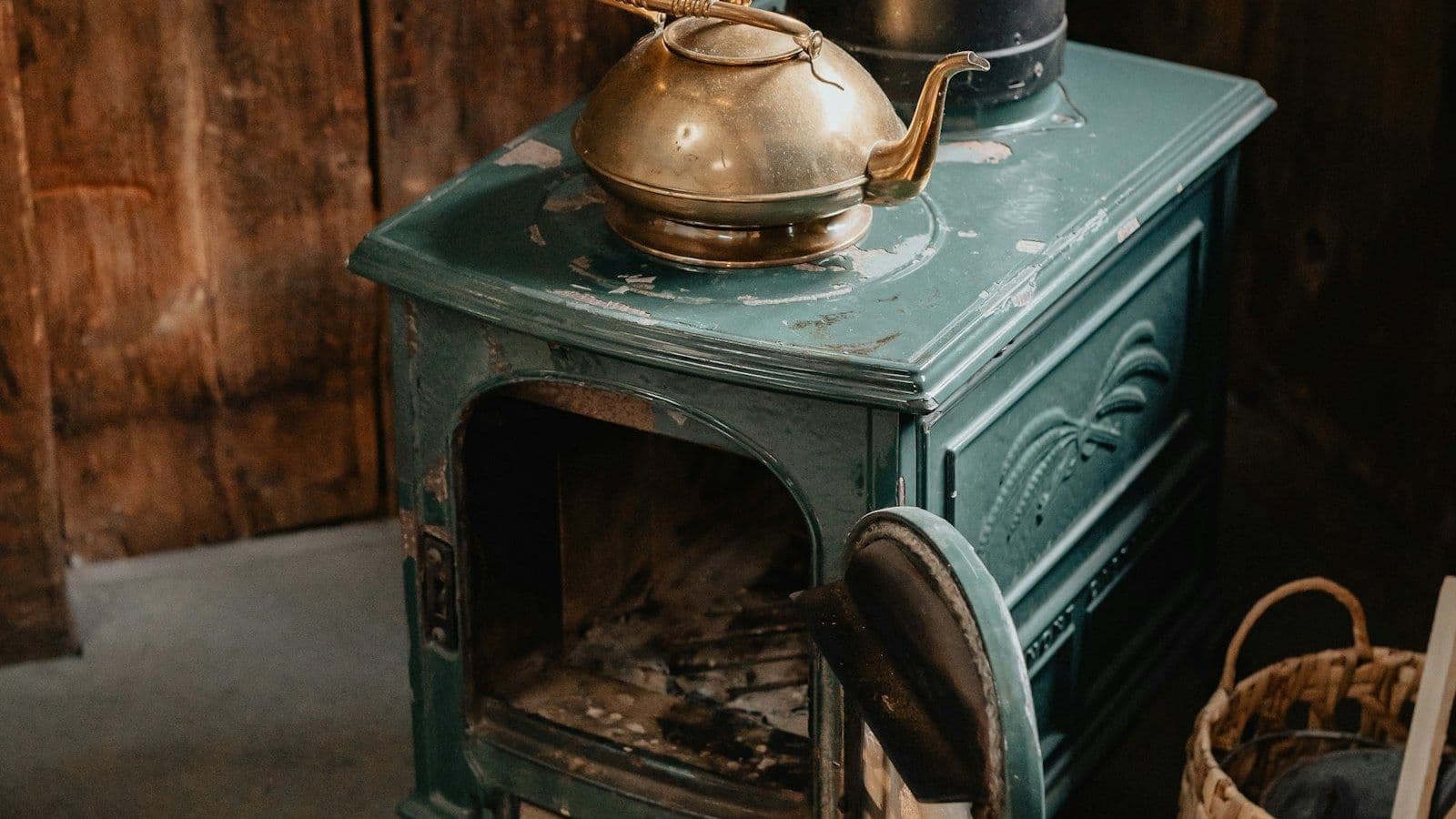
Two range makers in the town I've never named, both casting and fitting the same closed kitchen range. A firebox in the middle, an oven at the side that held its heat, a boiler behind for hot water. Six pounds ten shillings, fitted, flue swept, a morning's work for two men and a boy.
The first maker was proud of that price and right to be. He would stand in a kitchen with the oven door open and explain the thing properly: the coal saved against an open grate, the bread a woman could bake at home instead of buying it daily. People agreed with every word. They said it was a fine range and that they would think about it in the spring, and in the spring they said the same about the autumn. He took a pound off one wet February, sold nothing extra for it, and concluded that the street was poorer than it looked.
The second maker put a card in his window with two prices on it, one above the other. Six pounds ten, paid at the door. Or a pound down, half a crown every Monday for a twelvemonth, and the range goes in this week. That road came to seven pounds ten, a pound more, and he never hid it. Asked why, he said that waiting a year for his money was worth a pound to him, which most people thought fair.
A pound down was a month of putting by, or a brother, or something sold from the back room. And half a crown a Monday was met, in most of those kitchens, by the bread. A woman with no oven bought her bread baked, six days in seven, and the moment she had an oven she stopped. The range paid its own Monday out of the baker's takings, and she could watch it doing so, which is a different thing entirely from being told it would pay for itself in three winters.
Be fair to the first man: he did not want to be owed money by sixty kitchens, and being owed money is a trade of its own. The second maker took that trade on deliberately. The pound came before the cart left the yard and covered his iron, and his boy called on Monday evenings with a ruled book. A range in arrears was carried out again, which happened twice in four years and was known to, which is why it so rarely did.
By Christmas the second maker had fitted nine and the first had fitted two. The part the first never saw was the ledger. His rival knew on any Monday what was coming in on the next, and so had a floor under his year, while the other had only the weather and the hope of spring.
The Lesson, Since You've Earned It
The sum you ask for and the shape you ask for it in are two different questions, and a great many people who must say no to the first would say yes to the second. Almost nobody asks the second. We settle the number, defend it, and when it is refused assume it was wrong. Sometimes it was. Far more often it was perfectly acceptable, and the customer could not put his hand on all of it at once.
Two quite different complaints travel under the one coat, the sentence about being too dear. The first says your thing is not worth that to me. It is an argument about value, answered with evidence and with what the objection actually conceals. The second says I want it at that price and have not got it this month. That is not an argument at all but arithmetic in somebody's kitchen, and no persuading will alter it. The trade hears both as one sentence and reaches for a discount, which answers neither. It does not make an unconvinced man believe you, and it does not conjure six pounds into a purse that holds two.
Change the shape and you change what your price is compared with. A lump is set against every other lump the year may demand: the quarter's rent, the repair that cannot wait, the reserve that lets a man sleep, and against that company your invoice does badly. A weekly sum is set against the weekly benefit instead, and that is the comparison you win, because most things worth buying pay back in instalments. If your work saves a little every week, let it be bought a little every week.
A discount comes out of the margin, never comes back, and teaches the buyer that your first figure was optimistic. Terms cost you waiting and a measure of risk, and you keep the price whole. Better, you may charge openly for the accommodation, as the second maker did. Your century has more ways to do this than the old town had: the fee taken monthly, the year on a retainer, three payments instead of one, a first stage small enough that a nervous customer can begin.
Two cautions. First, you are becoming a lender, and a lender needs terms of his own. Take enough at the start to cover what you lay out, for the reasons the letter on the deposit gave. Keep something back until it is paid, whether the title, the last fitting, or the service that stops when the payments do. Apply one rule to everybody, especially the people you like. Offer terms only where a fifth of them failing would inconvenience you rather than finish you: terms belong to the confident, not the desperate. Second, keep the division honest. Dividing a lump out loud to make it sound smaller, while still demanding the lump, is a conjuring trick, and people know the difference.
Three questions, before you answer your next enquiry:
- Of those who told you it was too dear this year, how many said it while plainly wanting the thing? Those were not refusals but timing, and you filed them as price. Go back to three with the same figure arranged differently.
- What is the smallest first payment that leaves you whole on your outlay? Work out what a job costs you before any of it comes back, and take that at the start. Anything short is a loan you did not mean to write.
- If one in five stopped paying, what would happen to you? The answer sets your ceiling: how many you may carry, and how large each may be.
The Answer to the Riddle
Which of the two was the dearer?
The second, by a full pound, written in his own window. He was also the one the street could afford, which is why he fitted nine while the cheaper man fitted two. A price a customer can reach is cheaper than a price he cannot, whatever the totals say at the bottom.
The verse:
The iron was the same in either yard,
The fire laid the same, the price the same.
One named a sum no kitchen there could carry,
One named a Monday, and the kitchens came.
Until next time. Go and write your price twice on the same page, once as a sum and once as a Monday, and show both to the next person who asks.
The Best Time for Marketing was Yesterday...
Ben B. Tilley
P.S. Look down last year's enquiries that came to nothing and mark each with the word the customer used. Some said afford. Some said worth. A trade that keeps one column headed lost on price has thrown away the only distinction that mattered, and goes on treating a purse the size of a month as a doubt about the work.
Also in the archive: The Fourth Lever, The Clockmender's Price and A Fifth Off the First.