
Dear friend,
The riddle first, as the tradition demands. Back in the old town, in the spring after the gale that stripped half the roofs in the valley, two thatchers had more work than they could climb to, and only one still had it three years after.
Two thatchers, the same reed cut from the same beds,
The same hazel spars, the same ladders, the same close ridge.
Both were sent their work by neighbours who had had them out before.
One finished the roof, was thanked, and went home to his supper.
One walked back down the lane to the house that had sent him.
Which of the two was never short of work?
Hold your answer. Story time.
The Story
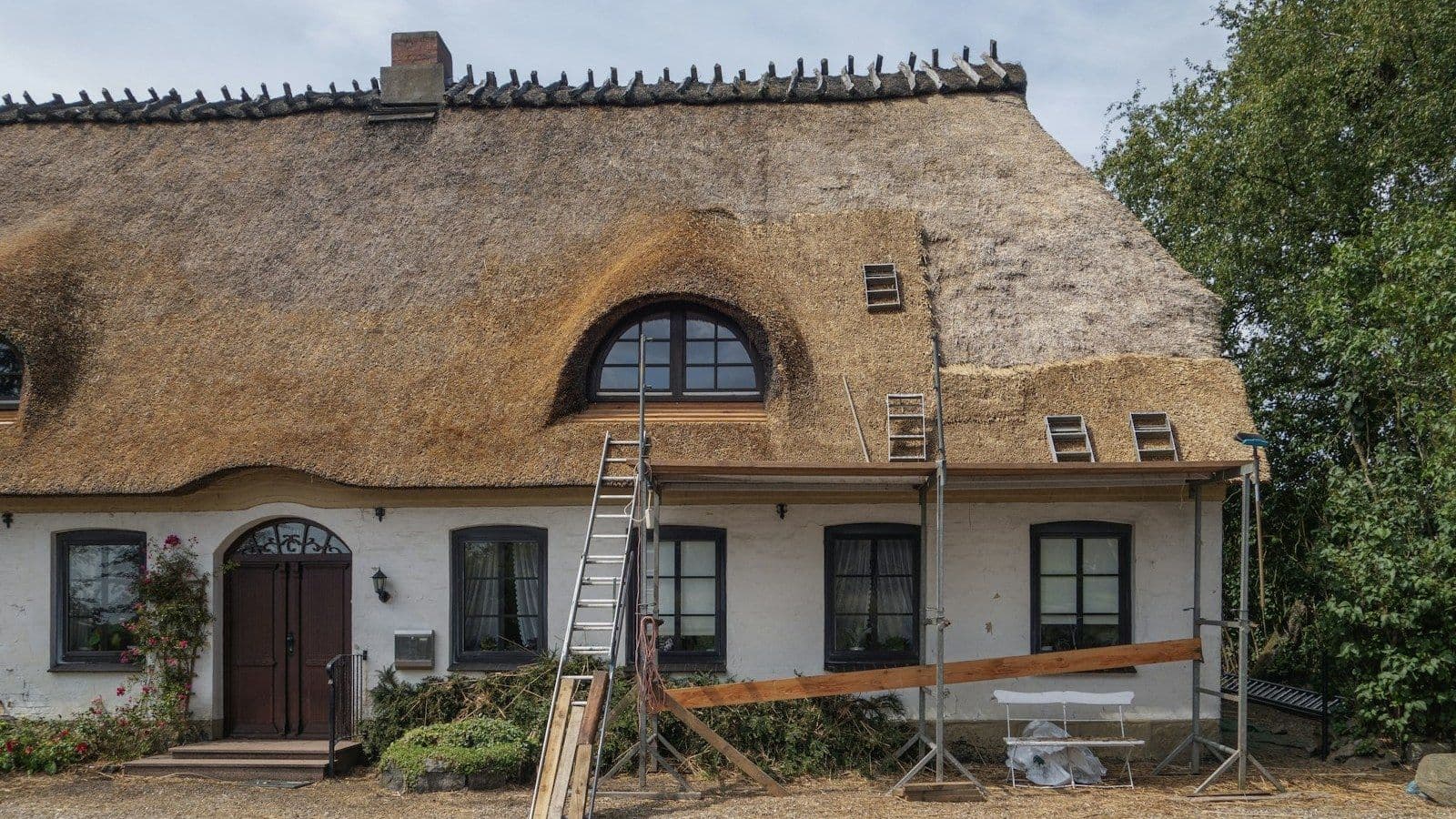
Two thatchers in the town I've never named, both working the water reed cut from the beds below the mill. Strip the old coat back, dress the new reed up the slope in courses, fix it with hazel spars twisted green so they hold, and finish with a ridge that tells anybody passing whose hands were on it. It stands thirty years and is never thought of again, which is the trouble with the trade. Nobody goes looking for a thatcher. He is sent for, because somebody at a gate said a name.
The first thatcher understood that perfectly well. When a new customer told him at the door that the family at the crossing had given his name, he said that was very good of them and went up the ladder. The job was done, the money paid, the ladders came down. He would have told you the work speaks for itself, and been half right.
What he never saw was the other end of it. The man who had given his name spent two months not knowing. He had said in front of his brother-in-law that this was the fellow to have. He did not know whether the reed had been short, whether the price had crept, whether the lad had been idle on the scaffold. He was standing surety without being told the amount. Asked again a year later, he did not say do not use him. He said there is a man who did mine, he was all right, which is a shrug with a name in it.
The second thatcher did two things his rival did not. At the start he said out loud whose word had brought him, and that he would not let that word down. At the end, before he went anywhere else, he walked back down the lane to the house that had sent him and reported. The north slope was worse than any of us thought and we took it back to the rafters. It is right for thirty years now. Your name got me in at that door and I am obliged to you. Then, while he was there, he would put his ladder against that man's own porch, re-ridge it in an afternoon and refuse to be paid. The porch took two hours. The goodwill lasted a decade.
Be fair to the first man. He thought going back would look like touting, and there is something in that. It was simply not what happened. The second went with news and thanks and no request of any kind, and the men he called on heard none, because there was none to hear. Within three years he was booked a season ahead by people he had never met, while the first, still a good workman, was putting a card in the post office window.
The Lesson, Since You've Earned It
A recommendation is made with somebody else's good name, and the man who made it is not repaid by the work going well, but by being told that it went well. We thank the customer, who paid us, and forget the one who sent him, who paid more and was never invoiced. From where that man stands, the work going well and nobody mentioning it is indistinguishable from the work going badly and nobody mentioning that either.
Consider what you asked of him. He put his own standing behind a firm he does not control, on a job he will not see, at a price he will not be told, and from that moment he is exposed and can do nothing about it. Most trades leave him there for ever. The unease never sharpens into a grievance. It settles, and the next time he is asked he is careful.
Go back and it closes. An anxious act becomes a proud one, and a proud one is repeated. You also hand him the particulars he did not have: the north slope was rotten, they took it to the rafters, it is good for thirty years. That carries where he was all right carries nothing. It is giving people something to say, aimed at the one man already proved willing to say it.
Keep the thanks in kind and keep it small. An afternoon of your own trade, charged at nothing, cannot be refused with embarrassment and is worth more than money. Be careful with tariffs and commissions: offer a man a pound a head and you have told him his good opinion is a thing you buy, and the useful sort will stop giving it rather than be paid. Pair the walk back with asking for one person by name and you have a supply rather than weather.
Two cautions. First, do not let the visit carry an ask. The moment gratitude has a request folded inside it, the man learns that being thanked by you is the start of being sold to, and he will stop answering the door. Go with news and thanks and nothing else; work comes later and separately. Second, you are carrying an account of another man's house and another man's money. Say the job went well and that you were glad of the introduction. Do not say what it cost, or what state the place was in, or anything that would make the new customer wish he had not let you in. You are showing discretion in the act of showing gratitude, and the man watching will notice both.
Three questions, before the week is out:
- Can you name the people who sent you your last ten customers? If you cannot, you are running on weather, and weather cannot be thanked or increased. Ask every enquiry how they came to you and write the answer down.
- Which of them have you been back to since? Not a thank-you at the time, which is manners, but a report afterwards, which is the thing itself. For most trades the honest answer is none, and that is a season's work in a list already written.
- What would you actually say? Have two sentences ready: something on the job he would find interesting, and the plain statement that his word brought it to you. A man who arrives with nothing to report has only come to be admired.
The Answer to the Riddle
Which of the two was never short of work?
The second, and not because his reed was better. Both were given the same gift. One acknowledged it to the man who gave it, and so was given it again, and again after that. The other thanked the roof he was standing on, and left the man who put him up there wondering for thirty years whether he had done the right thing.
The verse:
The reed was the same, and the ridge, and the spar,
Both ladders stood at the same pitch and height.
One thanked the roof that he was standing on,
One walked back down the lane before the light.
Until next time. Go and find out who sent you your most recent customer, and call on him this week with the news of how it went, and ask him for nothing.
The Best Time for Marketing was Yesterday...
Ben B. Tilley
P.S. The silence runs the other way too. When you send work on to somebody else you have handed over your good name as the neighbour handed over his, and are owed the same report. Notice who brings it. A tradesman who cannot be troubled to tell you how the job went has said something useful about the care he will take with the next name you give him.
Also in the archive: Your Sister on the Lane, The Box of Offcuts and Ten Days After.