
Dear friend,
The riddle first, as the tradition demands. Back in the old town, where two turners kept their lathes in sheds off the same yard, and only one of them wrote anything down.
Two turners in one town, the same lathe and the same beech.
Both cut chair legs for the same chairmaker and broom handles by the gross.
Both were asked, most weeks, for things they did not make.
One answered civilly and thought no more about it. One kept a ruled book by the door.
By the next spring one of them had added work that paid him through the winter.
Which, and what did the book tell him that his memory never could?
Hold your answer. Story time.
The Story
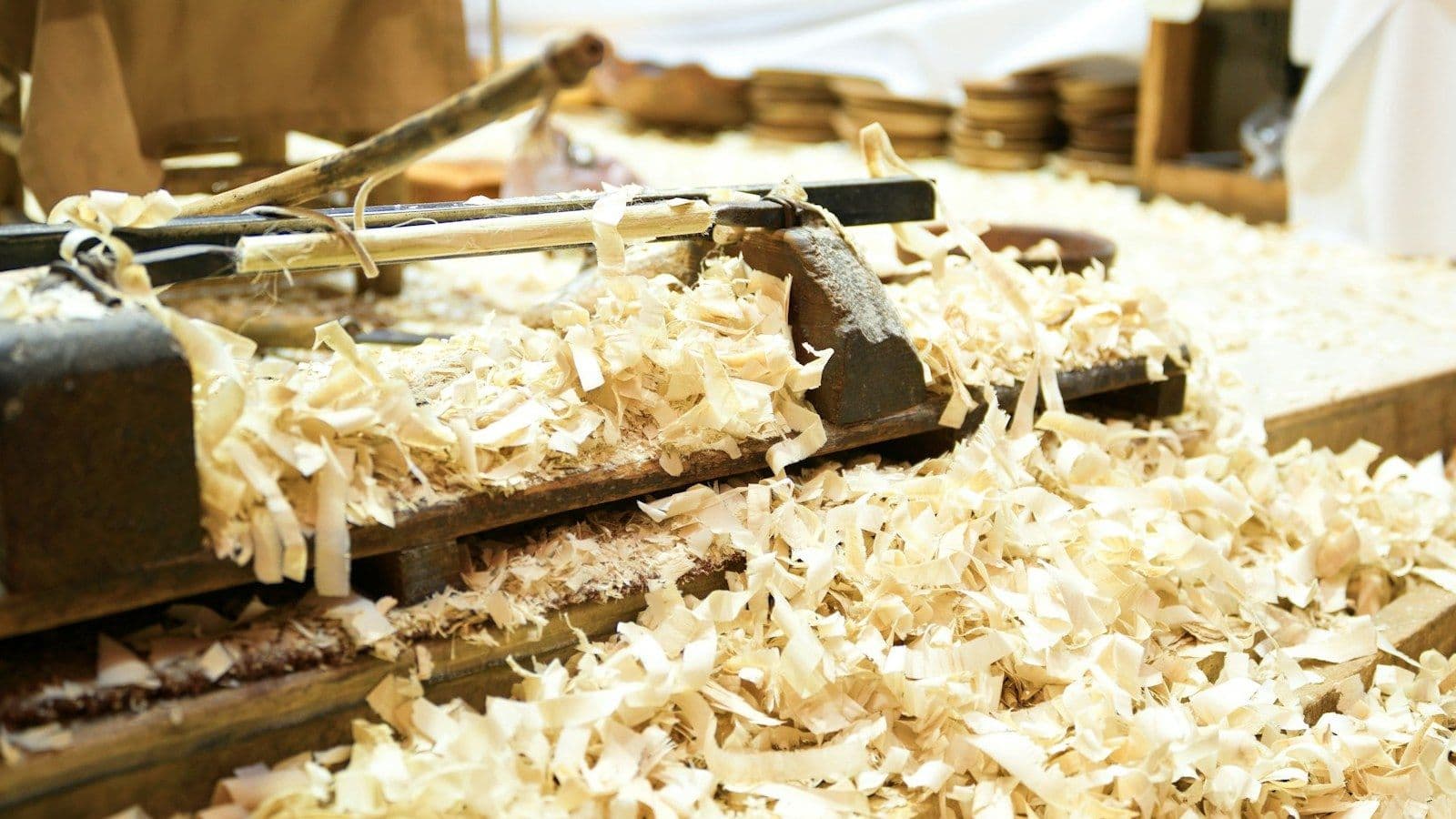
Two turners, in a town I have never named. Both worked a shed off the same yard, a lad on the great wheel and the shavings coming off in long pale ribbons. Both had the chairmaker in the next street for their steady trade, with broom handles for the brush shop and bobbins for the mill. Both had the same board over the door: turnery, chair legs, broom handles, bobbins. Neither was the better turner.
And all through the year people came to those two doors asking for other things. A woman wanting a pole for her curtains with the rings to match, in the same wood as the pair in her front room. A man with a broken stair baluster in a sack. A rolling pin. A mangle roller. Wheel spokes, twice, from a carter who had not thought the matter through.
The first turner answered every one of them properly. He looked at the thing, said it was not his line, and often enough told them where to try. It took him three seconds, it was the truth, and when the person had gone off down the street there was nothing in that shed to show they had ever stood in it. His order book recorded what he had sold. Of what had been wanted he kept nothing.
The second turner did one thing differently, and it cost him a penny book. He kept it on the shelf by the door, ruled into four columns: the day, the name if he got it, what was wanted in the asker's own words, and what he had said. He taught the lad to write in it when he was out, which took a fortnight of reminding. One rule, and he was strict about it. Write what they said, not what you would call it. So the book says a pole for my curtains with the rings, and not mouldings, which mattered later.
By the following spring the book held forty-one lines, and he read them at his kitchen table in one evening. Fourteen were curtain poles. He could turn a curtain pole. He had the beech and the lathe, and the sizes were an afternoon's work to settle. In eleven years he had never told one living soul he could do it, and his board had been telling the town, in three honest words, to go elsewhere.
Nine were a single baluster to match a broken one, the sort every turner refused, setting up for one being a poor way to spend a morning. He saw that the householder was buying the matching rather than the wood, took the broken piece, sent a new one back by the carrier, and asked a figure that suited the trouble. Nine of those a year is nobody's fortune, but they came in January, when nothing else did.
Eleven were wheelwright's work, hubs and spokes, which he would never do. He sent them up the hill with a word, and the wheelwright, having noticed, began sending down the handle work he disliked. The last seven were singles, and the book proved them singles, which is a service too. Left to his memory he would have remembered the woman who wanted a spinning wheel put right and spoke of it warmly for twenty minutes, and remembered her as a market.
Be fair to the first man. He was neither deaf nor idle. He answered every asking accurately, in three seconds, and three seconds is long enough to destroy a piece of information. He kept no book of them because nobody thinks of a thing he has refused as a thing that happened.
The Lesson, Since You've Earned It
Every request you cannot fill is market research delivered to your door at the customer's expense, and unless somebody writes it down it is gone by the end of the day. You will pay good money for worse. A man asking at your counter is not offering an opinion about what might be nice. He is in your parish, he has the want now, he has the money about him, and before he set out he decided you were the sort of firm that might do it. No survey manufactures a sample of that quality, and it is handed over for nothing by people with no idea they are doing it.
Notice that each line in such a book answers two questions rather than one. The first is whether the want exists, which is what you were listening for. The second is what the town believes you to be, which is the more useful answer and the one you did not ask for. Fourteen women did not come to that shed by accident. They came because a turnery is plainly the right place for a wooden pole, and they left because the man had published three words and they were the wrong three. So when your book fills with askings for work you already do, you have found a gap in what you have said rather than in your trade, and that is mended with a sentence rather than a tool. It is the complaint of the customer who never learns half of what you sell, put to you already in the matter of the plain sheet left on the last chair.
Then there is the reason the book must exist at all. Memory keeps what was vivid, recent and loud. A ledger keeps what was frequent. Your whole decision lies in the difference between fourteen and one, and that difference is what no man holds in his head across a year of ordinary weeks. Keep the asker's own words, too, since the language in that column is the language the next forty people will use, and therefore the language your notices ought to be written in, which is the business of the words the customer actually uses.
The same information arrives today in greater quantity and is destroyed by better machinery. Somebody types a thing into the search box on your website, is shown an empty page, and the machine that showed it knows the words and will tell you if you ask. A message beginning I don't suppose you do gets a courteous no and no file. None of it is lost because it is hard to keep, but because keeping it is nobody's job.
Two cautions. A count is not an instruction. Nine askings a year may not pay for the tooling, the stock and the learning, and the book's work is to say which two or three things are worth a trial, not to make you a man who makes everything for everybody. And write the lines at the moment, by whoever receives them. A book kept by the owner alone records the owner's week, and the askings that reach the lad at the counter are the ones you would never otherwise hear.
Three questions, and the first can be answered before you put the lamp out:
- What were you asked for this week that you do not sell? Answer from memory and you will manage two, perhaps three. That shortness is not a quiet week. It is the argument for the book.
- Which of the askings in your book do you already do? Start there, every time. That finding costs a line on your board and a word to the people who send you work, and it pays this month rather than next.
- Who hears the askings you never hear, and where are they to write them? Name the person, name the book, and put it where the asking happens. A record kept where it suits you is a record of nothing.
The Answer to the Riddle
One of them kept a ruled book by the door and wrote in it every asking, and by the next spring had added work that paid him through the winter. Which, and what did the book tell him that his memory never could?
The second turner kept the book, and what it told him was the count. Fourteen askings for curtain poles he could have turned any week of those eleven years, nine for a matched baluster nobody else would stoop to, eleven for a trade that was not his, and seven that were nothing. His memory held none of it. It held the warm woman with the spinning wheel.
The verse:
They ask you for the thing you lack
And go off down the street.
They have told you what the town will buy.
Write it down before they turn the corner.
Until next time. Go and rule a book into four columns, the day, the name, what they asked for in their own words, and what you said, and put it where the asking happens.
The Best Time for Trying was Yesterday...
Ben B. Tilley
P.S. After a year, read the book a second time for what is not in it. A line of work you keep tools, timber and shelf room for, and which nobody has asked you about in twelve months, is not a quiet line. It is a line the town has stopped thinking of you for. The askings tell you what to add, the silences what to drop, and the silences are the harder to see, nothing arriving to announce them.
Also in the archive: Under the Wrong Heading, Ninety Facts and The Boy Minding the Shop.