
Dear friend,
The riddle first, as the tradition demands. Back in the old town, where two tilers kept their ladders against the same yard wall, and one was always a quarter of an hour later coming down.
Two tilers in one town, the same ladders and the same pantiles.
Both were sent for over the same wet patch in a back bedroom.
Both set the slipped tiles right, and neither could be faulted.
One was down and away by eleven. One stayed up and put his hands on things.
By the year's end the second had taken three times the money out of that street.
Which, and what was he touching that the other never thought to price?
Hold your answer. Story time.
The Story
Two tilers, in a town I have never named. The same two ladders, the same lad to foot them, both known as men who did not leave a job half done. A November gale took two pantiles off the north slope of a house in the long street, and by the Friday there was a wet brown patch on the bedroom ceiling. That house sent for the first tiler. A month later the house opposite sent for the second.
The first man was up at eight, had the tiles bedded and the course made good by ten, loaded his barrow and took his seven and six in the hall. He was in the next parish before noon. He had done what he was sent for and done it well, and the householder told two neighbours he was clean, quick and honest, all of it true.
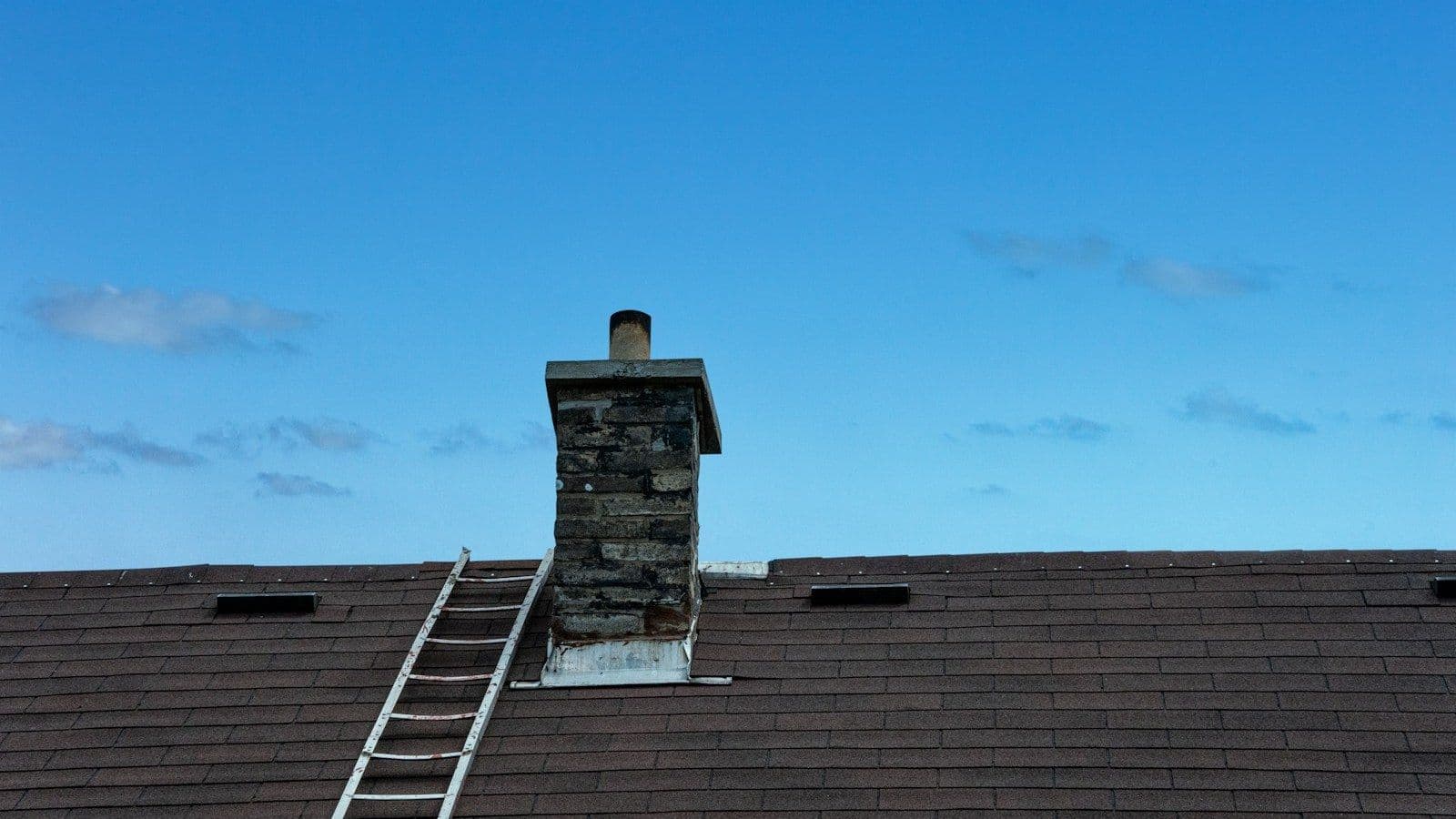
The second man did the identical repair on the identical slope, and nobody could have told the two apart with a glass. Then, instead of coming down, he stayed up a quarter of an hour and put his hands on the rest of it. The ridge, where the mortar had gone to grey sand and three tiles rocked under his palm. The lead apron at the foot of the chimney stack, curled back at one corner like the page of a book. The back gutter, half full of moss, a bracket gone so the fall ran the wrong way.
He came down and did not stand in the hall reciting the faults of the house. He asked for a sheet of paper and wrote two lines, and against each line two figures rather than one. The ridge re-bedded this morning, with the ladders where they stand: twelve shillings. The same ridge in March, on its own: twelve shillings and the morning again, and the morning is the greater half. The bracket today, one and six. The bracket in March, one and six and a man and a boy and a cart.
Then he said the thing that actually sold the work, which was not a recommendation at all. The mortar was not urgent. It would see this winter and might see three. He raised it only because it would never be as cheap again, she not being obliged at that minute to pay for getting him onto the roof. She took the ridge and the bracket and left the lead, and he told her she was right to leave it. Eighteen months later, when the lead did lift in earnest, she did not get three estimates.
Be fair to the first man, who is the more sympathetic of the two. He had been raised in a trade that contains a certain kind of operator, the one who comes to mend a sash and finds eleven pounds of rot, and he had decided early not to be him. So he kept a rule, and a decent one. Answer what you were sent for, do it properly, charge fairly, go. That rule carried him up the same twenty streets some hundreds of times, and each time he was paid for the climbing exactly once.
The Lesson, Since You've Earned It
The work is only half of what your customer is buying. The other half is getting you to the work, and while you are standing on the roof that half is bought and paid for, and will not be cheap again. Take any small job apart and the two pieces are plain. There is the doing, which is the ridge or the bracket or the hour at the bench. And there is the arriving: the loading, the travel, the ladders, the lad, and on her side the morning taken off work and the furniture moved. The arriving is often the larger of the two, and nobody has ever shown it to her as a separate thing.
So the second piece of work, bought while you are there, is genuinely cheaper than the same work in March. Not as a kindness, and not as a discount you will quietly resent, but as arithmetic, and without costing you a penny of margin, since you are not travelling and setting up twice either. There are few moments in trade when both sides gain by the same stroke.
Which is why the offer, properly made, does not feel like being sold to. A man who says that while he is here he may as well do the ridge, and names one figure, is asking a favour and will be heard as one, a short step from the unpaid obligings of the twelve small favours. A man who writes twelve shillings today and twelve shillings plus the morning in March has asked for nothing. He has handed over the reason and let her do the sum, which is the courtesy the counter does in the matter of the spade and the hedge. And the deadline is honest. You did not invent it to hurry her. It stands against the wall of her house, and it goes back on the cart at noon.
The same arithmetic governs this century with the trade taken out of it. The engineer is on the premises, the account is set up, the information moved across, the staff in the room for the afternoon's teaching. All of that is the climbing, and the firm that packs up at four without naming what is cheap this week has paid for the ladders and sold nobody the ridge.
That it is rarely done is not ignorance. The moment to do it is the moment you least wish to, the job finished and the road calling, and nobody has felt a rush of selling spirit while coiling a rope. So it must be a step in the job with a name and a place in the order of things. The look round, before the tools go in the bag.
Two cautions. Say it only where it is true, since the saving is the whole of your argument. If the work would cost her the same in March, then while I am here is a sales phrase and people hear one coming. And hold it to two things. A man who comes down a ladder with seven faults has stopped being the tiler who mended the leak and become a stranger with bad news about the house. Say which of the rest can wait, and be willing to tell her to leave something alone. The one you tell her to leave is often the one that buys you the next job.
Three questions, and the first wants a figure rather than an opinion:
- What does it cost you to arrive? Loading, travel, access, setting up, the first half hour, the apology to the customer you are now late for. Work it out once and write it inside the van door. That figure is what your customer pays twice every time you drive away having offered nothing.
- What two pieces of work could you do while already there, and do you know their prices without going home? If you must sit down and work one out, you will not offer it. You will say you will put something in the post, and you know whether that letter gets written.
- At what minute does the looking happen, and who does it? Put it before the tools are packed, not after the money is handed over. And if it is the lad on the premises rather than you, he is the one who needs the two figures on a card.
The Answer to the Riddle
One was down and away by eleven, one stayed up and put his hands on things. Which, and what was he touching that the other never thought to price?
The second tiler, and what he touched was the rocking ridge, the curled lead and the fallen bracket. None of it was urgent and he said so. What he priced was not the mortar. It was the morning, which she had bought once already and would otherwise buy all over again.
The verse:
A ladder up is money spent
By him as much as you.
Before you take it off the wall
Ask what else it could do.
Until next time. Go and write on a card the two pieces of work you could do while already at a customer's premises, each with two figures, today's price and the price of coming back for it.
The Best Time for Trying was Yesterday...
Ben B. Tilley
P.S. The sum runs backwards too. If the arriving is the greater half, a job whose doing is twenty minutes and whose arriving is a morning should not be sold as it stands. Refuse it, price it at the morning, or hold it until you are in that street for another reason. Most trades carry a handful of these, taken on out of good nature, each quietly costing a half day.
Also in the archive: The Second Rung, The Oil After the Lamp and The Farrier's Fortieth Shoe.