
Dear friend,
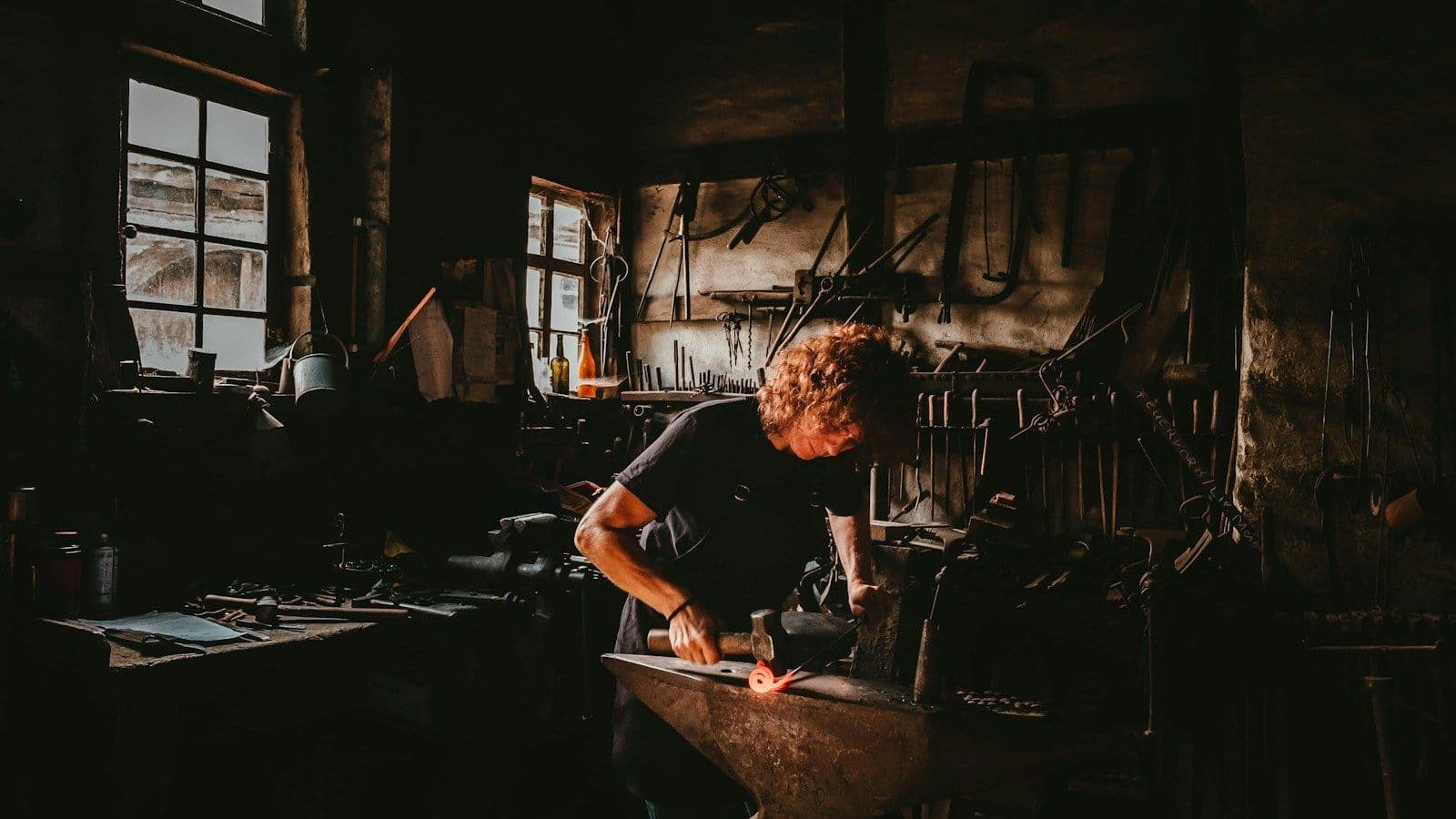
The riddle first, as the tradition demands. Back in the old town there were two smiths who would go up a ladder in a wind to fix copper to a gable, a trade with a small and nervous public.
Two smiths in the town I have never named, two forges and the same drawn copper.
Both fitted conductors to barns, mills and spires, and both asked four pounds ten.
Both had six hundred bills printed by the same printer in the same week of March.
One spent his on twenty years at the work, best copper and a free estimate, and took three orders that year.
The other gave four lines to himself and all the rest to the weather, and took nineteen.
Same trade, same copper, same printer. How?
Hold your answer. Story time.
The Story
Two smiths, then, a mile apart on the same road. Each had learned the fitting of lightning conductors from the same master, each bought drawn copper from the same merchant in the city, and each asked four pounds ten for a barn and rather more for a steeple, the difference being the fright of the climb.
The first man had his bill set in good clear type. Lightning conductors fitted. Twenty years at the work. Best drawn copper, nothing cheaper used. Churches, mills and farms. Estimates free. Every word of it true, and he could have been put on oath for any line. Six hundred went out across the parishes, and in the twelvemonth that followed he fitted three.
He was not a fool and his was not a bad bill. For a man who had already decided he wanted a conductor and was looking about for somebody to fit it, it did everything a bill can do. The trouble was the count of such men. In eleven parishes there were perhaps four in a year. He got two, and lost the others to a city firm with a cheaper price and a longer name.
The second man spent a wet fortnight in February at a table with eleven years of the county paper and a pencil, and came out of it with a list. Nineteen fires in those eleven years that the paper had put down to lightning, with the place and the month against each. A tithe barn at harvest with the whole crop in it. A mill with the dust in the air. Two farmhouses, a malthouse, a row of ricks, and a church tower struck twice in six years before anybody thought to do anything about it.
The top half of his bill was that list, place by place and month by month, so that a man reading it could put his finger on three he remembered and one he had driven past. Below it came three sentences on what a conductor does. The charge in the cloud wants the shortest road to wet earth, and left alone it takes that road through your roof timbers, your hay and your horses. A copper rod offers it an easier one, down the wall and into a plate buried in damp ground. It goes where the metal goes, and does not care whose barn it is.
Then, at the foot, four lines about himself. Twenty years at the work, best drawn copper, four pounds ten for a barn, and the days he was at the forge.
Nineteen orders. Not one of the nineteen had been looking for a lightning conductor on the morning the bill came, and several had never said the word aloud in their lives. They had a tall building with the year's income stacked inside it, and nobody had put the two halves of that thought together for them in print.
The Lesson, Since You've Earned It
A customer must come to believe three things before he can buy from you, that the trouble is real and is his, that something can be done about it at all, and that you are the man to do it, and nearly every word you have ever written argues only the third. Look at your own material tonight and you will find it. The years, the materials, the guarantee, the free estimate, the photographs of finished work. All of it the third thing, addressed to a man who has already granted the first two and is merely choosing a supplier.
Begin with who that leaves out. The people who might one day pay you stand in three heaps, and only the smallest is looking for you. There are those seeking a man in your trade, few, and fought over by everybody in it, which is why that fight is settled so often on price. There are those who know the trouble but do not believe anything can be done at a price worth paying. And there is the great third heap who have never named it at all. The first smith advertised to the first heap, the second to the third, which is where the room is.
Then why the order cannot be shuffled. A reason to prefer you is worth nothing to a man who sees no reason to act at all, and the fault compounds, because a man not yet persuaded of the trouble reads your credentials as boasting. The nineteen fires were not a sales argument. They turned a barn a man had walked past for thirty years into a barn with a risk standing over it, and a stranger who cannot judge your work knows his own trouble at a glance. Only then has the rod anywhere to land, and only after both does four pounds ten mean anything, since a price is the price of a result and the result must exist in his head first.
Note too that the second man did not ask to be believed about the weather. He gave places and months a reader could check against his own memory, and the checking was the persuasion. When you ask a man to accept what he cannot verify, show him the thing being done rather than described.
Two cautions. Teaching the man who needs no teaching will cost you him. Somebody who walks in asking your price has granted all three beliefs already, and a lecture on the first only makes him wonder what you are selling. The notice that goes cold to six hundred households and the page a man reaches by looking you up are not the same document. And the first belief must be argued honestly or not at all. Dress a small risk as a certainty and you take an order this month and earn the name of a frightener by Christmas, and that name travels faster than any handbill.
Three questions, for the week in front of you:
- Which of the three does my material argue? Mark every sentence of your handbill, or of the first screen of your website, with a one, a two or a three. If the ones and twos together come to fewer than half, you are writing only to people who have already done your hardest work for you.
- What would make the trouble visible to a man who has not noticed it? A figure, a list, a record, something he can look at in his own yard this evening. It must be checkable without your help, or it is only you talking.
- Where did my last ten customers stand when they first heard of me? If all ten arrived already looking for what you sell, you are not winning a market, you are taking turns at one, and your share will be settled by whoever is cheapest.
The Answer to the Riddle
Same trade, same copper, same printer, and one took three orders where the other took nineteen. How?
Because the first wrote to the handful who had already decided they wanted a conductor, and there were four of them in eleven parishes. The second wrote to men who had a tall barn and no thought about it, showed them the trouble first, the remedy second and himself last, and made customers where the other could only compete for them.
The verse:
You tell them you are twenty years at work and never cheap,
And every word is true, and every word is late.
They do not know the roof above the hay is theirs to keep,
So show the trouble first, and they will ask your price, and wait.
Until next time. Go and take your handbill, or the first screen of your website, and mark every sentence on it with a one, a two or a three.
The Best Time for Trying was Yesterday...
Ben B. Tilley
P.S. The three beliefs are also the shortest way to read a hesitation. When a man says he will think about it, he doubts one of the three, and seldom the one you assume. Most trades answer by arguing the third louder, more years, more photographs, a little off the price, when he was never in doubt about the third at all. He was in doubt about whether the roof over his hay was worth four pounds ten.
Also in the archive: Four Sides at the Horse Fair, The Seedsman's Sentence and The Words She Typed.