
Dear friend,
The riddle first, as the tradition demands. I am told that in your century a man may be spoken to sixty times between breakfast and supper by machines that have no idea what he is holding.
Two cabinet makers in your own century, two units on the same estate.
Both worked alone at fitted furniture, and both kept the telephone in the apron pocket.
One took every program as he found it, and was called to sixty times a day.
The other spent twenty minutes one Sunday settling which three might speak at all.
In one week the first spoiled a board of walnut and let a kitchen go cold for five hours.
Same trade, same tools, same telephone. How?
Hold your answer. Story time.
The Story
Two cabinet makers, then, in a town much like the one I have never named, though set in your century rather than mine. Each rented a unit on the same estate, each worked alone at fitted cupboards and wardrobes for houses within an hour's drive, and each carried in the bib of his apron a telephone that could reach him anywhere.
The first took every program exactly as it arrived. He was not careless. He was the more anxious of the two, and his anxiety was respectable: that somewhere a customer was waiting on him and he would not know. So he left everything switched on, and the machines obliged. The timber merchant announced reductions. A video program wished him to see what another joiner had posted. The parcel firm had thoughts about a delivery. Between eight and six he was called to perhaps sixty times, and twice in a week one of those calls was a person with money.
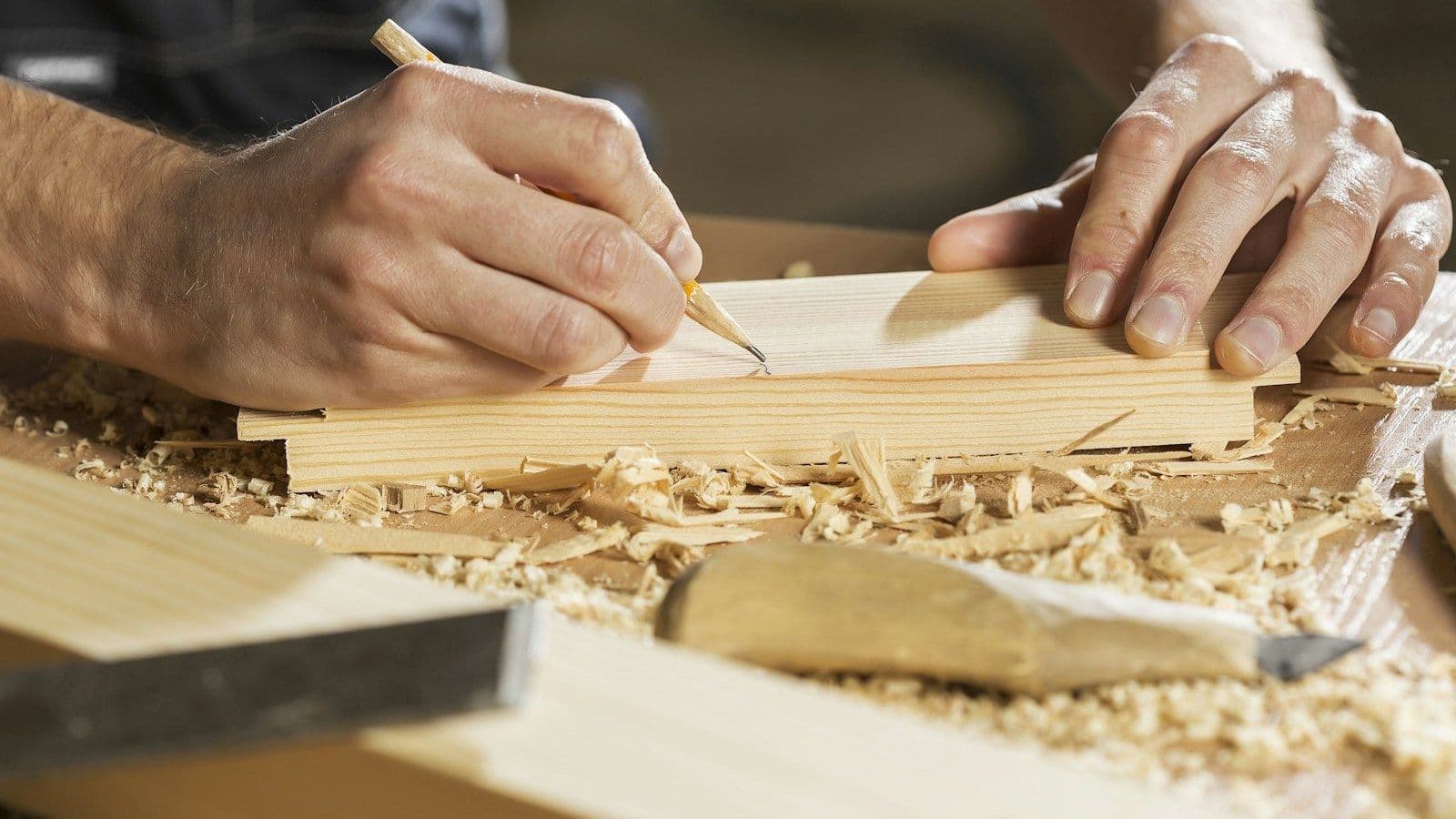
On the Tuesday he was marking out five drawer fronts, to come out of one board of walnut so that the figure would run across the chest unbroken. He had the square on the board and the pencil on the line. The telephone went off against his chest. Softwood, reduced, for a man who had not bought softwood in a year. He looked, put it back, picked up the square, and cut the second front on a line he had already used. The next board came from a different tree, and he knew what that would look like under polish, and so did the customer.
That same week, at eleven on the Thursday, a woman filled in the form on his website about a kitchen, four thousand pounds of work. It arrived in his pocket in the same voice as everything else, ninth in the queue that morning, and he had long since learned to glance without reading. He answered at four, and she had arranged to see somebody else.
The second man had done one thing differently, on a Sunday evening in January, in twenty minutes, with a cup of tea going cold. He went through every program he owned and asked each the same question. Can this cost me money before tonight? Three could. The form on his website, because an enquiry is perishable. Messages from the customer whose job was in his workshop that week, because a kitchen going in on Wednesday cannot wait until Thursday. The bank, because money failing to arrive is a fact he wants on the day. The rest he silenced outright and gave two appointments instead, half past eight and half past four, at the bench with the kettle on.
He was no less informed by Friday. He read the same things, sitting down, in an order he chose. And when a form came in at eleven on a Thursday his telephone made the one sound it was still permitted to make, and he put the pencil down, because that sound meant something.
The Lesson, Since You've Earned It
Every tool you own was given leave to interrupt you whenever it pleases, you granted that leave by saying nothing, and your first economy this week is to take it back and hand it out again to the two or three things that can cost you money before tonight. Nobody sold you that arrangement. You inherited it, program by program, each one arriving with its voice already switched on.
Begin with what the thing is. A letter waits on the mat. A caller at the door can be judged through the glass before you open it. A notification is neither. It is a claim on the next half minute of your attention, made in complete ignorance of what you are doing, by a party equally content to reach you mid cut, mid sentence or mid quotation. The merchant offering softwood is not malicious. He has no view at all about your walnut, and his settings were written by people who wanted you in their program often, which is their proper aim and no business of yours. The same hand chose what you see when you open the thing, and the figures a machine puts in front of you become the figures you work to.
Then the cost, which is not the half minute. Attention is not a tap, to be shut and opened at the same pressure. Anybody interrupted while counting knows the price. You come back a few feet behind where you left off, and on work of any delicacy you come back to the wrong line. The first man did not lose thirty seconds to the timber merchant. He lost a board of walnut and the figure across a chest.
Now the part that matters most, and it is the opposite of what all this has sounded like. The machines deliver everything in one tone of voice. A reduction on softwood, a stranger's video and a woman with four thousand pounds arrive with the same buzz and the same mark on the glass. When all news is urgent none is, and a man quite sensibly stops attending. The sixty calls train the habit of not looking properly, and that habit is paid for on the morning when looking mattered. Silence is therefore not the enemy of speed but where speed comes from, and the four minutes in which you answer an enquiry are bought with the fifty-seven interruptions you refused. You cannot run to every sound. You can run to one.
Two cautions. Silencing is not ignoring, and if you appoint no hours you have merely stopped answering people. Name two a day and keep them as you would keep an appointment with a customer, because that is what they are. And the permission you keep must be honoured or it rots. Let enquiries through, then leave them an hour because you are up a ladder, and you have taught yourself to disregard the one sound you kept. Nor should you, for a quiet shop, silence the people you work with and live with. They are not notifications, and a man unreachable by his own household has moved the trouble rather than mended it.
Three questions, for the week in front of you:
- Which of these can cost me money before tonight? Go through them one at a time and say it aloud for each. Whatever cannot earns no sound, no mark and no light.
- When do I visit the rest? Name two hours and write them where you work. A thing silenced without an appointed hour gets read at midnight in bed, the worst hour of the lot.
- What was I doing when the last one arrived? If the answer is the most valuable work of your week, you have the price of leaving the settings as they came.
The Answer to the Riddle
Same trade, same tools, same telephone, and in one week the first spoiled a board of walnut and let a kitchen go cold for five hours. How?
Because he had given every program in his pocket an equal right to his attention, and the only way to bear sixty calls a day is to stop reading them. A man who has stopped reading is slow on the one that matters and absent from the work he is paid for. The other had given that right to three, was interrupted perhaps four times a day, and every interruption was worth the cut it cost him.
The verse:
You gave them all a key to you the day you brought them in,
And now they call at any hour, the trifling with the true.
Take back the keys this very night and hand out only three,
And when the workshop sounds again, the sound will ask for you.
Until next time. Go and open the settings of every program on your telephone, and silence every one that cannot cost you money before tonight.
The Best Time for Trying was Yesterday...
Ben B. Tilley
P.S. Turn the rule around before you put this down. Every message you send a customer is an interruption you have been granted, landing in a pocket in the middle of something you know nothing about. Most trades spend it on a cheerful nothing once a month and wonder why it is read less each time. Spend it only on news the reader would be sorry to have missed, and you keep a key your rivals are quietly being asked to hand back.
Also in the archive: Still Setting It Up at Christmas, The Trough Across the Yard and The Shutter at Seven.