
Dear friend,
The riddle first, as the tradition demands. Back in the old town there were two clockmakers who both wanted the forty houses on the north side, and every one of those houses had a man already.
Two clockmakers in the town I have never named, the same oil, the same files, the same forty houses.
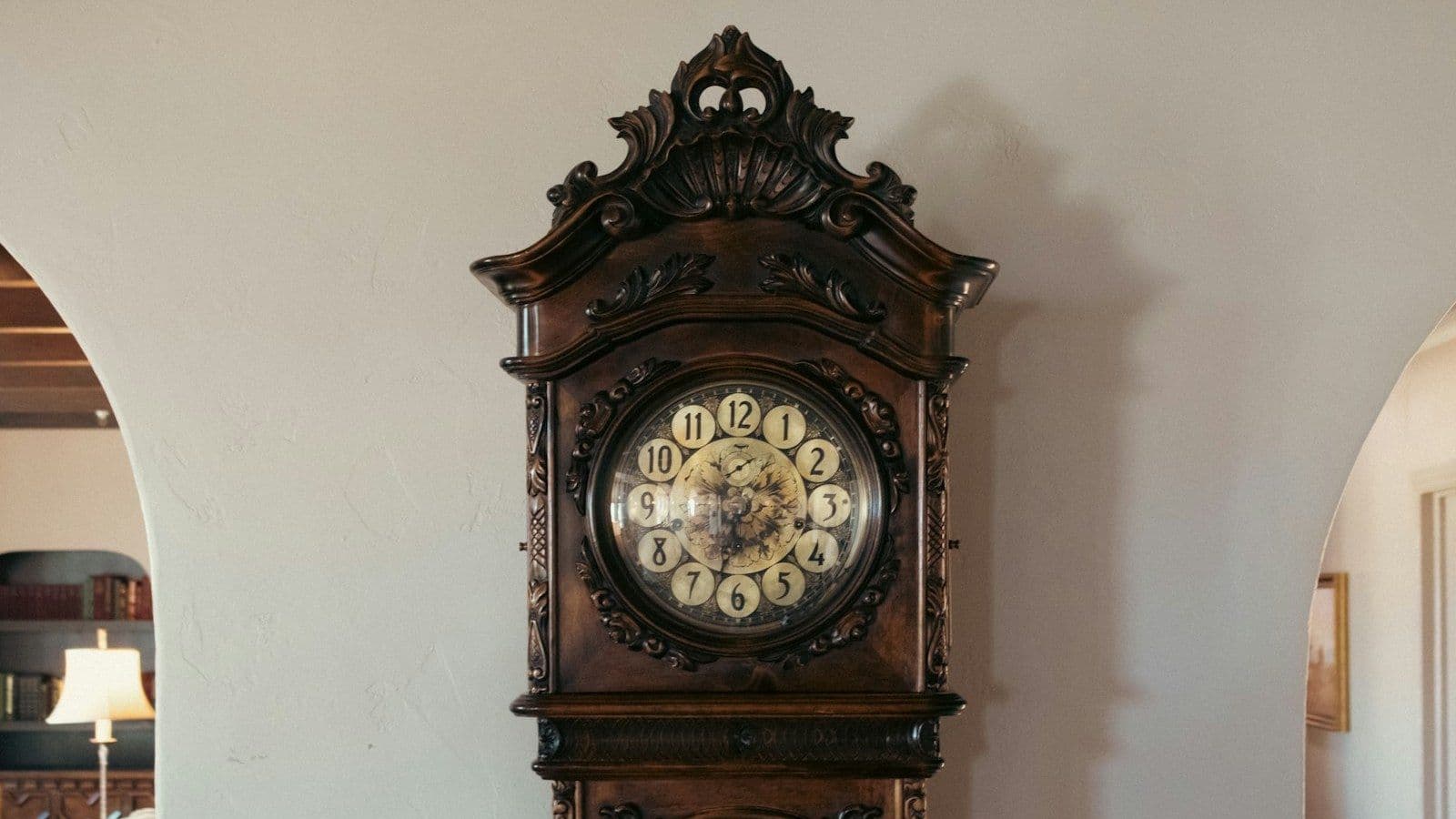
Each house had a long-case clock in the hall and a man who had cleaned it for years.
Both wrote to all forty that October, both better workmen than the man in possession.
One asked for the clock in the hall.
One asked about the dial in the back kitchen, stopped at twenty past four for years.
Same letters, same houses, same October. Why had one of them the hall clocks inside three years?
Hold your answer. Story time.
The Story
A long-case clock wants a man every few years. The movement comes out, the plates are washed, fresh oil laid on the pallets. The householder cannot judge any of that and never will. The rest of his opinion is about the man: the October call, the hat on the chair, the talk about the frost, eleven years of it. The custom is not a contract. It is a habit with a person inside it.
The first clockmaker went at those houses the sensible way, and his letter was a good one. It said what a cleaning consists of, why oil goes gummy in a hall with a fire in it, what he charged, and when he would call. Four houses answered. Three were suited already, and the fourth was a widow whose clockmaker had died in the August. He concluded that the north side was satisfied, and he was wrong.
The second clockmaker had carried his father's bag round those halls as a boy, and had noticed a thing that never gets into anybody's letter. In nearly every house stood a second clock that no man had charge of. A thirty-hour dial in the back kitchen, stopped. A bracket clock wrong since a move. A stable clock with a hand bent by a boy with a broom. The hall clock belonged to the man in possession. The others belonged to nobody.
So he asked for those, in one short sheet whose whole body was a question: is there a clock in your house that is not going. Nine shillings to put it right, and if it was not worth nine shillings he would say so. Eleven houses out of forty said yes, a figure the first man could not have bought. The work was small and unlovely, and he did each piece as he would a hall clock.
What followed was not his doing. The kitchen is the warmest and busiest room in a house, and a kitchen dial strikes the hours in front of a cook, two maids and the children under the table, every day for three years, without losing two minutes in a month. The hall clock, cleaned each October, lost four minutes a week and was never spoken of.
By the third year nine of those eleven hall clocks were his. One old man retired and said who should have his round. In the rest the householder remarked, when October came about, that the young fellow had better look at the long-case while he was there. Nobody was ever told he had been replaced, which was the whole of the arrangement.
The Lesson, Since You've Earned It
A customer who already has somebody is not weighing your work against that man's work, but against the conversation he would have to have, and it is the conversation, not your price, that you must find a way round. Everything in your letter is a reason to prefer you. None of it touches the cost of changing, which the customer pays alone, in a currency no estimate shows.
Consider what you are asking of him. He must say an awkward sentence out loud to a man he knows by name and will meet on market day, about a choice he made himself and has defended for eleven years. Set beside that, a saving of a fifth is no help. It leaves him looking like a man who turned off an old servant to save one and sixpence.
Which is why the way in must be work that nobody has charge of. In almost every customer you want there is such a piece: the thing the man in possession does not do, or does not do in time, or has never been asked for. The second site, the odd month, the week he is full. Taking it requires no decision about anybody, so the only question is whether the work is worth having done, which your customer settles on his own in a minute.
Then the comparison stops being an argument you are making and becomes something that happens in his house without you. Do not go back and point at it, and never say a word against the man already there. To fault him is to fault your customer's own judgment, and he will defend that judgment with your reputation. Speak only of what you can see for yourself, as in any approach nobody asked you to make, and let the ticking do the arguing, since a reason he works out himself carries him where no sentence of yours could. Two conditions on the small piece: it must be real work at your full standard and charged for, a favour teaching him only that you are cheap, and it must sit where somebody looks at it.
Two cautions. The first is that the small piece can become your permanent station. You can spend four years on kitchen dials, well paid and never considered for the hall, because you are waiting to be invited. Settle now, in writing, what would earn you the larger work and in which month you will ask for it. The second is that not every arrangement is worth going at. Where the man in possession is a brother-in-law, no standard of work will shift him, and your first small job is cheap information about which sort of house you are in.
Three questions, for the week in front of you:
- Which three customers I want already have somebody, and what is the work in each place that nobody has charge of? Not what I would rather be doing for them.
- Can my offer be accepted without anybody being told anything? If saying yes requires a conversation with the man already there, I have found the same request at a lower price, not a way in.
- What must be true before I ask for the whole of it, and on what date do I ask? Write the condition and the date together, since the date is the half that gets forgotten.
The Answer to the Riddle
Same letters, same houses, same October. Why had one of them the hall clocks inside three years?
Because he asked for work that cost nobody his place. The first asked forty householders to turn off a man they knew, and four answered. The second asked about a clock nobody had charge of, and left three years of his own work ticking in eleven warm kitchens. When the hall clocks came to him they came by the householder's own suggestion, with nothing awkward said to anybody, which is the only way custom ever moves.
The verse:
The hall clock had a keeper and the keeper had his day,
The dial in the back kitchen had been stopped for twenty years,
One asked a man to turn away a man he knew by name,
One asked about the clock that nobody had kept for years.
Until next time. Go and write to one customer who already has somebody, and ask for the piece of work in their place that nobody has charge of.
The Best Time for Trying was Yesterday...
Ben B. Tilley
P.S. Read it against your own book. Every customer you hold has work in it that nobody has charge of, and somewhere a careful rival is writing about exactly that. Ask each of yours, once a year, what is going badly that nobody has been asked to look at.
Also in the archive: Four Inches of Earth, The Man at the Turnpike Gate and The Nineteen Yards.