
Dear friend,
The riddle first, as the tradition demands. Back in the old town, in the years when every wet field in the parish was being piped, two drainers worked the same heavy clay.
Two drainers, the same clay pipes and the same fall to the ditch,
The same sodden field in the same wet parish, the same twelve pounds asked and paid.
Both laid a sound job, and both left a field that carried beasts by June.
One went home when the trench was filled. One drove a peg first, and wrote the field down.
Three years on, the farmer had four more fields to do and a brother-in-law with nine.
Which man was sent for?
Hold your answer. Story time.
The Story
Two drainers in the town I've never named, and their work, in the old chorus, was equally good. The same clay pipes off the same kiln, twelve pounds for a field from either of them.
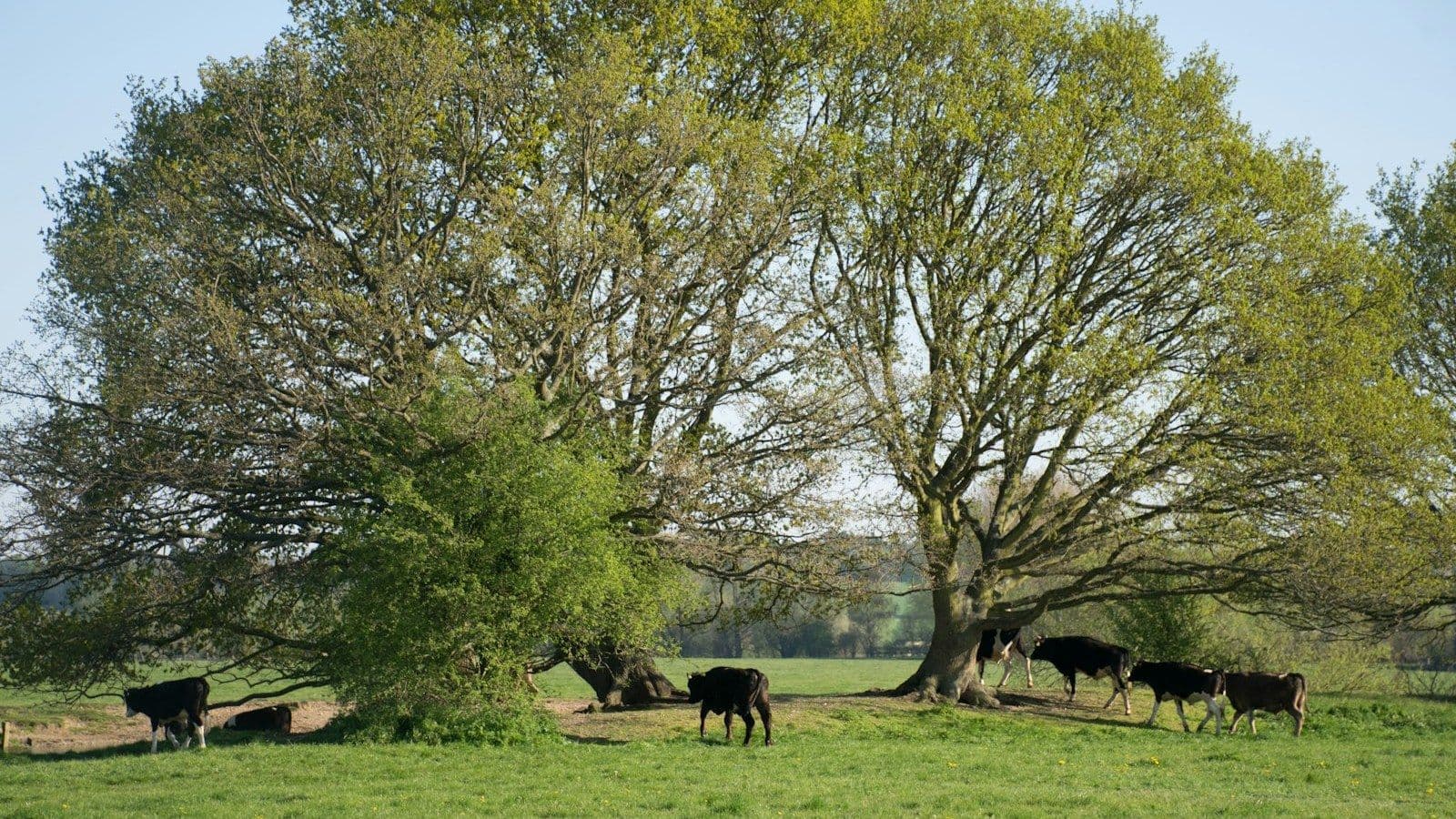
The first drainer took the Twelve Acre on the hill farm in the February. It grew rushes in the bottom corner and sedge along the headland, and a man walking it in March went in over his boot and came out with the sucking noise that farmers know. He cut his trenches to the fall, laid his pipes, and by June the farmer had cattle on ground that had carried none before August in living memory. Then he went on to the next parish.
Two summers later he wrote offering to do the Long Meadow on the same terms. The farmer read the letter at his own gate, looking out over the Twelve Acre, which was by then simply a field. Beasts on it, hay off it in July, nothing remarkable about it. Twelve pounds for pipes in a ditch, he thought, and put the letter behind the clock, and the Long Meadow stayed wet another nine years.
The second drainer had a field of the same character in the next valley, and before a spade went into it he did a thing that cost him a morning. He walked the whole of it with the farmer on a raw February day and wrote in a pocket book what he was told. That the cart could not get on before the ninth of June last year. That the bottom two acres had never been cut for hay. That the field carried eleven beasts for nine weeks and the rest of the summer they were elsewhere, eating bought feed. Then he cut a peg of ash and drove it in at the wettest place, in ground that took his arm to the elbow.
He laid his pipes, which was the part he was paid for, and went away. The following February he came back and walked the field again with the same book open, and they put the new lines under the old. Cart on the twenty-second of March. Hay off the whole of it. Nineteen beasts, and no feed bought after May. The peg stood in dry ground with the grass grown up round the foot of it, and the farmer pulled it out and kept it in the barn, where he showed it to people.
That spring the second drainer did that farm's other two fields, and the year after, nine for a brother-in-law who had been told something he could repeat. Not that the man was a good drainer, which is what anybody says of anybody. That the field carried nineteen beasts instead of eleven, and was fit in March.
Be fair to the first man. He did not skimp and he did not overcharge, and his pipes are running yet. His mistake was to suppose the trouble would be remembered.
The Lesson, Since You've Earned It
The trouble you take away is forgotten faster than the money you charged for taking it away. A man remembers a wet field only while he has one. Relief does not linger in the mind as a grievance does. It has no smell and no ache, it wakes nobody at four in the morning, and within two seasons the thing you mended has become the ordinary condition of the world.
Meanwhile the price sits in his accounts, dated and exact, and does not fade at all. Every month you keep the trouble away, the trouble grows fainter and the figure stays sharp, so the ratio he feels gets worse the longer you serve him well. There is the whole mystery of why a supplier of nine years' standing is asked to justify himself while a stranger quoting less is not. The stranger is measured against a memory of trouble. You are measured against nothing, having removed it.
There is a second loss in it. What cannot be remembered cannot be repeated. A customer who cannot name what changed praises you in the only words left him, which are that you are very good, and very good moves nobody and has never been checked by anybody. A figure a man can test travels; an adjective stays in the room it was spoken in.
The remedy is the peg and the pocket book, and the whole of it lies in the timing. Write the trouble down before you begin, because afterwards it cannot be recovered. Ask a farmer in August what his field was like in March and he will say it was wet, which is worth nothing. Ask him in March and you get a date, a number of beasts and a corner never cut. Take his measures in his own words, and give the page back a year later with the new line under the old. A customer judges you on the part he can see, and the best of what you do is buried a foot under the turf.
Two cautions. First, record his measures and not yours. The hours worked and the pipes laid are an account of your exertion, and he did not hire your exertion. He hired a field he could get a cart onto. A report of activity is read as a bill with sentences round it. Second, do not claim the weather. A dry spring will flatter you, and a page that takes credit for it becomes advertising, and is discounted as such. Where a thing did not improve, write that down too. An honest record with one disappointment in it is believed entire.
Three questions, before your next job begins:
- What was the trouble, in his words, on the day he first spoke to you? Write the sentence as he said it, with the date beside it. You will not be able to write it later, and neither will he.
- What can be counted on the first morning? One or two figures he already keeps for his own purposes. If you must teach him what the number means, it is your number and it will not do.
- When will you put the two lines side by side? Name the date now and enter it in your book. The day it would occur to you naturally is the day he asks what he is paying for, and by then you are answering a doubt rather than preventing it.
The Answer to the Riddle
Which man was sent for?
The second, for two more fields on that farm and nine at the brother-in-law's. Both men drained a wet field properly and left it dry. One left nothing behind but the dryness, which the farmer soon took for the natural state of his land. The other left two lines on a page and a peg in the barn, and was paid for years afterwards for a morning's writing.
The verse:
The same pipes to the same fall, the same rushes cut down,
The same field carrying beasts where it carried but weed.
One left it dry and the drying was forgotten,
One wrote down the wet, and was sent for indeed.
Until next time. Go and write down, before your next job starts, the one sentence your customer used for the trouble, with the date against it.
The Best Time for Marketing was Yesterday...
Ben B. Tilley
P.S. When a customer of long standing asks, pleasantly enough, what exactly it is he pays you for, do not take it as ingratitude and do not argue. He is not telling you the work has slipped. He is telling you that memory has done to your value what it does to everybody's, and that you have no page to put in front of him. Build the page before the question and the question does not arrive.
Also in the archive: The Mason's Witnesses, How Many Pints Were Drawn and And What Comes Back For It.