
Dear friend,
The riddle first, as the tradition demands. Back in the old town, a householder wanting a lock hung took the workman on trust, and trust is built out of whatever she can measure.
Two whitesmiths in one town, the same bar iron and the same eightpence a lock.
One filed his wards so true that the lock would shoot sweetly in its twentieth year.
The other was sound at the bench and no better than sound.
But he came at the hour he named, and carried his filings away in his pocket.
Inside the year, one of them had the custom of half the parish.
Which man's work was the town actually able to judge?
Hold your answer. Story time.
The Story
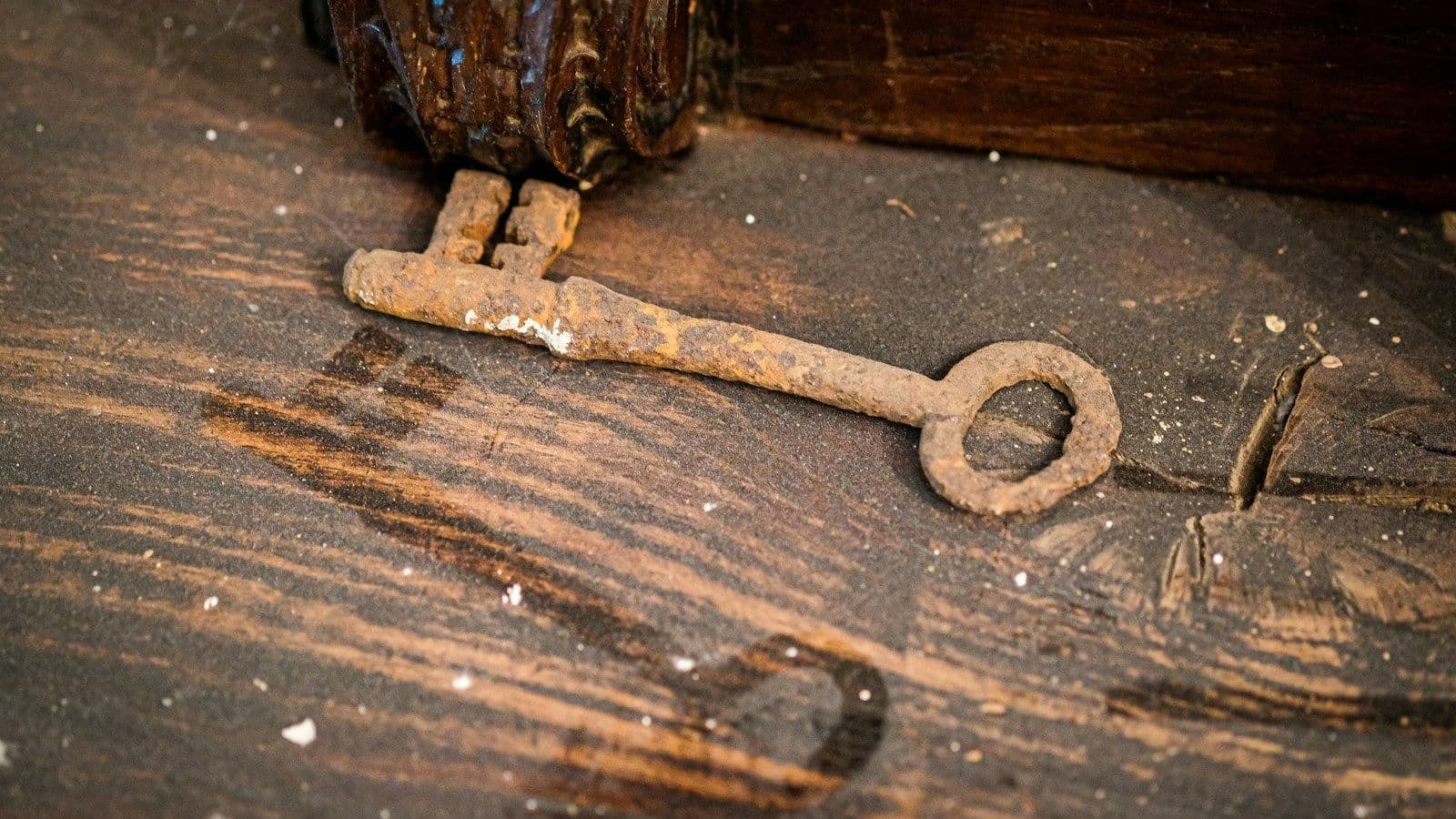
Two whitesmiths in the town I have never named, one at the top of the market place and one in the yard behind the Bell. A whitesmith, if the word has gone out of use where you are, works iron cold and bright where the blacksmith works it hot and black. He hangs your locks, bolts and window fastenings. The same bar iron came to both men off the same cart, at eightpence a lock.
The first was the better workman, and the trade knew it. His care went into the parts of a lock that are shut up inside it. He filed the wards true instead of near enough, so the key turned without being wrestled, and tempered his springs at the proper heat, a judgement of colour no man can teach in a sentence. A spring so treated pushes a bolt for forty years where one scorched or left soft tires in five. Half an hour more on every lock, and nobody saw it.
The second did honest work and would not have claimed more. His springs were bought in and his wards filed to the ordinary standard of the trade, which worked and went on working. What he did instead was this. He named an hour and came at it. He laid a square of baize under the door, so the hall floor took no scratch from a dropped chisel. He swept his filings into a paper and pocketed it, filings being what a householder finds in her stockinged foot three weeks later. Then he put the key in her hand, said a drop of oil at Michaelmas and nothing else wanted for years, and told her which two of her other fastenings wanted no money spent.
Guess the year that followed. The second man was sent for by one street, then the street behind it, then the better houses up the hill, while the first was spoken of, when he was spoken of at all, as a good workman who left a mess. Be fair about the rest, though. His locks were better, and nothing the town believed altered that. Forty years on his were still shooting sweetly while the second man's wanted mending, and the mending went to the second man's son, that being the shop the parish sent for.
The Lesson, Since You've Earned It
Your customer cannot judge your work. He can only judge the distance between your work and what your trade has taught him to expect, and your trade taught him that without consulting you. He has no scale in his head marked from bad to good in your line. He has the last three men who did this job for him, and that memory is the only ruler he owns. Lay yourself against it and he reads the difference off at once. Rise above the top of it and he reads nothing.
That is why the half hour on the wards earned nothing. The householder had no instrument for a ward. No whitesmith had ever shown her one, and no lock of hers had failed in a way she could date. The swept hall landed squarely in the marked part of her ruler, because she had three whitesmiths' worth of filings in her memory and an hour of waiting about on a Tuesday. She was not rewarding a courtesy but reading off a scale she had built out of other men.
This is the harder half of what I have said before about the end of a job being the part your customer watches. Being seen is not enough on its own. He can watch you file a ward and take nothing from it, but he cannot watch you arrive on time without comparing you to every man who did not.
So your extra effort pays best not where you are strongest but where your trade is weakest, because that is where the ruler has the most marks on it. Every trade is quietly notorious for three or four things. Not coming when it said. Not putting a figure in writing. Leaving the place worse than it was found. Those are the spots where the customer has a measure and knows how to use it, and a breach of custom there is worth more than your best hour at the bench.
There is a second move, the only way to be paid for work above the top of the ruler. You can put marks on the ruler yourself, beforehand. Tell the householder that a lock has wards and a spring in it, that yours are filed and tempered rather than bought in, and that this is the half hour she is not charged for. Tell her what the week will hold, as the joiner did who wrote out what each day would be like. Say nothing and she uses the scale your competitors made.
Two cautions. Do not earn praise by lowering what people expect before they engage you, since the expectation that judges your work also decides whether you are sent for. Beat the custom of your trade, not your own promise. And the ruler moves. Anything you do twice becomes the new mark, and the third time you leave it out its absence is a fault, so choose breaches of custom you can keep up for twenty years.
Three questions, for the week in front of you:
- What is my trade notorious for? Ask the next three customers what they dreaded when they sent for a man in your line, in their words rather than yours. Those answers are the marks on your ruler.
- Which of my extra care can he measure? Name, for each thing you do better than the trade, the instrument he would use to detect it. Where there is none, you are working for your own standard and the life of the job, which are honourable reasons, but not building your name.
- What has he been told to expect from me? If nobody has told him what the week holds, or what is inside the work he cannot see, he is using the last man in your trade as his ruler. Put one of the two in writing before the next job starts.
The Answer to the Riddle
Which man's work was the town actually able to judge? The second man's, and only his. It could judge an hour kept and a hall left clean, having years of broken hours and gritty halls to set against them. It could not judge a filed ward, having nothing to compare one with, and a thing with no comparison is invisible however good it is. The first was the better whitesmith, the second the better measured.
The verse:
He cannot weigh the ward you filed,
he never saw it made;
he weighs you by the other men
who left his hall unswept.
Until next time. Go and ask one customer what he dreaded when he sent for a man in your trade, and write his answer down in his words.
The Best Time for Trying was Yesterday...
Ben B. Tilley
P.S. This is why a man who comes into a trade from outside often looks remarkable while doing nothing clever. He has not learnt the trade's habits, so he keeps hours and writes things down in a way that reads, to a customer holding the usual ruler, as extraordinary care. That advantage lasts as long as his ignorance. Learn your trade's bad habits deliberately, then, and decline them on purpose.
Also in the archive: Never the Finest Black, Sheets in Four Hallways and The Morning the Fire Was Out.