
Dear friend,
The riddle first, as ever. Your century today, and the difficulty is not that people do not want what you sell. It is that they cannot face starting.
Two firms both offer one good thing,
Same need, same price, same benefit.
One asks them for a form of pages,
One asks a question, then one more.
The want was equal on both sides.
Why did one doorway stay unused?
Hold your answer. Story time.
The Story
Two firms in the same trade, and the offer, all together now, was equally good. Each had something a great many people genuinely wanted, and each put a way in front of it.
The first built a proper front door, since the work was serious and the customer ought to be serious too. To begin, a person had to gather several pieces of information they did not have to hand, fill in a form of some length, choose between options they did not yet understand, and set aside an appointment of an hour.
Nothing in that is unreasonable. Everything on the form was needed eventually, every option had to be chosen at some point, and the hour was genuinely useful.
But consider the woman who wants to begin. She has four minutes, some willingness, and no idea where the figures are kept. She opens the door, sees the size of the first step, and thinks the honest thought: not now, when I have a clear evening. And a clear evening is a mythical animal, and she never comes back, and she would have told you all year that she fully intended to.
He concluded, reasonably enough, that people were less interested than they had said.
The second firm made the first step almost insultingly small. One question, answerable from memory, in one line. Then a second. Then a third, each one arriving only after the last was done, so that the size of the whole was never visible at the start.
By the fourth question the woman had begun, and a person who has begun is a different creature from a person who is deciding whether to begin. The awkward parts, the figures she did not have and the options she did not understand, came later, when she had already put something of herself into the thing and wanted to finish it.
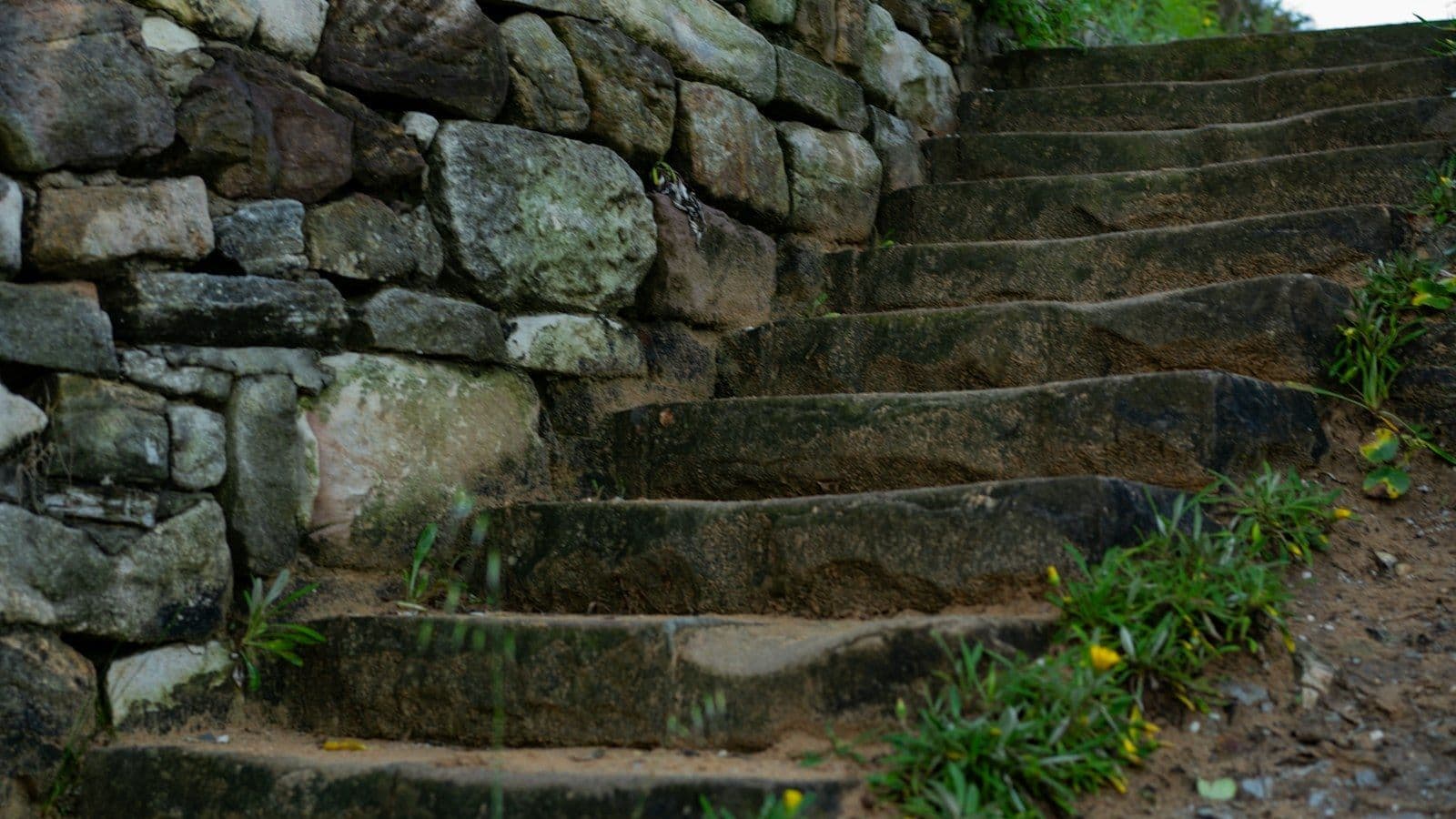
The same information was gathered. The same hour was eventually spent. What differed was the order, and the fact that nobody was ever shown the mountain, only the next stone.
And he noticed something the first firm never learned. Nearly everybody who answered the first question finished the lot. The losses had never been in the middle. They had all been at the doorway.
The Lesson, Since You've Earned It
People do not decline what you sell. They decline the first step, and they decline it for its size rather than its difficulty. A step that requires gathering, choosing and setting aside time is a step that must wait for a clear evening, and clear evenings do not come. The want survives perfectly well; it simply never gets spent, and from where you stand that looks exactly like a lack of interest.
So look at your own doorway with a stopwatch rather than a conscience. How long does the very first thing take, and can it be done from memory by somebody with four minutes and no papers to hand? If not, it wants breaking up: one question rather than twelve, a reply rather than a form, a ten-minute call rather than an hour, the easy half first and the awkward half once they are in.
And do not show the whole staircase. This is not concealment, since nothing is hidden and anybody asking what is involved should be told plainly. It is simply the difference between a person who can see a single step and one confronted with the entire climb before they have taken any of it, and the second sort postpones, every time.
Two cautions. The small step must be real work towards the thing rather than a device to capture a name, since a person who takes an easy first step and finds it was a trick has learned something about you they will not unlearn, exactly as the letter on what you would read at home set out. And do not shrink the step so far that it becomes meaningless: the point is that beginning is easy, not that beginning is nothing.
Three questions, and time the first one with an actual clock:
- How long is your first step? Do it yourself, as a stranger, with no preparation. Whatever it takes, that is what stands between a willing person and your trade, and most owners have never once measured it.
- What does it demand they have to hand? Every figure, document or decision required at the doorway is a reason to come back later. Move each one to a point after they have begun, and keep only what can be answered from memory.
- Where do people actually stop? If they stop at the start, you have a doorway problem and no amount of persuasion further in will help. If they stop in the middle, that is a different letter and a different fix.
The Answer to the Riddle
Why did one doorway stay unused?
Because it asked for a clear evening, and nobody has one. The two firms wanted the same information and reached the same place by the end, and one of them asked for all of it at the threshold, where a willing woman with four minutes could only postpone. The other asked one question she could answer without getting up, and then another, and by the fourth she had begun. The want was identical in both houses. Only the size of the first step differed, and the size of the first step decided everything.
The verse:
They want it well enough, they do,
But not enough to clear a night.
Ask one small thing they know by heart,
And they will climb the rest by dark.
Until next time. Go and time your own first step as a stranger would meet it, and cut it until it can be done from memory in under a minute.
The Best Time for Marketing was Yesterday...
Ben B. Tilley
P.S. The same principle governs the thing you have been meaning to do in your own business for a year. Whatever it is, the reason it has not happened is almost never that it is hard; it is that the first step is large and undefined, and so it waits for a clear evening of your own. Cut it to one small thing you could do before lunch, and notice how quickly the rest follows.
Also in the archive: The Buttons and the Book, Set Aside at Nine in the Evening and A Fifth Off the First.