
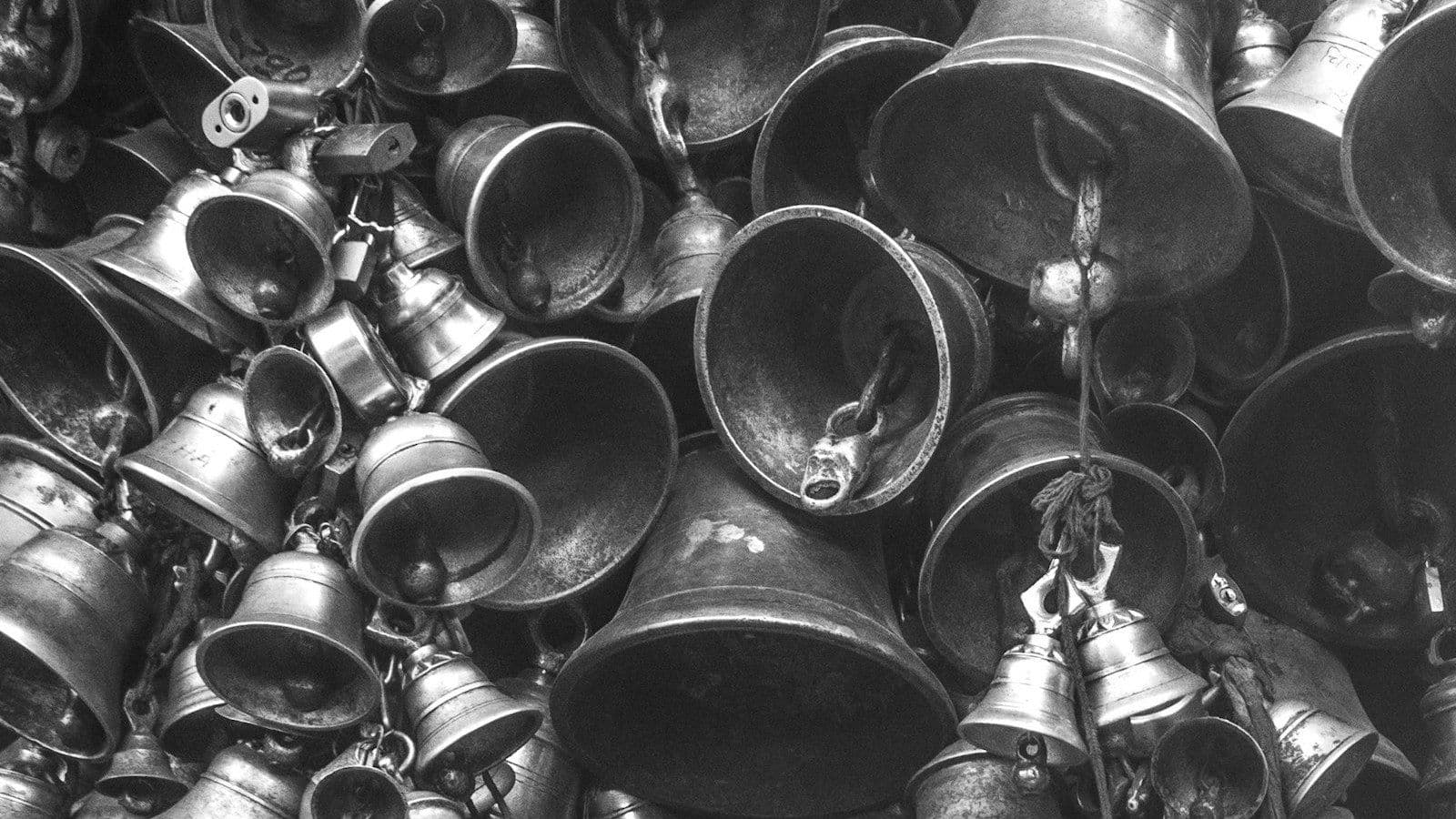
Dear friend,
The riddle first, as the tradition demands. Back in the old town, at the foundry gate, where the churchwardens have come about a bell bigger than anything either founder has cast.
Two founders price one untried bell,
Same metal, same unknown, same swell.
One guesses low to win the day,
One prices what he cannot say.
Both cast it. One is ruined by it.
Which founder knew what he did not?
Hold your answer. Story time.
The Story
Two bell founders near the town I've never named, and their bells, in the old chorus, rang equally true. Each was asked by the same churchwardens to cast a tenor bell larger than anything either had attempted, and each had to name a figure for a thing he had never done.
The first did what a man does when he wants the work. He took what a smaller bell had cost him, scaled it up by the metal, added a little for the trouble, and named that.
Every part of that reasoning was sound and the whole of it was wrong, because the difficulty of a bell does not scale with its weight. The mould wanted a deeper pit than his yard had ever dug. The first pour cracked in cooling and had to be broken up and done again, which is a thing that happens with a size a man has not made before, and which nobody can predict on the day of quoting. And the work sat in his yard for five months while his ordinary trade went elsewhere.
He delivered a good bell and lost the value of a year on it. Worse, he was frightened by the experience, and never quoted for a large bell again, so the one job that might have opened a new trade to him closed it instead.
The second founder said something different to the churchwardens, and said it plainly.
I have not cast one this size. I can cast it, and I will tell you what I do not know, which is how she will behave in the cooling, and that is where the money goes. So here is my price for the pattern and the mould, which I can judge exactly. Here is my price for the pour, which includes one recasting, because at this size a first pour sometimes fails and I would rather build that in than come to you with bad news and an extra bill. And if she comes good first time, the recasting money comes back to you.
He was dearer on paper than his rival. He got the work, because the wardens were not fools and could see which of the two men had thought about what might go wrong.
She did crack, as it happens, and he recast her, and nobody had to have a difficult conversation about money, and the bell hangs there still.
And he kept quoting for large bells, since the first one had not hurt him, and within ten years that was most of his trade.
The Lesson, Since You've Earned It
When you price a job you have never done, you are not pricing the work. You are pricing what you do not yet know. And the commonest error is to price it as though the unknown were simply a larger version of the known, since that is the only method available to a man who has not done it: take the familiar job, scale it, add a little for the trouble. The trouble, in unfamiliar work, is never a little. It is the whole of the difference.
So separate what you can judge from what you cannot, and say so out loud. The parts you have done a hundred times are priced exactly, and they are most of the job. The part you have never done is priced with the failure built in, openly, as a named contingency rather than a padded figure. A customer told plainly that a first attempt sometimes fails at this size does not think less of you, as the horse dealer's splint proved; they think you have done this before in your head, which is what they are actually buying.
Two structures make it work in practice. Price the certain and the uncertain separately, so the customer can see which is which. And return the contingency if it is not spent, which costs you nothing when things go well and makes the whole arrangement honest rather than a hidden margin: it is the difference between charging for risk and charging for the fear of it.
And watch the temptation that wrecked the first man, which is to bid low precisely because the job is unfamiliar. It feels like caution about losing the work and it is the opposite of caution: the unfamiliar job is the one most likely to overrun, and so it is the one that can least afford a thin price. If you must guess, guess high, since a job you have overpriced merely goes elsewhere, and a job you have underpriced stays in your yard for five months.
Three questions, and use the last unfamiliar job you took:
- What did you actually not know? Name it precisely, as the second founder named the cooling. If you cannot name the unknown, you have not yet understood the job well enough to price it at all.
- Did you price the failure in? Look at what happened when it went wrong. If the overrun came out of your own pocket in silence, you charged for a job and delivered an experiment.
- What would you say to the customer now? Write the sentence: here is what I know exactly, here is what I do not, here is what I have built in for it, and here is what comes back to you if it is not needed.
The Answer to the Riddle
Which founder knew what he did not?
The dearer one, and it was the only thing he knew that his rival did not. Both could cast, both had the skill, and one of them priced an untried bell as though it were a known bell made larger, which is the one assumption that was certainly false. The other told the wardens exactly where his knowledge stopped, charged for the gap, and offered to give the money back if the gap turned out to be empty. He was chosen for the very admission that his rival thought he could not afford to make.
The verse:
Price what you know, and know it well,
Then name the part you cannot tell.
Build in the crack before it comes,
And give it back if she rings true.
Until next time. Go and take the next unfamiliar job, split the quote into the part you can judge and the part you cannot, and say which is which.
The Best Time for Marketing was Yesterday...
Ben B. Tilley
P.S. There is one more reason to price the unknown properly, and it has nothing to do with the job in hand. A man ruined by his first attempt at something never attempts it again, and the whole of his trade is thereby fixed at the size it was. The price you put on your first large bell decides whether you ever cast a second.
Also in the archive: Rot Behind the Boards, The Millwright's Two Pounds and Three Gates.