
Dear friend,
The riddle first, as the tradition demands. Back in the old town, where two coppersmiths set out in the same spring to make a better preserving pan, and one of them went about his enquiries in a way that left eleven kitchens a pan short for a fortnight.
Two coppersmiths in one town, the same sheet copper off the same factor, the same tin, the same hammers.
Both wanted to know where the old pans failed before they beat out a new one.
One bought two dozen worn pans off the marine store dealer and had them on his bench by the Friday.
One knocked at eleven doors and asked to borrow the pan down off the shelf for a fortnight.
The second man learned less about copper than the first and sold three times the pans.
What did the borrowing do that the buying could not?
Hold your answer. Story time.
The Story
Two coppersmiths, in a town I have never named. Both worked in a shop you could hear from the end of the street, the planishing hammer going at three strokes to the second, the smell of flux and hot tin, bright half-moons of swarf swept into a corner twice a day. Both bought their sheet off the same factor, both could tin a pan so evenly you would have taken the inside for silver, and neither was the better workman.
That spring both men had the same thought, which was that the preserving pans going out of their shops were not as good as they ought to be. The households up the hill bought one every seven or eight years, bought it grudgingly, and said so. Both wanted to know which seam went first, and whether it was the fruit or the fire or the scouring that did it.
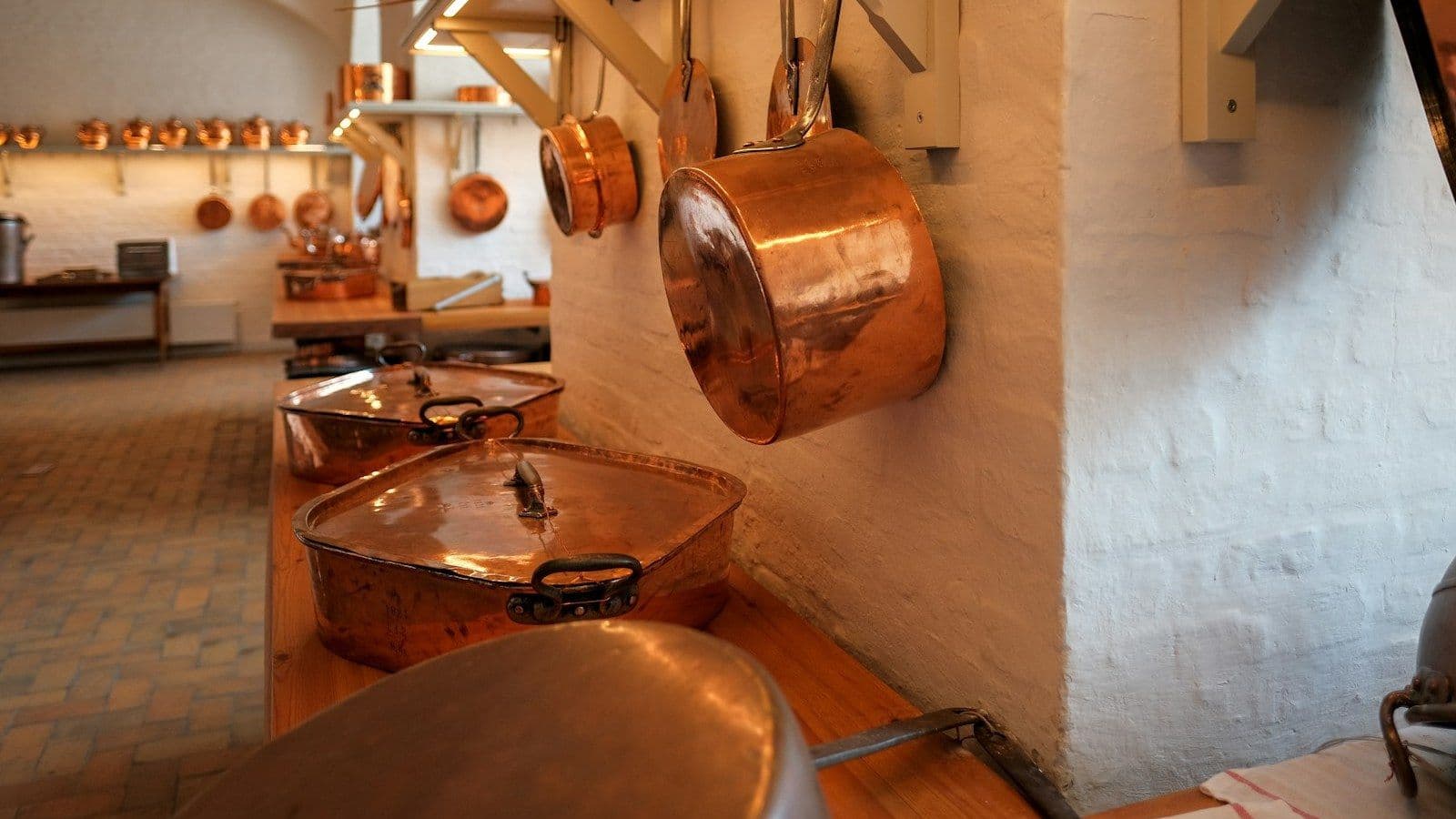
The first coppersmith went to the marine store dealer by the canal, who had a heap of such things, and bought two dozen worn pans for the price of the metal. He cut four of them up and spent three evenings over the rest with a rule and a candle. He found out a great deal. The failure was at the rivets, almost always, and it was not the fire and not the fruit but the lifting of a full pan by one handle, year upon year, which worked the holes oval and let the acid in. He made his new pan with a strap running a hand's breadth down the side under each handle, and a thicker bottom, and he was right about all of it. His was the better pan. I want that understood before we go on.
The second coppersmith did something slower and, on the face of it, sillier. He put on his coat, walked up the hill, and at eleven doors asked whether he might borrow the old preserving pan for a fortnight, because he was making a new one and wanted to see where they wore. He offered nothing for the loan and left nothing in its place. Eleven women fetched the steps, got the pan down off the top shelf where it had sat since the plums, scoured it out so as not to hand over a dirty thing, and let him carry it away under his arm. One asked, reasonably, what she was to do if she wanted it. He said he would have it back within the hour if she sent the boy, and she never sent the boy.
He learned less than his rival. Eleven pans tell you less than twenty-six, and he could cut none of them up, since they were going back. He got the rivets and missed the business of the bottom. His pan was a good pan and the other man's was better.
Both went into the shop windows in June, within a week of each other, at within sixpence of the same price. By Michaelmas the second coppersmith had sold three to his rival's one. Nine of the eleven households bought the new pan, and the two who did not sent their sisters. When he took each old pan back up the hill he carried with it a sheet of paper saying what her particular pan had told him: worn through at the near rivet, the strap added for that reason, and here is the place I shall watch next time. Several of the women kept it. And every one of those eleven kitchens had a thing to say over a fence that no handbill in the county could have bought, which was that the coppersmith had borrowed her pan.
The Lesson, Since You've Earned It
A small favour asked of a customer binds them to you more surely than a large one given. This sounds back to front, and most traders behave as though it were, which is why there is so much money lying about in it.
The mechanism is the woman on the steps. She fetched down a pan, scoured it, and handed it to a man she was under no obligation to help. Nobody made her. Afterwards she has that act to account for, and the only comfortable account is that she thinks well of him and he is worth a bit of trouble. People work out what they think from what they have done at least as often as they do the reverse. A trader who gives you something has told you what he thinks of you, which you may discount as a seller's opinion. A trader who asks a small thing of you has arranged matters so that you tell yourself what you think of him, and a man never argues with himself in that particular court.
The second thing in it is standing. Being asked for the loan of your pan, or your judgement, or five minutes of your experience, is a compliment that costs the asker nothing and is hard to fake. He came to you. He thought your old scorched pan worth studying. Giving first has its own power and I have argued for it elsewhere, but note what the two do differently. The gift confers obligation, and obligation is a weight. The request confers standing, and standing is a pleasure. Only one of those is a thing a person is glad to carry about.
Hold it against the far end of the scale and the shape comes clear. A gift too large to repay is remembered as a debt rather than a kindness, and the receiver settles it by keeping out of your way. The favour asked runs the other direction. It opens a small account in which the customer is the creditor, and a creditor has every reason to keep the connection alive. He wants his pan back. He wants to know what came of his advice. You have a second honest occasion to stand at his door, which is the thing most trades spend good money trying to manufacture.
I will not pretend the case is all one way. It is usually put by people who imply that asking is free, and it is not. The imposition is real, and if it is heavy enough to be an inconvenience rather than a courtesy it produces the same resentment the oversized gift produces, approached from the other side. The thing works at a particular size and fails outside it.
Two cautions. First, the favour must be genuinely useful to you, and you must do something with it and say what. A request made as a manoeuvre, with no intention of using the answer, is detected quickly and costs you more than silence would have. The paper that went back up the hill with each pan was not a nicety. It was the proof that the trouble had been worth taking. Second, ask only of people who can afford to say no. Never ask a favour of a customer who is waiting on something from you, or who has an unsettled complaint, or whose work is late, because a request arriving then is not a compliment, it is a man asking for credit he has not earned.
Three questions, and the first wants doing this week:
- What are you guessing at that a customer could simply show you? Write down the thing you most want to know about how your work is actually used, owned, worn out or complained about, then name the one customer best placed to show you and ask to see it. Not a survey. A visit, a loan, a look at the thing in the place it lives.
- Who have you only ever given to? Mark the customers who have had discounts, extras and free advice from you for years and have never once been asked for anything. Those relations are more one-sided than they look, and the remedy is not to stop giving. It is to ask one of them, this month, for something small that you actually need.
- What would you ask if you were not afraid of looking as though you needed it? That fear is the whole obstacle, and it is misplaced. Nobody ever thought less of a tradesman for wanting to know where his own work fails. Write the sentence out, keep it to two lines, and make it easy to refuse.
The Answer to the Riddle
What did the borrowing do that the buying could not?
It put eleven women to a small trouble on the coppersmith's behalf, and from that trouble each drew the natural conclusion, which was that he was a man worth taking trouble for. The marine store pans taught the first man more about copper and nothing whatever about the hill. His rival bought less information and eleven standing relations with the households that would be doing the buying, and the pan made with the poorer information was the one they wanted in their kitchens, because in a small way it was partly theirs.
The verse:
The gift you press upon a man sits heavy on his shelf,
And he pays it off by walking the long way round your door.
But ask him for the loan of what is idle on his own,
And he will tell himself he likes you, and believe it evermore.
Until next time. Go and ask one good customer this week for the loan of something, the sight of something, or five minutes of their opinion on a choice you have actually got to make, and go back afterwards and tell them what you did with it.
The Best Time for Trying was Yesterday...
Ben B. Tilley
P.S. The same mechanism explains why the customer who once rang at an awkward hour with a difficult problem, and was helped, turns out to be loyal, while the one whose job went through without a hitch drifts away by the spring. It is not the trouble that binds him. It is that he was obliged to ask, and then to be glad he had, and a man does not easily walk away from somebody he has already decided to be glad about.
Also in the archive: Still in Its Paper, The Cart in the Frost and The Board She Chose.