
Dear friend,
The riddle first, as the tradition demands. Back in the old town, in the same spring, two cabinetmakers were each asked for an oak dresser by a household that had saved for one, and only one of them asked the household to help.
Two cabinetmakers, the same good oak,
Same plans, same price, the same seven weeks.
One said, leave every choice to me,
One asked which board she liked the best.
Both dressers true to the last joint.
Which was still being shown to guests in twenty years?
Hold your answer. Story time.
The Story
Two workshops in the town I've never named, one by the bridge and one up the lane behind the church. Both bought their oak from the same timber yard, and both could cut a dovetail you would need a lens to find. That spring each of them was engaged to make a kitchen dresser: three drawers, a cupboard below, open shelves above for the plates. The price was the same to the shilling. So was the time.
The first cabinetmaker came to the house, measured the wall, asked where the plates would go, and wrote it all in his book. The householder asked, a little shyly, whether there was anything she ought to decide. He smiled and told her to leave it with him, since that was what she was paying for. Seven weeks later a cart brought the dresser to the door, and it was faultless. The drawers ran like water. She paid him gladly and thanked him twice.
The dresser went against the wall and became, within the month, the place where the plates were kept. When visitors admired it, and they did, she said that the man by the bridge had made it, and the conversation moved on, because there was nothing more to say. The following winter a drawer swelled in the damp and stuck. She mentioned it to him in the street, politely, in the tone people use for a small disappointment they have decided not to make a fuss about.
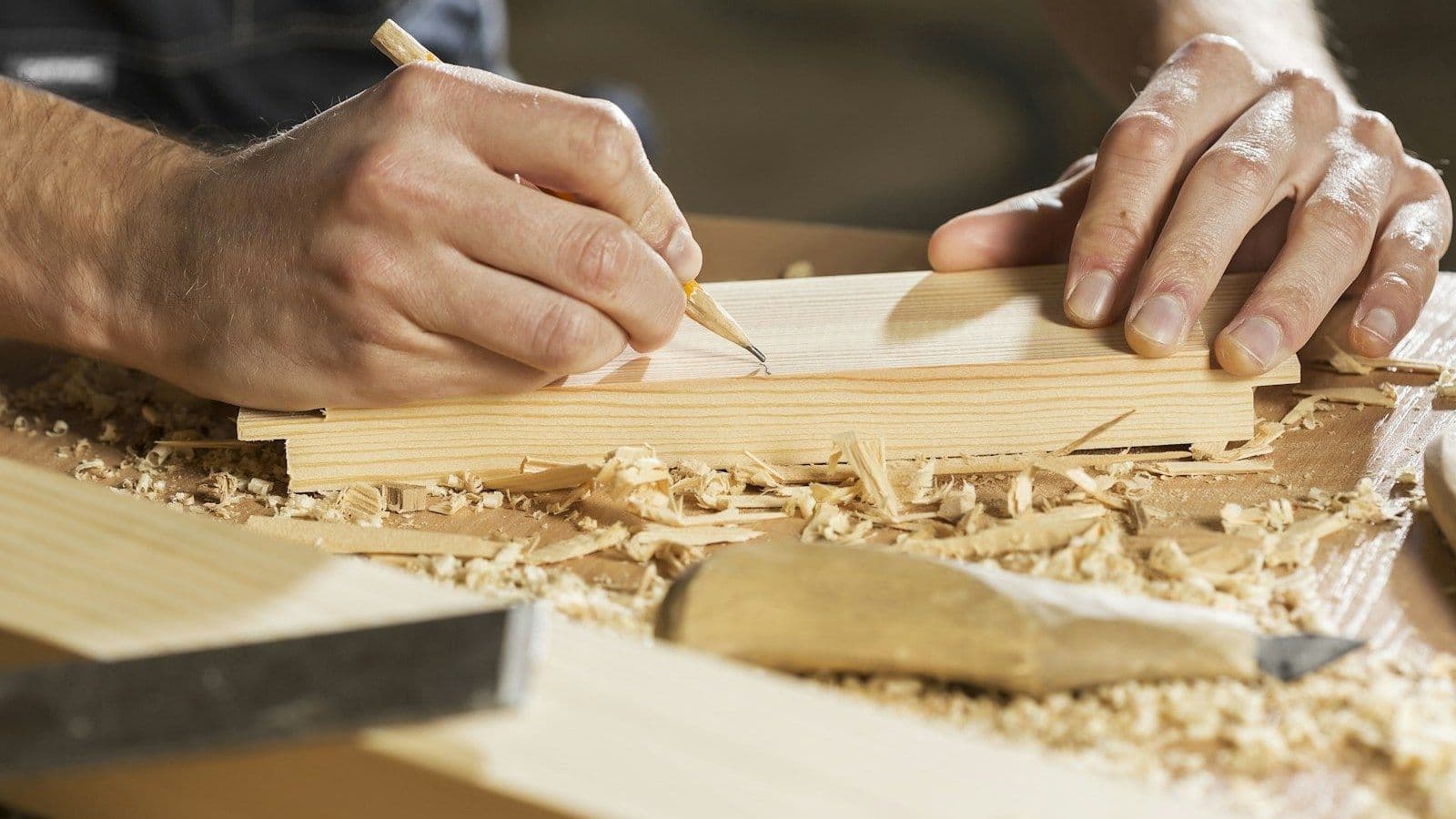
The second cabinetmaker measured the same sort of wall and asked the same questions. Then he asked the householder to come up to the workshop on the Saturday morning. When she arrived he had three boards of oak leaning against the bench. Any of them would have made a sound dresser; he had seen to that before she came. One was plain and straight. One had the silver fleck that quartered oak shows in the light. The third had a dark run of grain along one edge that looked, if you were inclined to see it, like a hare in full stretch. He asked which she would like for the doors. She took some time about it, and chose the hare.
Four weeks in, he sent word that the carcase was together, and she walked up to see it, unfinished and pale, with the hare already set in the left-hand door. He had a tray of handles on the bench, four kinds, all of which he would have been content to fit, and he asked her to choose. She chose the plainest. The whole business cost him perhaps two hours across seven weeks.
The dresser arrived on the same day of the same month, as good as the first and no better. But it did not become the place where the plates were kept. It became the dresser she had chosen. When visitors admired it she took them to the left-hand door and showed them the hare, and told them about the three boards against the bench, and the morning she had spent deciding. She told it for twenty years, and she was still telling it when her daughter married and needed a table. When a drawer swelled the following winter, she said it was the oak settling, as he had warned her it might, and she said it with something close to pride.
The Lesson, Since You've Earned It
People prize most what they have had a hand in, so leave every customer one real choice to make, and let them see the thing being made. A thing bought is a thing received. A thing chosen, even in one small particular, is partly the chooser's own work, and people defend, forgive and talk about their own work in a way they never do for something that was simply delivered.
Look at what the second cabinetmaker got for his two hours. He got a customer who valued an identical dresser more highly. He got forgiveness in advance, because a fault in a thing you helped to make is a fault in a shared project, not a failure of the supplier. And he got a story. A hare in the grain and a Saturday morning are exactly the kind of something to say that carries a trade from one kitchen to the next.
Notice, too, what he did not do. He did not hand over his judgement. He chose the three boards; she chose between them. He set out four handles; she picked one. The skill stayed his and the choice became hers, and those are different things. It is the same principle as giving a which-one question rather than a blank page: a choice between good options is a pleasure, while a choice with no edges is a chore that makes the customer anxious.
Every trade has room for this. The designer can show three typefaces and ask which feels right. The builder can let the family write their names on the bare plaster before the wall is closed. The roaster can let the regulars choose next month's coffee from two he has already tasted.
Two cautions. First, never give the customer the part that carries the risk. Let them choose the grain, not cut the joint. If their share can go wrong, the whole thing can. Second, offer the part; do not impose it. Some customers simply want the thing done, and are entitled to that. Ask once, make it easy to accept, and make it just as easy to say, you choose.
Three questions, before your next piece of work goes out of the door:
- Where in this job is there a choice that is truly a matter of taste? Not a technical decision, which is yours, but colour, grain, wording or finish, where any answer you offer would be a good one.
- At what point could the customer see it half-made? A visit, a photograph, a sample, a draft. Something unfinished that they are invited to look at is the moment the thing starts becoming theirs.
- What will they be able to point at afterwards? If the answer is nothing, they will have a good purchase and no story. Find the hare in your own work, and make sure they chose it.
The Answer to the Riddle
Which was still being shown to guests in twenty years?
The one whose owner chose the board. Both were equally well made. But the first was admired as furniture, while the second was shown as a piece of its owner's own history. The second cabinetmaker gave away a small part of the making, and that part was what the household kept talking about.
The verse:
The thing you make, they'll use and praise,
The thing they chose, they'll show and tell.
So leave one choice within their hands,
And let them watch you make it well.
Until next time. Go and find the one choice in your next job that you could hand to the customer, and set out three good options for it before they arrive.
The Best Time for Marketing was Yesterday...
Ben B. Tilley
P.S. There is an old story, told often in advertising circles, of a powdered cake mix that sold poorly until its makers left out the dried egg and asked the cook to crack in a fresh one. Historians argue about whether it happened quite like that. Nobody who has watched a customer show a visitor the thing they helped to choose has ever doubted the principle.
Also in the archive: The Last Twenty Minutes, The Piano in the Parlour and The Woman Who Works the End.