
Dear friend,
The riddle first, as the tradition demands. Back in the old town a man who had made money in a good season was very sure he knew why, and so was the man who lost it, and the two were commonly wrong in the same direction.
Two corn merchants on the same wharf, the same scales and the same millers to supply.
Both bought heavy in the same September and both sold well in the following spring.
Both put the money down to their own judgement of the trade.
One had written, before the buying, what he expected and why he expected it.
The other had only the pleasant memory of having been right.
Same wharf, same scales, same profit. Why was only one of them any wiser in April?
Hold your answer. Story time.
The Story
The trade is corn merchanting, and in the town I have never named it was carried on from two granaries forty yards apart. A loft above, a weighing machine below, and on market days a coat pocket of paper bags of samples to be rubbed between a miller's finger and thumb. Both bought their corn of farmers, held it, and sold to the mills through the winter.
In the September both bought heavily at much the same figure, thirty-eight shillings the quarter. By the spring wheat stood at forty-six, and each had made a year out of one decision taken in a wet week.
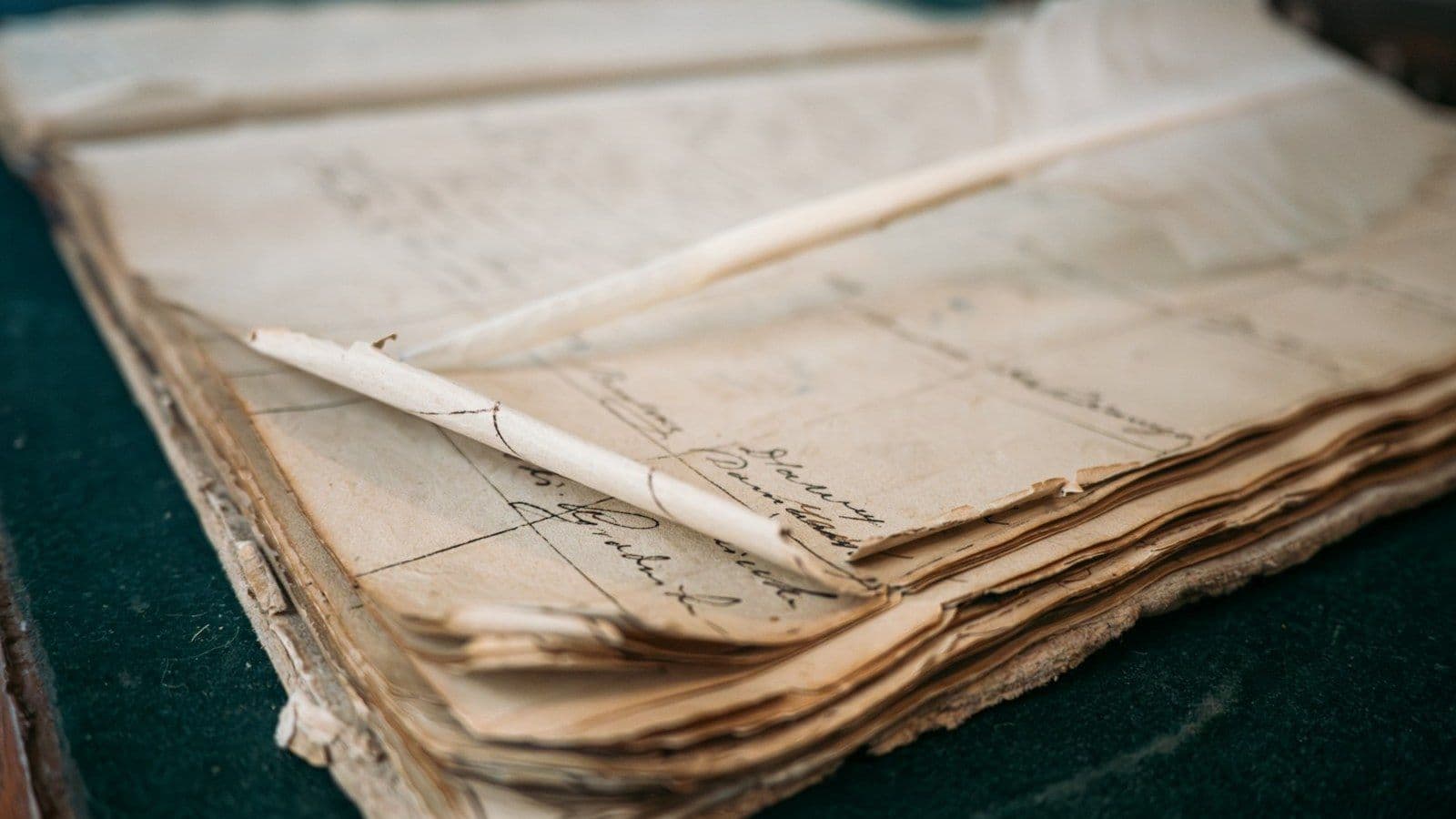
The difference was a ruled book the second man kept by the weighing machine. Before the buying he wrote four lines in it. The date. Three hundred quarters at thirty-eight. Forty-three expected by Lady Day, the Baltic ships being held up by ice and his millers carrying nothing. And a fourth line, that if wheat stood under thirty-eight at Lady Day he had been wrong.
In the April he took the book down and wrote underneath what had happened. The ships came in early. The rise had nothing to do with ice. It came out of a ruined harvest in the west that nobody on that wharf had thought about in September. He had been right in his pocket and wrong in his head, and the book said so in his own hand.
His neighbour drew a different lesson from the same eight shillings, which was that he could read the trade. The next September he bought twice as much, with the same feeling in him and nothing written down. Wheat went the other way, and he spent two years getting clear of one autumn.
The book cut the other way too, and that is the part worth having. Years earlier the second man had refused further credit to a baker, who went to the neighbour, paid promptly, grew, and was pointed at across the wharf for three years as the custom one man had been too timid to keep. The book held that refusal with its reason: the account had twice run past ninety days, and the man asked for more at the moment he was slowest to pay. Three years on the same two signs appeared in another baker. He refused again, and that one failed in the November owing the neighbour sixty pounds.
The Lesson, Since You've Earned It
Your result is your judgement with everything you did not control added on top of it, and you cannot take the second away from the first unless you wrote the first down before the second arrived. The rest of this letter is that sentence with its workings shown.
Begin with why the memory will not serve. You suppose you keep your reasons and may consult them later. You do not. The mind does not store a reason, it builds one out of what it now knows happened. Once you have learned that wheat went to forty-six you remember expecting it, and more firmly than you did, and the inconvenient half of what you thought in September falls quietly out. It is not dishonesty, and it happens fast. But it leaves your account of your own conduct honest and wrong at once, the witness and the verdict being one person.
So consider what the unwritten man learns from a profitable autumn. He learns that he has an eye, that being the only lesson available to him, the figure in the bank being all the evidence he kept. It is also the dearest thing he could have learned, since a man who believes he has an eye repeats the habit at a larger stake. A bad judgement that happens to pay is a bad judgement promoted.
The mirror of it is quieter and costs as much, for a sound judgement that happens to lose gets dropped. That refusal of credit looked foolish for three years, and a man with only those years to go on would have let it go. It survived because its reason sat where the result could not reach it.
The remedy is cheap, which is the best of it. Before a decision you cannot easily walk back, write four lines in a plain book. The date. What you are doing. What you expect to follow, and by when. And what would show you that you were wrong. The last line does the work and is the one you will want to leave out.
Note the date particularly. An expectation with no date cannot be settled, and a reason that cannot be settled teaches nothing, which is exactly why it is comfortable to hold. Nor is this the fixing of a trial's length and measure before you begin. A trial may be run again. These are the decisions a trade lets you make once, where the learning must come out of a record, there being no repetition to take it from.
This is not clerking for its own sake. Fifteen entries covers every decision in a year that can still be felt a year later, and fifteen entries is half an hour. That a man marks his own homework is answered by the fourth line, written before he has any interest in the verdict.
Two cautions. Keep it to four lines, since a page of reasoning is a page you will never read again, and a record nobody rereads is a diary and not an instrument. And read the book whole, once or twice a year, rather than entry by entry as each falls due. One entry proves nothing. Twenty show you the shape of your own judgement.
Three questions, for the week in front of you:
- What am I about to decide that I could not easily undo in a month? Write it tonight in four lines, with the date and the thing that would prove you wrong.
- Of the last five decisions I call good, which do I have evidence for beyond their coming out well? If the answer is none, you do not yet know which parts of your trade you understand and which you have been lucky in.
- Which standing rule have I dropped on the strength of one bad instance? Find it, and ask whether its reason was disproved or merely embarrassed.
The Answer to the Riddle
Same wharf, same scales, same profit. Why was only one of them any wiser in April?
Because only one could tell what he had been paid for. The other was paid for being right and concluded that he had been right, which are two different things, and he settled for that confusion the next autumn at twice the weight.
The verse:
You remember the autumn, and how you were certain,
and certain is all you recall.
The book on the shelf has the reason you gave,
and the reason was wrong after all.
Until next time. Go and write four lines about the next thing you decide that cannot easily be undone: the date, what you are doing, what you expect and by when, and what would show you were wrong.
The Best Time for Trying was Yesterday...
Ben B. Tilley
P.S. Some entries will have no reason in them, only a feeling with a date under it. Do not strike those out and do not dress them up. They are the book working, and after a year you will find they cluster in one corner of your trade. That corner is where you keep opinions rather than knowledge, which is worth knowing before you stake the granary on it.
Also in the archive: The Chalk Behind the Door, Twenty-Two by Christmas and Twelve Men and Two.