
Dear friend,
The riddle first, as the tradition demands. Back in the old town a farmer standing over a dry corner of his field was not much afraid of paying too much. He was afraid of paying and getting nothing, a different fear that takes a different answer.
Two well sinkers in the old town, the same rods and the same gravel spoon.
Both were sent for in the same parched August and both asked two shillings a foot.
Both were met at the gate with the same question about the figure.
One took a quarter off and went home thinking he had been clever.
One left his figure where it stood and gave away something else entirely.
Same rods, same gravel, same figure. Why did the dearer man sink the more wells?
Hold your answer. Story time.
The Story
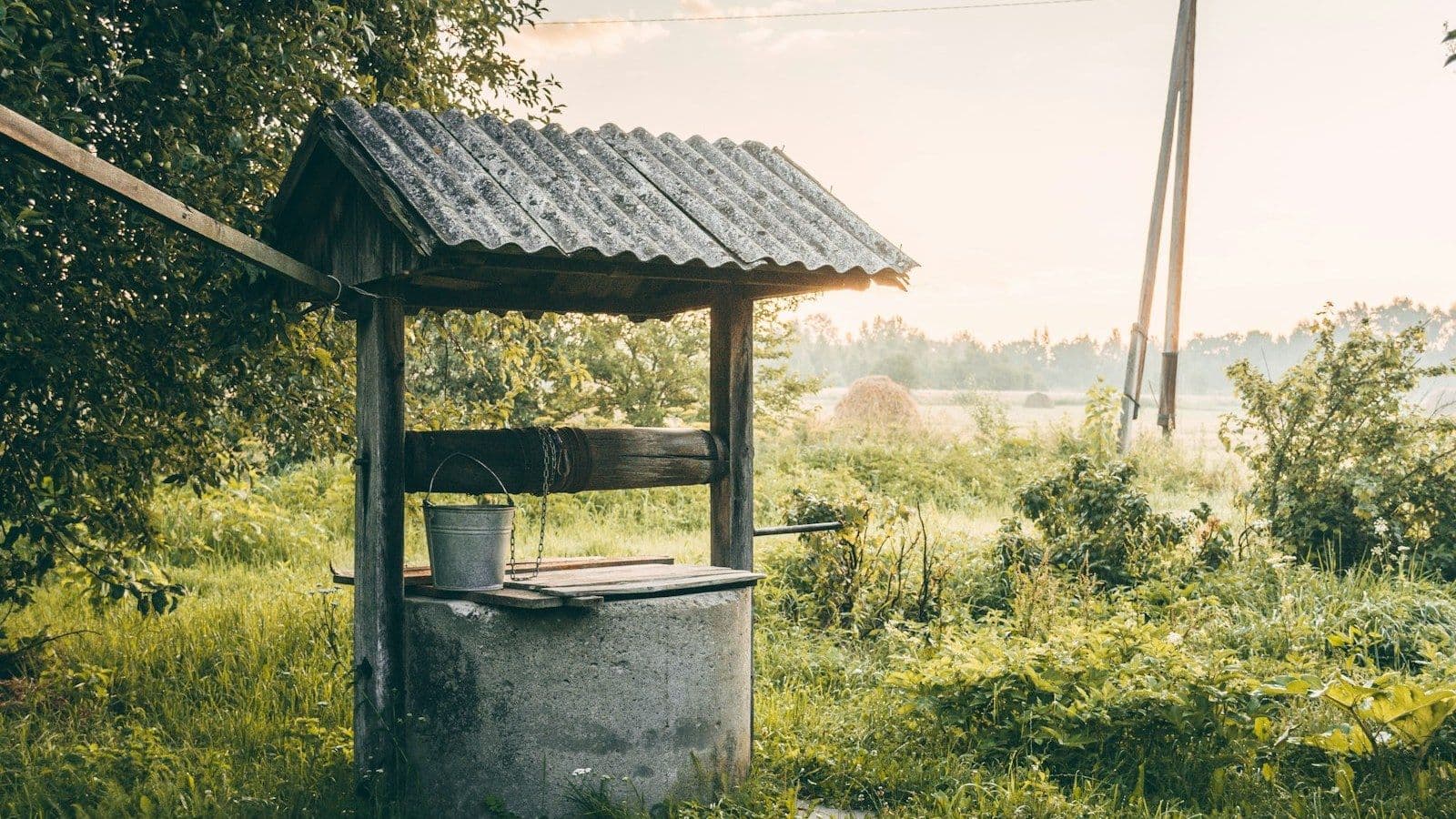
The trade is well sinking, and in the town I have never named it was done by two men and a windlass. A shaft three feet across, one man below filling the bucket and one above turning the handle, blue clay to the elbow. You go down hoping for gravel, because the gravel is where the water sits, and nobody alive can tell you from the surface of a field how far down it lies. That August the ponds went to cracked mud, and the two sinkers in the parish had more enquiries in six weeks than in two years.
The first man walked a farmer's ground, looked at the fall of the land and the willows in the hedge, and said he would expect water at thirty feet. Two shillings a foot, so three pounds, near enough. The farmer stood with his hand on the gate and said what farmers say. The first man took a quarter off on the spot.
He got the work, and the price with it, since a figure given away at a gate does not stay at that gate. By mid September he had sunk fourteen wells, every one at one and sixpence. Fifteen shillings given away fourteen times is better than ten pounds, more than he cleared on the whole six weeks.
The second man met the same question two miles off and did not move his figure by a farthing. What he said instead was this. Two shillings a foot, and if we go to forty feet and find no water you owe me nothing, and I fill the hole in myself. The farmer signed that afternoon, at the dearer price, having spent four days not signing at the cheaper.
He could say it because he kept a book, nine years of wells in it, each with its depth and outcome written the same evening. One in seven came up dry, and a dry hole cost him about twenty-five shillings, being labour and wear and nothing else, since a dry hole is never lined and the brick stays on the cart. That is under four shillings a well.
So the first man paid fifteen shillings on every well he sank and the second paid four, and in the event only on the two holes he filled in out of nineteen. One finished September at full price and called the man who stands behind his work. The other finished with the cheaper name, which you cannot put down once you have picked it up.
The Lesson, Since You've Earned It
A buyer who hesitates can be given money off your price or relief from the risk of his own decision, and the money is the dearer gift by far, because you pay it on every sale while you pay the other only on the few you lose. The rest of this letter is that sentence with its workings shown.
Begin with why the discount missed. The farmer was not weighing three pounds against forty-five shillings. He was weighing water against no water, those being the same bad afternoon in different trousers. A man who fears the thing will not work is not comforted by hearing it will cost less when it does not. The discount answers a question about size. His question was about certainty.
The error is expensive, because a reduction takes more out of your year than it looks to. A quarter off two shillings is sixpence. If fourpence of that two shillings was ever going to be yours, you have handed over sixpence to keep fourpence.
The undertaking behaves differently, and the difference is arithmetic rather than courage. It costs you the rate at which you fail multiplied by what failing costs to put right. Both are numbers. Neither is a feeling. Four shillings a well, set beside fifteen, and the generous-looking concession turns out to be the mean one. The second man was not the braver. He had done a sum the first never thought to do.
Mark also what it must cover, which is the thing actually feared rather than the thing you find convenient to promise, since a guarantee aimed at the wrong fear is a cost with no sale attached. Nobody lay awake over the brickwork. They lay awake over the shaft.
There is a second gain, quieter and larger. A man who carries his customer's risk must count his own failures, because they now arrive with a price on them. The first never knew his dry-hole rate. The second knew his, and set about improving it. An undertaking is a meter fitted to your own work, and the only honest one, since customers complain at a fraction of the rate at which they are disappointed.
The objection, and it is fair, is that people will take advantage. Some will, and that number is also a number, and in most trades it proves smaller than the number who walked away unconvinced. But not everywhere. Where the thing is consumed and cannot be given back, or honouring costs the whole price rather than a part, the sum comes out the other way. Then do not write it. The test is arithmetic, never nerve.
Two cautions. Do not undertake what you cannot afford at the rate you honestly expect, and take that rate from your book rather than your opinion of yourself, since a guarantee priced on hope is a discount with a delay on it. And do not give both at once, since a man who takes the risk off and the price down together has told the buyer his figure was soft.
Three questions, for the week in front of you:
- What does my customer think will happen if this goes wrong? In his words, in one sentence. Then read your standing discount back and ask what part of that sentence it answers. Usually none of it.
- How often does it go wrong, and what does putting it right cost me? From last year's records, not your memory, which flatters. Multiply the two, and set the answer beside what discounting gave away in the same year.
- What am I knocking off out of habit? If the first figure is the smaller, withdraw that discount this week and put the undertaking in its place.
The Answer to the Riddle
Same rods, same gravel, same figure. Why did the dearer man sink the more wells?
Because one answered a question about money and the other the question actually asked, which was whether a farmer could spend three pounds and still own a dry field. One sold a lower price on every well. The other sold certainty, and paid for it twice in nineteen.
The verse:
You offered him sixpence a foot off the figure,
and sixpence a foot he declined,
For the hole in his field that he lay awake over
was empty in either man's mind.
Until next time. Go and write down, in your customer's own words, the worst thing he believes could happen if he says yes to you.
The Best Time for Trying was Yesterday...
Ben B. Tilley
P.S. Put an edge on it. Forty feet, thirty days, the first month. An undertaking with no boundary is honoured at the customer's discretion rather than yours, and worse, disbelieved, since a man who promises everything for ever is understood to have promised nothing. The limit is what makes it credible.
Also in the archive: The Knife Man's Wager, One Joint in Twenty and The Good Iron on the Axle.