
Dear friend,
The riddle first, as the tradition demands. Back in the old town, the summer began with a committee coming round with a book, and the book had a line for your name, a line for your money, and none at all for what you were to get for it.
Two livery stable keepers in the town I have never named, the same stalls and the same four horses apiece.
Both were asked in May for a subscription to the summer show, and both gave three guineas.
Both were thanked by name from the platform.
One took the thanks, and his name in the newspaper among forty others.
One took a line in the programme, a stated hour, and a man at the field gate with a slate.
Same show, same three guineas. Which of them was paid?
Hold your answer. Story time.
The Story
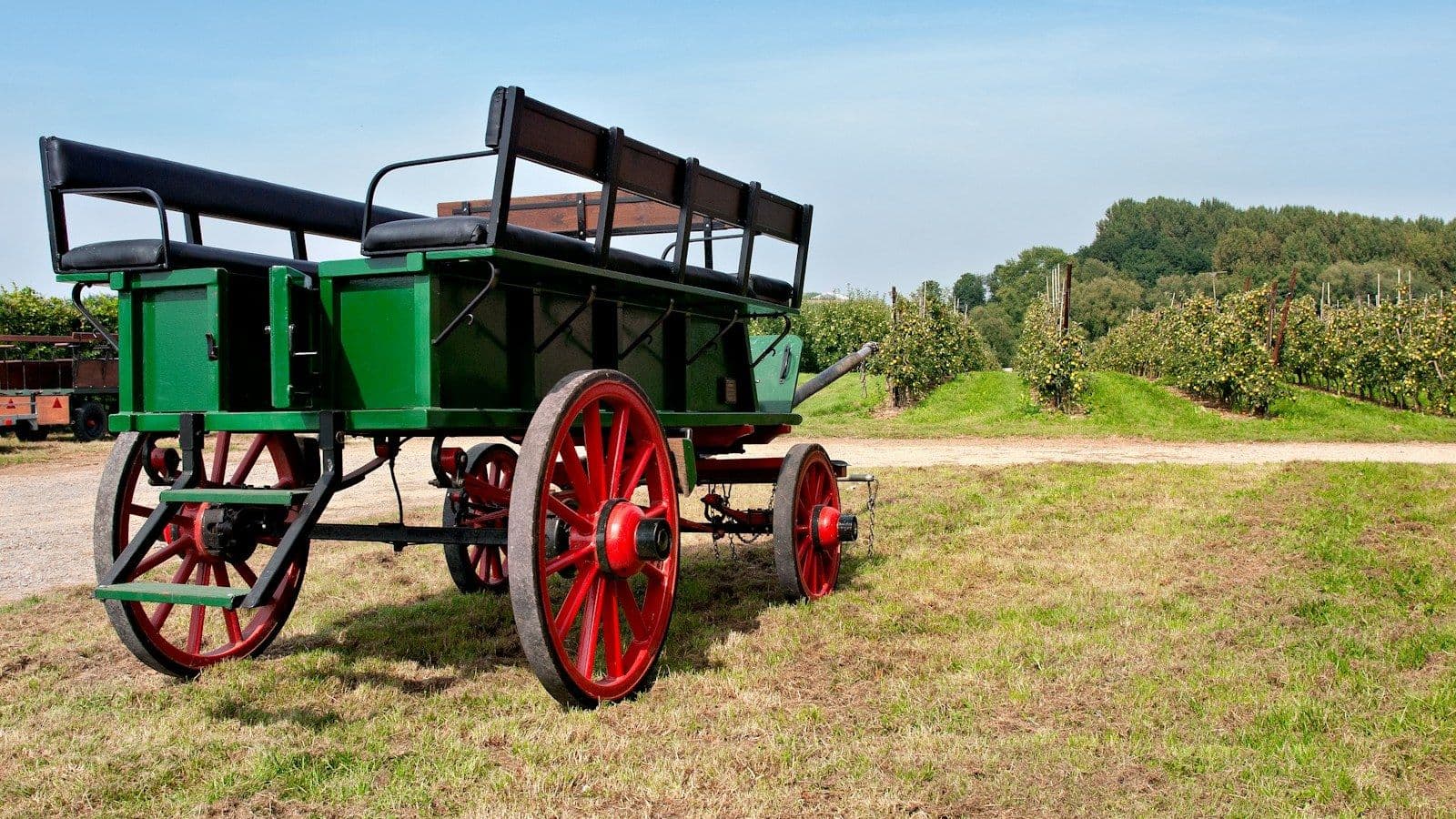
Both men kept horses for hire in the same town. Four apiece, a wagonette and two light traps each, harness oiled on Sunday evenings. Nobody could have told you which was the better man.
In May the secretary of the summer show came round with his book. The show was the great day of the place, two miles out along the turnpike, with a flower tent, pens of poultry, and the sports after dinner. Its subscription list was printed on the back of the programme and again in the newspaper, in order of the amounts given, which everybody understood and nobody mentioned.
The first man gave his three guineas for reasons that were decent and his own. His father's name had stood in that list for thirty years. Because the money had to come from somewhere, he told the printer to run three hundred handbills that July instead of his usual six hundred. On the day he was thanked from the platform, and on the Friday his name stood eleventh, between a brewer and a draper. He kept the cutting. His horses stood in their stalls that afternoon, and in the evening he came home to a slate with nothing chalked on it, and told himself that a show day is a day when nobody hires anything.
The second man sat in the same parlour with the same book, and asked one question before he put his name down. How, he said, do people get there. The secretary was glad to be asked, for it was what had been spoiling his show. The last half mile was uphill, so the field stood half empty until two o'clock, and the exhibitors were falling away besides, since a man with a bench of pelargoniums in pots cannot carry them up a hill.
So his three guineas went into the book, and three other things went in beside it. A line in the programme and on every poster, in the same type as the sports: conveyances from the market square on the half hour from noon, a shilling each way. A cart from seven in the morning for exhibits, two shillings the load. And his man at the field gate from four o'clock with a slate, taking names for the journeys home.
None of it was a favour wrung out of anybody. The secretary had a hill he could not flatten, and here it was solved by a man who already owned the horses. He was thanked in the same words as the first man. He also carried eighty-one people out and ninety-four back, some having thought better of the hill at seven. At a shilling each way that is eight pounds fifteen shillings, and eleven loads of exhibits besides, two from nurserymen eight miles off who hired carts from him twice that autumn.
The committee had the same money from both. One gave three guineas away; the other bought something with it, printed on a page every person on that field was holding.
The Lesson, Since You've Earned It
A subscription buys you gratitude, which is pleasant and does not spend; an advertisement must stand in front of somebody who already wants something and give him something to do about it that day. The three guineas was never the question. The question was which of the two it was buying, and the first man never asked, because the book had no line for it.
Consider what must be true before money spent on being seen comes back as work. There must be a reader who wants something at the moment he reads. There must be an instruction he can follow without getting up to find a pencil. And there must be some rough way of knowing afterwards that he followed it. A subscription list satisfies none of the three. It is read at breakfast by a man in a mood of mild approval, wanting nothing, instructed to do nothing, and leaving no trace, so that you may stand eleventh in it for nine years and never know whether it brought one fare. I have written before on being admired rather than paid, and this is the purest case I know. The admiration arrives promptly, in public, by name. The money does not arrive at all.
Two cautions. The first is that you must not now refuse everything that cannot be counted. Some expenditure works slowly, by showing that you are a fixture of the place, and I have argued elsewhere that the expense which answers the question nobody asks aloud earns its keep. The error is not spending money you cannot trace. It is muddling a gift with an advertisement, then paying for the gift out of the advertising money, as the first man did when he halved his handbills. The second caution is timing. Ask in May, while the programme is a blank page, not in July when it is printed.
Three questions, for the week in front of you:
- Of everything I paid last year to have my name on, how much of it asked anybody to do anything? Items down the left of a page, the instruction each carried down the right. Shirts, boards, programmes, the club banner. Where the right is blank you have made a gift, and should stop entering it as marketing.
- What is the organiser actually short of? Not what the rate card offers. Transport, chairs, a tent, prizes, a man on the gate. What he is short of is what he will gladly print for you, and it is worth more than the space you were sold.
- If I gave this as a plain gift and expected nothing, would I still give it? If yes, give it gladly, from the other pocket, and never check whether it worked. If no, you want an advertisement, and should settle what it is before your name goes down.
The Answer to the Riddle
Same show, same three guineas. Which of them was paid?
The second man, who went home with nine pounds seventeen shillings in fares and cartage, two customers from eight miles off, and a slate full of names. He did not give more, nor earlier, nor was he better liked. He asked one question in May the other did not think to ask, and it was not what shall I give. It was what shall I be given for it.
The verse:
Three guineas in the secretary's book will buy you a kind word,
And kind words are a pleasant load to carry down the lane.
But ask instead for printed times, and let the hour be heard,
For gratitude will thank you once, and traffic comes again.
Until next time. Go and find the last thing you paid to put your name on, and write out the one sentence it gave a stranger to act on. If that line is blank, write the sentence today.
The Best Time for Trying was Yesterday...
Ben B. Tilley
P.S. A subscription list is read closely by one sort of person only, and it is not your customer. It is the other subscribers, checking the order of the amounts. Your customer is reading the page opposite, which gives the hour of the sports and tells him what to do with his afternoon. Pay to appear on the page people read for their own reasons, never on the page they read for yours.
Also in the archive: The Follower Count, The Waiting Room Wall and The Chandler's Two Jars.