
Dear friend,
The riddle first, as the tradition demands. Back in the old town, in the spring the branch line opened, when two tea merchants each paid to be read, and only one of them paid for a reader who had nothing better to do.
Two tea men pay to have their say,
Same leaf, same blend, same careful words.
One buys the column he has always bought,
One buys a board where travellers wait.
The board costs less, the notice the same.
Which notice sold the more tea?
Hold your answer. Story time.
The Story
Two tea merchants in the town I've never named, and their tea, in the old chorus, was equally good. Same chests from the same importers, the same patient blending in the back room, and the same understanding that good tea sold in silence is simply tea going stale more slowly.
The first had advertised in the county paper for eleven years. Two inches on page six, every Friday, with a well-made line about the breakfast blend and the address underneath. It was a sensible thing to do. The paper was read in every decent house for twenty miles, and every trader of consequence was in it, which was rather the point and, as it turned out, rather the trouble. When he began there had been a dozen notices on page six. By the spring in question there were forty-three, and the paper, noticing its own popularity, had put the rate up twice.
Nobody on page six was doing anything wrong. But a reader turns a page of forty-three notices the way one walks past a hedge: aware that it is there, confident it contains nothing unexpected, and looking at none of it in particular. The first merchant's two inches were read, properly, by almost nobody, at the full rate.
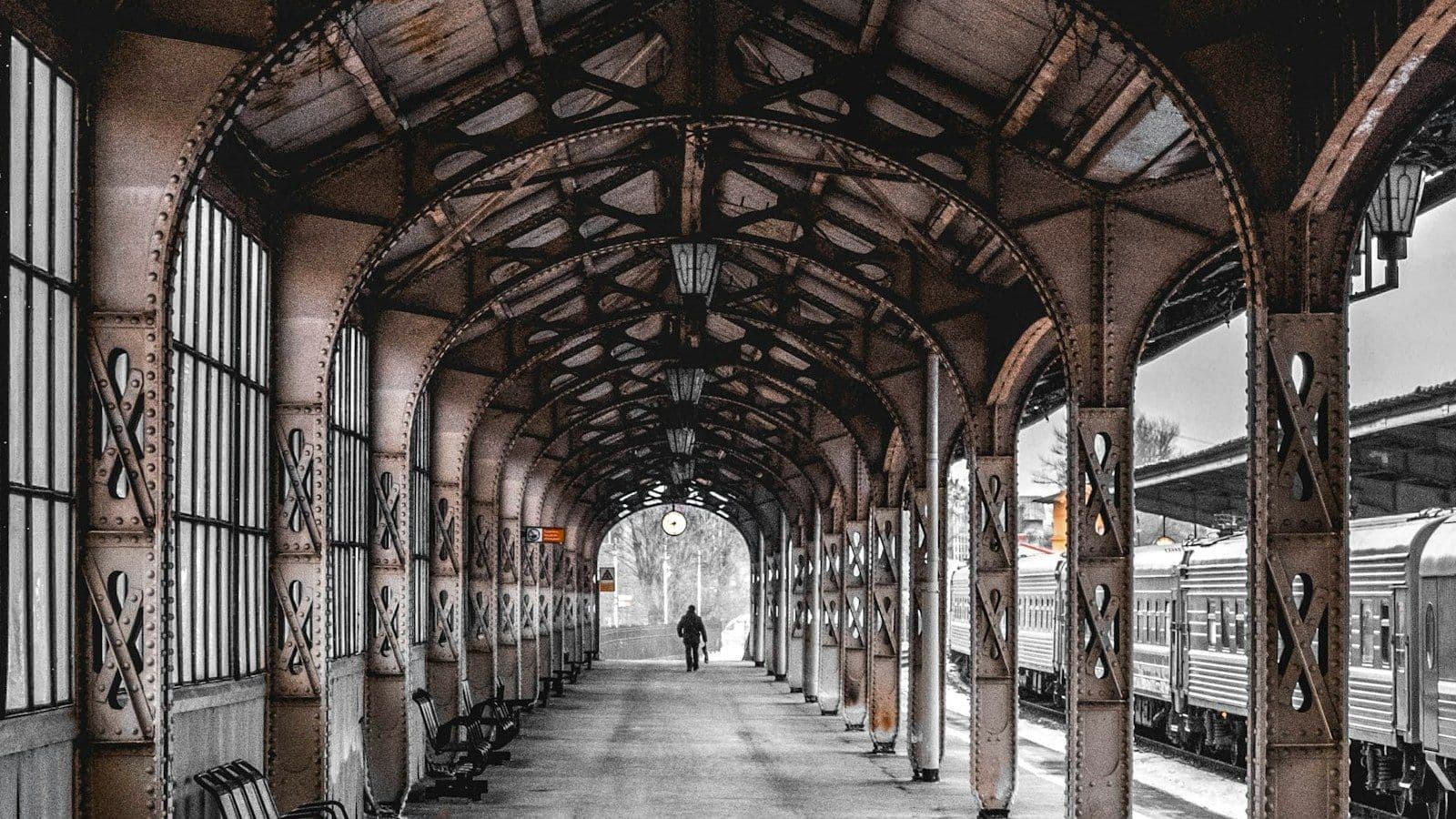
That spring the branch line opened, and with it a small station at the bottom of the hill. It had a waiting room with whitewashed walls, a stove, two benches, and one printed timetable. The up train was due at ten past eight and arrived, as a rule, at half past. So every morning a room full of people sat for twenty minutes with nothing whatever to look at but the timetable, which they had already read.
The second merchant took the early train in the first week and read the timetable twice himself. The following morning he called on the stationmaster and asked whether he might hang a framed board on the empty wall. The stationmaster had never been asked, had no idea what to charge, and named a sum for the quarter that was less than a month on page six.
The board was not clever. It said what the tea was, where the shop was, and that a traveller who mentioned the station would be given a quarter of the breakfast blend to try. What mattered was not the words but the reader. A man with twenty idle minutes and a bare wall does not skim. He reads every line twice, and by the second week could recite it. Some were new to the town, come with the railway, and had not yet chosen a tea man. The quarters of breakfast blend went out at a steady rate, and a good many came back as pounds.
It did not last, and the second merchant had not expected it to. By the following spring the stationmaster had a printed list of rates and the waiting room had nine boards on its walls, one of them belonging to the first merchant, who had noticed at last. A traveller facing nine boards reads none of them, much as he reads none of page six. The second merchant had watched his quarters of tea slow over the winter, and by the time the ninth board went up, his own had come down. He had moved his money to the back of the programme for the new band concerts in the park, which the committee had printed blank, having never thought to sell it.
The Lesson, Since You've Earned It
Attention is priced by habit, so it is always cheapest in the place people have only just begun to look. The rate on page six was not set by how many people read it. It was set by eleven years of traders agreeing that page six was where one advertised. The waiting room had the readers without the agreement. Nobody had yet decided it was worth anything, so it cost almost nothing, and nobody else was shouting in it.
This happens in every generation. Each new place where people gather to pass the time goes through the same three seasons. First the people arrive and the traders have not noticed, and a notice there is read with the attention of a bored traveller. Then the traders arrive, the owners of the place notice the traders, and the price goes up. Finally it becomes page six: respectable, crowded, fully priced, and glanced at. Most small businesses arrive in the third season, when it has become the thing everybody says you must do, and pay the most for the least. It is the same mistake as the grocers on a street of identical signs, made with the calendar instead of the paintbrush.
The waiting rooms of your own day are not all on screens, though many are. A new estate at the edge of town full of households who have not yet chosen anybody. A parish newsletter or a local online group in its first year, whose editor would be glad of anything. A new sort of post that a platform has started showing to everybody while most traders are still making the old sort. Each has a room of people with some time and a bare wall, and nobody has yet printed a list of rates.
Two cautions. First, new is only cheap if your buyers are in it. The travellers were exactly the people who bought good tea; a new place full of the wrong people is not a bargain, it is merely empty. Second, move rather than add. The second merchant did not keep page six and the board and the programme. He took the money from one and put it in the next, which is how a small trade avoids the fate of the maker with six half-fed channels.
Three questions, and think of the places you currently pay for, in money or in hours:
- Where have your customers started spending idle time in the last two years? Not where they have always been. Ask, and write down the answers.
- How many other traders are on the wall beside you? Count them, in whichever place you advertise most. If you are one of forty-three, you are paying for a glance, whatever the invoice says.
- How would you know the place had filled up? Decide now what the sign will be, so that you notice in the second season and not the third.
The Answer to the Riddle
Which notice sold the more tea?
The board, for two good years, and for a reason that had nothing to do with the words. The column was read by people with forty-three other things to read and a breakfast going cold. The board was read by people with nothing else to read and twenty minutes to read it in. Then the wall filled up and the board became a column, and the merchant who understood why it had worked was already somewhere else, on a blank page nobody had thought to sell.
The verse:
The crowded page is dearly sold,
And turned the way we pass a hedge.
Go where the eyes have just arrived,
And leave before they print the rates.
Until next time. Go and ask your next five customers what they have started reading, watching or joining this year, and write down every answer.
The Best Time for Marketing was Yesterday...
Ben B. Tilley
P.S. The best of these places do not yet know they are places. The committee with the blank programme, the new estate before its first newsletter, the club with no sponsor on its shirts. Their owners have no price in mind and are usually pleased to be asked.
Also in the archive: The Riddle of the Two Pie Men, The Well on the Ridge and The Collab.