
Dear friend,
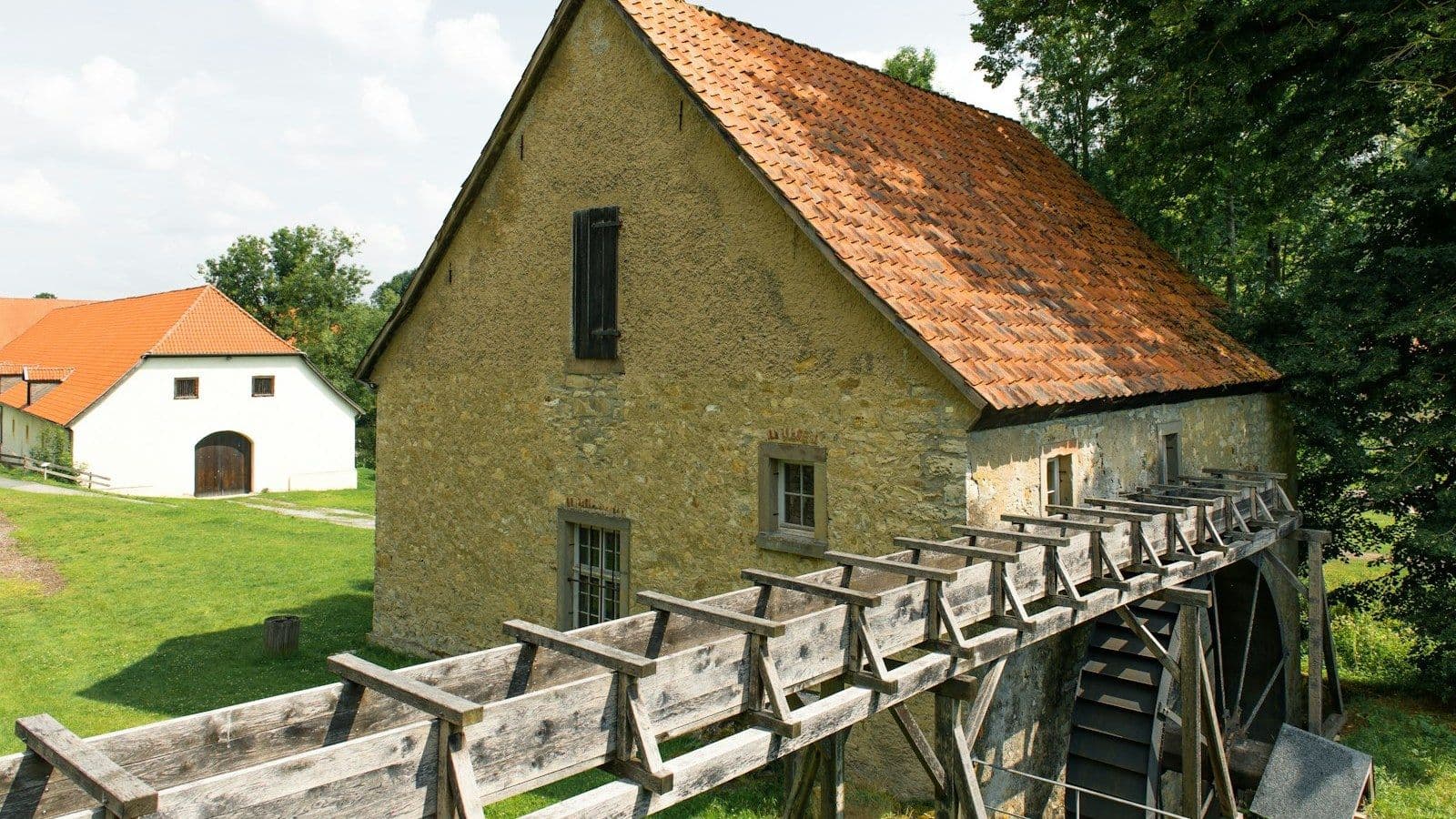
The riddle first, as the tradition demands. Back in the old town, where a quick stream came off the chalk and turned three mills between the bridge and the marsh, and two millwrights kept shops within a mile of each other.
Two millwrights in one town, the same gear patterns and the same iron.
Both were sent for when a wheel ran slow or a pair of stones ground hot.
Both drove out, spent an hour in the dust and came home again.
One went out to be useful. One sent three lines ahead, saying what would be settled before he left.
By the fifth year one of them was quoting twice as often and winning half as much.
Which was which, and what did three lines decide that an hour could not?
Hold your answer. Story time.
The Story
Two millwrights, in a town I have never named. Both could cut an apple-wood cog that would run twenty years in the mesh, and neither charged a shilling more than the other. When a miller was in trouble he sent his boy up the lane, and a millwright went out to look.
The first went out, as he would have put it, to be useful. He came of a Tuesday forenoon with the mill still running, since a stopped mill grinds no corn and no miller halts one for a visitor. He put his head into the wheel pit, got his sleeve wet, and talked for an hour about bearings and bucket boards while the place shook and the miller shouted answers over it. His advice was good and all of it free. At the end the miller said what millers say, which is that it was a great deal to think about and would he kindly send a figure. The figure went on the Thursday, and nothing came back. The mill ground hot two years more and was mended by somebody else after a breakdown, in harvest week. He never counted that he drove out fifteen times a year and got an answer of any kind from four.
The second millwright did one thing differently, and it cost him the back of an envelope and a boy's walk. The evening before he went anywhere he sent three lines to the mill. Here is what I shall bring: the long straightedge, a pattern cog, and my book of figures. Here is what would help, if it can be managed: the mill stopped for one hour, yourself rather than the lad, and some notion of what you have ground these two seasons. And here is what you will know before I drive away: whether that wheel wants re-bucketing or renewing, what either comes to within a pound or two, and which fortnight it could be done in without costing you a week of trade. You can then tell me yes, no, or not this year, and any of the three suits me.
Observe what had happened before he arrived. The wheel stood still and dripping and could be got at. The miller was there in his own flour instead of his boy, and had spent the evening before thinking about money, because a man told he will be asked a question thinks about his answer. Two seasons' figures lay on the desk, so the slow wheel could be shown to have cost him so many sacks out of his own accounts. The hour was no longer than the first man's. It simply had an end on it, and at that end the miller said he would have the wheel re-bucketed, after Michaelmas, at eleven pounds odd. At another mill the answer was a plain no, and once it was not this year, with a date on it that was kept.
Be fair to the first millwright. He was raised to be civil, and in that trade pressing a customer was the mark of a bad workman. He did what nearly every honest trade does, which is to treat the decision as a thing that happens afterwards, in a kitchen he will never stand in.
The Lesson, Since You've Earned It
A meeting with no named decision at the end of it does not produce a decision; it produces another meeting, or silence. That is not a remark about pressure but about preparation, and the preparation that matters is your customer's rather than yours. A man cannot settle at four o'clock a thing he did not know at nine he would be asked. He has not looked at what he can spend, nor asked the man who keeps his books, nor even decided what he wants. So he says the sentence that costs him nothing, which is that he will think it over. He means it, and you both go home with the matter where it was.
Three lines sent the night before move that thinking to before you arrive. You are not shortening his deliberation. You are starting it a day earlier, at his own fireside, where it was always going to happen anyway. By the time you are in the yard the question is not whether he might one day do this, but whether he does it with you.
The note does a second thing, which is to discipline you. You cannot honestly promise a price by the end of an hour unless you have found out beforehand what it turns on, which is the business of asking before you write. Most dead afternoons in a small trade are lost by arriving with nothing settled and leaving the same way.
Note the third option, offered without apology. A man permitted to refuse you cheaply will generally answer you, which is the matter of the nine estimates, and a clean no on Tuesday beats a maybe carried about until Christmas.
Two cautions. Do not name a decision the man cannot make. If the work wants a survey, a drawing or somebody else's consent, the thing you name is the next step and its date. And do not let the note read as a condition. It is three plain lines in the voice of a man organising a useful hour, and there is a way of writing it that sounds like a bailiff.
Three questions, and you can answer the first tonight:
- What, in one sentence, will be decided before you leave, and who must be there to decide it? If you cannot write that sentence the day before, you are driving out to be useful.
- What would have to be true for a yes at four o'clock? List what you must know, see or measure first. That list is your note. Everything left off it is a second meeting.
- How many visits this year ended in nothing at all? Count them, with the miles and letters after each. That figure is the price of the unnamed decision.
The Answer to the Riddle
One went out to be useful, one sent three lines ahead saying what would be settled before he left, and by the fifth year one of them was quoting twice as often and winning half as much. Which was which, and what did three lines decide that an hour could not?
The useful one was the man quoting twice as often and winning half as much, and he never knew it, since nobody writes to tell you that you have been pleasant and forgotten. The three lines decided nothing about the wheel. They decided when the miller did his thinking, who stood in the yard, and whether the hour had a door at the end of it. One man collected answers and the other collected afternoons.
The verse:
Two men may spend the selfsame hour
In dust beside the wheel.
The one who said what it was for
Comes home with something real.
Until next time. Go and write the three lines for your next appointment: what you will bring, what you need ready, and what will be decided before you leave.
The Best Time for Trying was Yesterday...
Ben B. Tilley
P.S. The note earns its keep twice, and the second time is quieter. Now and then a man writes back that he would rather just have a chat and would prefer not to decide anything. He has told you, for the price of an envelope, that there is no money, no authority or no intention in that yard yet, and told you on the Monday rather than in March. Thank him, put a date in your book, and spend the Tuesday on a mill waiting to be mended.
Also in the archive: Unless I Hear Otherwise, The Buttons and the Book and March, Two Years, the Extension.