
Dear friend,
The riddle first, as the tradition demands. Back in the old town there were two saddlers, and the difference lay in neither the leather nor the stitching, but in whose wages each had put inside his price.
Two saddlers in the town I have never named, the same leather from the same currier, the same eight stitches to the inch, the same four pounds ten for a set of plough harness.
One built his price from what the leather cost him and took whatever was left on Saturday as his living.
One built his price from what he would have to pay a competent man to make that harness, and put the shop and a profit on top.
Both were full by August and both turned three farmers away in September.
By Michaelmas one was turning them away still and the other had a journeyman at a second bench.
Same leather, same stitching, same four pounds ten. Which of them was paying a wage out of his own pocket?
Hold your answer. Story time.
The Story
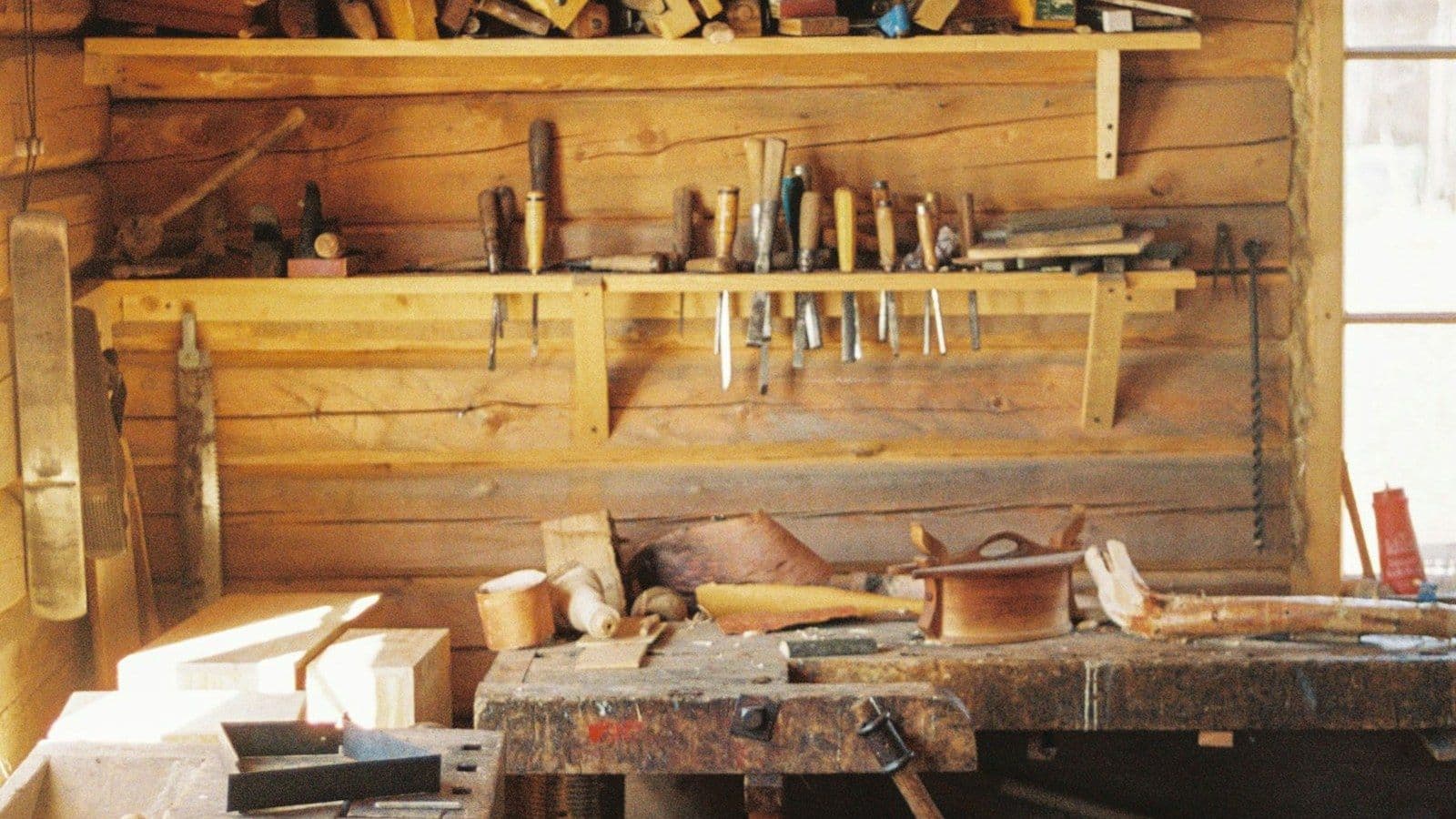
A set of plough harness is a week of work for a man who knows what he is doing. The hides come from the currier stiff as board, the collar stuffed with rye straw and beaten until it will sit on a shoulder without rubbing, the traces stitched with two needles and waxed thread. Both men did it well, both charged four pounds ten, and both had more work than they could carry by August.
The first man had arrived at his figure sensibly enough. Leather, buckles and thread came to one pound fifteen, and he knew the rent and roughly what the candles and the cart came to in a year. He put four pounds ten on the board because that was a figure farmers would pay without a long face, and whatever was in the drawer on Saturday night was his living.
The second man had worked three years at a saddler's in a bigger town, and he knew what that saddler had paid him. Thirty shillings a week, and he had been worth it. So when he set his price he did not ask what was left for him. He asked what a week on the bench cost at the going rate for a man who could do the work properly, added the leather and his share of the rent, then a profit on top, since a trade that merely breaks even can buy nothing. The figure came out at five pounds fifteen, and cost him perhaps one farmer in six.
Then came the autumn, when every plough team in the parish wants harness at once, and by mid September both were turning work away. The first had a farmer in his shop wanting three sets before the ploughing. A decent journeyman was out of work that month, so he did the arithmetic on the back of a pattern, and set it aside, because the sum would not come out. Four pounds ten, less one pound fifteen of leather, less thirty shillings of wage, left him five shillings a set for his shop, his risk, and his time standing over another man's stitching. His prices had never contained a wage. They had contained him.
The second man took the journeyman on at Michaelmas, and the man paid for himself out of the first four sets. By spring two benches were going, and the second was the profitable one, because the owner had stopped stitching on a Tuesday and gone out to see farmers instead.
The Lesson, Since You've Earned It
Any price that only pays while you are the one doing the work has your own unpaid labour hidden inside it, and a price with your labour hidden inside it can never buy anybody else's. This is the quiet reason a great many busy trades stay one person for twenty years. It is not nerve and it is not the labour market. It is that the prices were set by subtraction: take what the materials cost, add what feels askable, call the remainder your wages. That is not a price. It is a wage you have agreed with yourself, in private, at whatever figure the customer found comfortable.
The remedy is one question asked before you name a figure. What would I have to pay a competent person, at the going rate in this trade, to do this job properly, whether or not I intend to do it myself. Put that number in as a cost, in ink, beside the leather. Then add the shop, the vehicle, the tool that wears out, and the days nobody pays you for. Then add a profit, because profit is a separate thing from your wages, and the only money that buys a second bench or a slack February.
What you get for the trouble is a floor you can hold without any feeling in it. When the farmer asks you to come down you are no longer defending your own worth, which is an awkward thing for a modest person to do. You are defending the wage of a man who is not in the room. It sorts your order book as well: a job that will not carry a proper wage at any figure the market will pay is not a job to do faster but a job to stop, much as the knowing you give away free quietly holds up the doing you charge for.
Two cautions. The first is to use an honest wage: what a capable person doing the work properly is actually paid in your trade this year, found out by asking two or three people who employ them, not your own speed on your best day. The second is that this gives you a floor and not a price. What the work is worth to the buyer is a larger question, so the floor says where you may not go, never where you should stop. If it comes out above what your market will pay, the work must change, or the customer must.
Three questions, for the week in front of you:
- What does a week of competent hands cost in my trade? Find this year's figure, not the one you remember, and what it comes to a day.
- Which of my prices would fall over on the day I took somebody on? Run that wage through your three commonest jobs. Whichever will not carry it is the price to lift first, and by how much.
- Which job of mine will not carry a wage at any price I can ask? Name it this week, then change how it is done or stop offering it. Doing it faster will not save it.
The Answer to the Riddle
Same leather, same stitching, same four pounds ten. Which of them was paying a wage out of his own pocket?
The first, every week. His four pounds ten was one pound fifteen of leather and two pounds fifteen of a saddler working for whatever was left, and it held up for as long as that saddler was himself and never wanted a week by the sea. The moment the work came in faster than one pair of hands, his price could not buy the second pair.
The verse:
The leather has a price upon it, so does thread and tack,
The rent is on a paper and the candles on a bill,
But the week upon the bench is written nowhere in the sum,
And the man who leaves it out of it will stitch there till he dies.
Until next time. Go and find out what a week of competent hands costs in your trade, and hold your three commonest prices against it.
The Best Time for Trying was Yesterday...
Ben B. Tilley
P.S. The test runs backwards too. Take what your trade left you last year, divide it by the weeks you worked, and set it beside the wage you would pay somebody to do what you do. If the wage is the larger, you spent the year subsidising your customers out of your own labour, and your day book will say which of them got the most of it.
Also in the archive: Six Shillings for a Locking Door, Five for the Money of Three and Two Hours Above the Weir.