
Dear friend,
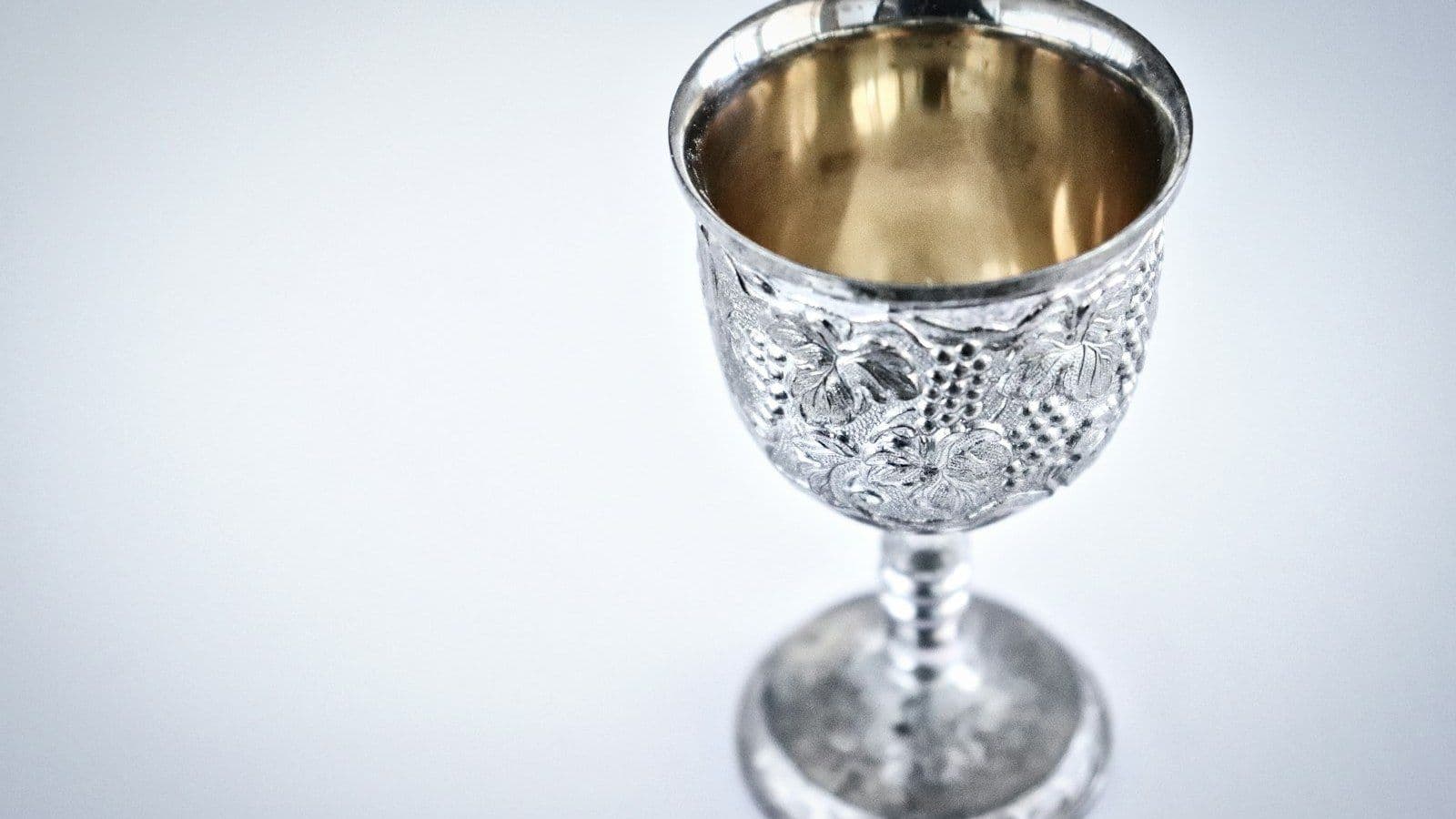
The riddle first, as the tradition demands. Back in the old town, at the silversmith's bench, where a grandmother has come in about a christening cup and has a price in her head already.
Two smiths both quote four pounds the cup,
Same silver, same fine chasing up.
One lets her hold it to the shop,
One sets it by her wedding ring.
Same cup, same price, same grandmother.
Why did one four pounds feel dear?
Hold your answer. Story time.
The Story
Two silversmiths in the town I've never named, and their work, in the old chorus, was equally fine. Each was asked in the same month for a christening cup, and each said four pounds.
The first said it plainly and left it there, which seems the honest thing to do.
But a price never lands in an empty head. The grandmother had walked past the ironmonger's window that morning, where there were cups at eleven shillings, plated and perfectly presentable, and that eleven shillings was the only figure she had. So four pounds arrived beside it, seven times the size, and her face did what faces do.
He answered the face, as men do, by explaining the silver, the weight, the hours of chasing. All of it true and none of it any use, because he was arguing against a comparison he had allowed her to make. She said she would think about it, and bought the plated cup, and was perfectly content with it for about four years, after which it went dark at the rim and lived in a drawer.
The second silversmith was asked the same question and said four pounds, and then said one more sentence before the face had time to happen.
He asked whether she still had her own mother's ring.
She did. Everyone does. And in the half a minute that followed they were no longer talking about cups in windows; they were talking about the three or four objects in a family that outlive everybody, and what they cost at the time, and who has them now. He mentioned that a cup like this would be in the family in a hundred years, and that his grandfather's mark was still on cups in the parish, and that the engraving of the name and date was included.
Four pounds, set against a ring kept for sixty years, is not seven times eleven shillings. It is a small price for the only object in the christening that anybody will still have.
She paid it, and she did not haggle, and she was not talked into anything. The silver had not changed and neither had the price. What had changed was the thing sitting next to it in her mind.
And note what he did not do. He never mentioned the plated cups, never sneered at the ironmonger, and never said a word against a perfectly decent product that suits a great many people. He simply put something else on the table first.
The Lesson, Since You've Earned It
Every price is compared with something, and if you do not supply the comparison the customer will use whatever is nearest. Whatever is nearest is nearly always the cheapest thing in the same shape: the plated cup, the man with a van, the machine-made version, the cousin who does websites. That comparison is not chosen by the buyer out of meanness. It is chosen because it is the only other number she has, and a number needs company.
So the work is to put the right thing beside your price before the wrong thing gets there, and the right thing is whatever your work genuinely belongs with. Sometimes that is another object of the same kind but a different life: the ring rather than the plated cup. Sometimes it is the cost of the trouble continuing, which the hay in the field letter set out. Sometimes it is what the alternative costs over ten years rather than on the day. The test is not cleverness but truth: you are not inventing a flattering comparison, you are correcting a false one.
And the moment matters more than the argument. The comparison must arrive before the price has landed, or at the same instant, since a customer who has already filed you next to the plated cup is arguing rather than deciding, and everything you say afterwards is a defence. This is why the second smith spoke before the face had time to happen, and why explaining your silver after the wince has never once worked in the history of trade.
Two cautions. Never disparage the cheaper thing, since the customer may own one and you will have called her a fool; put your comparison up and leave the other alone. And do not reach for the flattering comparison when it is not true. If your work really is a plated cup at a silver price, no framing will hold, and the customer will discover it in four years when the rim goes dark.
Three questions, and answer the first with a real recent quote:
- What did they compare you with? Ask, or work it out from what they said. There is always something, and it is usually cheaper, simpler and worse, and it was chosen because it was the only other figure in the room.
- What should they have been comparing you with? The thing your work genuinely belongs beside: the object that outlives the family, the cost of the problem continuing, the ten-year figure. Write the sentence that puts it there.
- When do you say it? If the answer is after they flinch, you are defending. Move it to the breath before the price, and say it as a question about them rather than a claim about you.
The Answer to the Riddle
Why did one four pounds feel dear?
Because it was set beside eleven shillings, and the man who set it there was the silversmith, by saying nothing. His rival named the same figure and put a mother's ring beside it first, and four pounds became modest. Neither of them changed the silver, the hours or the price. One left the comparison to a shop window on the way in, and the other chose it, which is the whole of the difference and takes about half a minute.
The verse:
Say four pounds into empty air,
And they will find a cup elsewhere.
Set it beside the ring she keeps,
And four pounds is a little thing.
Until next time. Go and find out what your last three customers compared you with, and write the sentence that would have put something better beside your price.
The Best Time for Marketing was Yesterday...
Ben B. Tilley
P.S. This is also why the cheapest man in a trade is so often the one who talks most about price. Having offered nothing else for the customer to weigh him against, he has made the number the whole of the conversation, and then must win it every time, against everybody, for ever.
Also in the archive: Three Tables, What Your Price Says Before You Do and When They Say It Is Too Expensive.