
Dear friend,
The riddle first, as the tradition demands. Back in the old town the chapel on the low road had an organ with a worn action and a bellows that sighed, and two men came to look at it in the same week.
Two organ builders in the town I have never named, the same pipe metal and the same forty pounds.
Both could voice a stop that would fill a chapel without ever shouting at it.
Both wanted six weeks, with the instrument in pieces on the schoolroom floor.
One sent six weeks and his figure, and nothing else at all.
One sent six weeks, his figure, and nine words about a man in the next county.
Whose six weeks did the deacons buy?
Hold your answer. Story time.
The Story
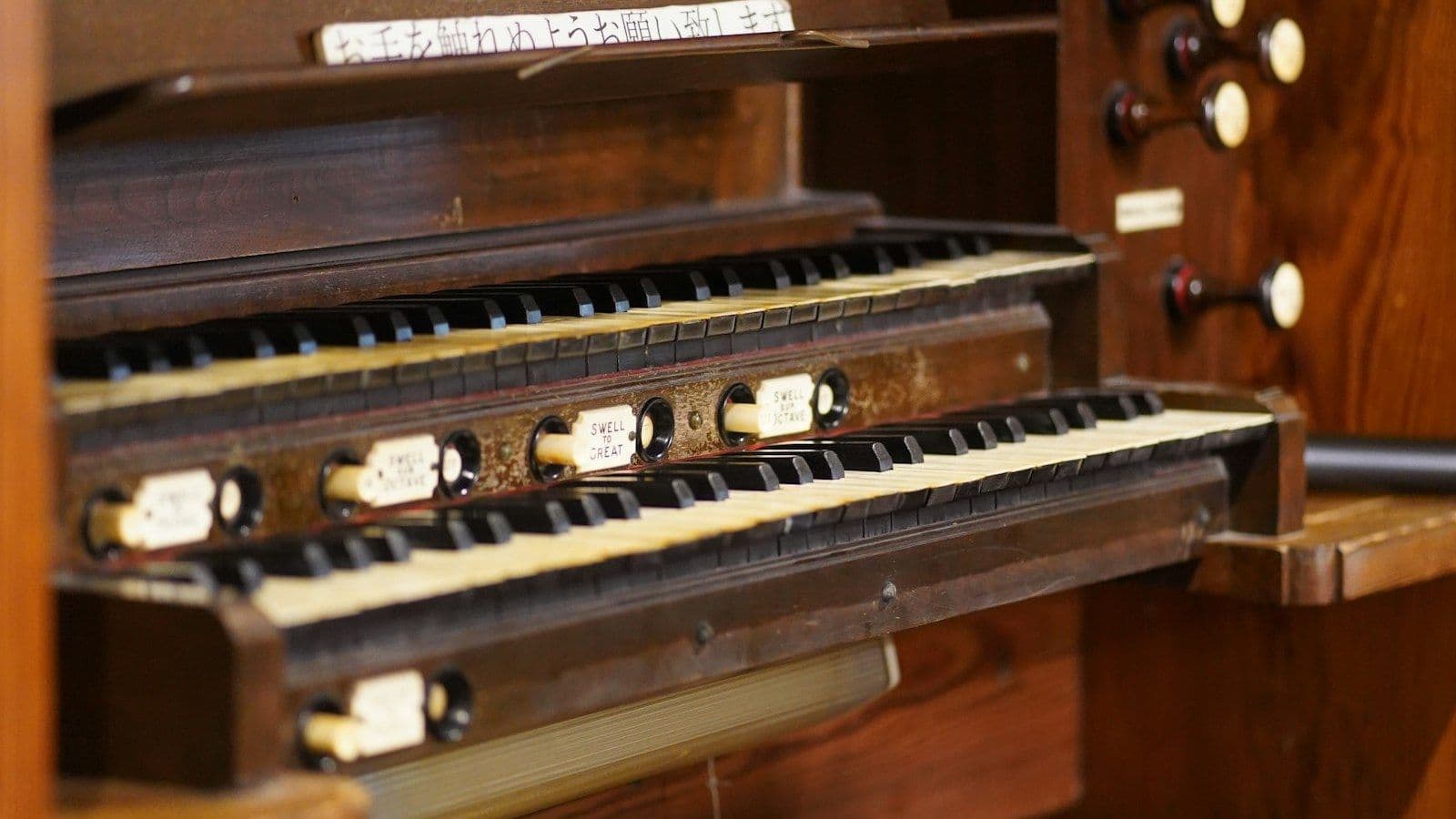
Two organ builders, both working single handed out of their own shops, both asked to the same chapel in the same week. The instrument was forty years old. The bellows wheezed, eleven pipes stood mute, and the action had worn until a note would hold on after the finger had left it, which in a slow hymn is a sound three hundred people turn round to look for.
Either man would have done the same work, and six weeks of it. The pipes drawn and laid along the schoolroom floor on blankets in order of their length, the soundboard stripped, new leather on the bellows, the action rebushed, and the whole of it voiced again stop by stop in a room smelling of hot glue and sheepskin. For those six weeks the chapel would sing to a harmonium, and anybody who has heard a full chapel sing to a harmonium knows what the deacons were being asked to put up with.
The first builder sent a plain and honest estimate. The work item by item, the materials named, forty pounds, six weeks, and the Monday he could begin. He was, if anything, the better voicer of the two, and he supposed, not unreasonably, that an organ of his in a chapel nine miles off would do his arguing for him.
The second builder sent the same work at the same figure, and under it four more lines. The particulars of the job would be kept in a ruled book as he went, every pipe numbered and every measurement entered, and a fair copy would sit with the chapel secretary from the end of the first week. If illness or accident stopped him, an organ builder in the next county had agreed, in a letter the secretary was welcome to read, to come and finish the work at his own day rate. And of the forty pounds, ten fell due when the new action was in the chapel and the rest when the organ played.
The deacons met on the Tuesday evening and did not discuss voicing, since not one of them could have told you what voicing was. What they discussed, for the better part of an hour, was the harvest festival in the first week of October, and what would become of it if the man in the schoolroom were laid up in the middle of September with the pipes out and the soundboard bare. By nine they had taken the second man, and the minute book says only that his terms were thought the more satisfactory.
Be fair to the first builder, who was neither careless nor idle. He answered everything he was asked, in detail, and answered it well. His trouble was that the thing those seven men feared most was the one thing none of them would put to him, since to put it to him was to stand in a vestry and tell a healthy man he might be taken ill. It was never asked, therefore never answered, and settled against him in his absence and written down as terms.
Nothing, as it happens, went wrong. The second builder was not ill a day of those six weeks, and the arrangement had cost him one letter and a goose at Christmas. Four years later he came off a trap and broke his wrist, and that same letter finished a job in another parish that would otherwise have stood open to the weather until the spring.
The Lesson, Since You've Earned It
A customer handing a long job to one pair of hands is buying two things, the work and the certainty that it will be finished, and only one of the two appears anywhere on your estimate. You have spent your life getting better at the first. The second you have left to luck, and on any job long enough or dear enough to matter, it is the second that is weighed when you are not in the room.
Three reasons this is worth an hour of your week. The first is that you will never hear the objection. A customer cannot ask it without appearing to wish you harm, so he does not ask it. It reaches you as a polite nothing, or a decision to leave it another year, or the job going to the firm with four men and a yard, after which you tell yourself you were dear. You were not dear. You were unanswered. Every other doubt in your trade arrives as a sentence you can take hold of. This one arrives as a silence, and a silence resolves in favour of whoever looks the safer bet.
The second is that the advantage the larger firm holds here is the cheapest in business to copy. You cannot buy its yard, and you have no need to. The only part of it your customer was uneasy about is spare hands, and spare hands can be had for an agreement with one competent man in your trade and the habit of writing your job down as you go. The writing is the harder half, since a job that lives nowhere but in your own head cannot be handed to anybody, as a trade kept in one head never can. A man who has agreed to relieve you is no use at all if he would arrive to find a hundred numbered pipes and no numbers.
The third is that it must be written and not said. Said at the door it sounds like foreboding and is forgotten by the evening. Written under your figure it is read in a kitchen or a vestry by the people who were never there to meet you, which is where these things are decided. It is also the one claim on your estimate a customer can test before parting with a penny. He cannot judge your voicing or your lead work. He can read a letter from a man in the next county, and knowing that he could is enough.
Make it an arrangement rather than a reassurance, since a reassurance is only your opinion of yourself. Four things separate them. A name and a trade, rather than a colleague who is never produced. The date the two of you agreed it, which tells your customer it existed before his job did. Where the particulars of his work are written down, and who holds the copy. And what becomes of money already paid, which is the fear underneath the fear, and the reason the second builder asked for ten pounds and not twenty. Four lines under your figure answer the question nobody will ask you aloud, in a trade where almost nobody troubles to.
Two cautions. The first is that it must be true, and an arrangement you could live with on the one occasion it is used. Choose a man whose work you would be content to find in your customer's house, settle his day rate and who bills whom before either of you needs it, and expect to do the same for him, which is what makes him willing. Never write down a name that has not agreed. A cover that proves imaginary in the single week it was wanted does more harm than none at all, and does it in front of the one customer who will certainly be asked about you. The second is not to hunt the fear where it does not live. On a morning's work nobody cares whether you are well, and a man who volunteers comfort about calamity plants the thought he came to remove. Keep it for work long enough or disruptive enough that an interruption would leave a customer holding something he cannot use.
Three questions, for the week in front of you:
- Which of my jobs would leave a customer holding something useless if I lost a fortnight? A roof open, a shop shut, a chapel with no organ in it. Write down the three sorts of work in which that is true, and put this on those rather than on the small ones.
- Who, by name, has agreed to finish my work, and on what terms? If the honest answer is nobody, that is one conversation with one man in your trade. If it is somebody who has never actually been asked, you have a hope rather than an arrangement.
- Could he pick it up on the Monday? Ask whether a competent stranger could carry on from what you have written down about the job in hand. Whatever he could not, your customer was right to be uneasy about.
The Answer to the Riddle
Whose six weeks did the deacons buy?
The second man's, on the strength of nine words naming a builder beyond the county line who never set foot in that schoolroom and never needed to. The deacons were not choosing between two kinds of organ work, which they were in no position to judge. They were choosing between six weeks that would certainly end and six weeks that probably would, and no amount of good voicing weighs against the harvest festival.
So the better workman lost a job for want of four lines he would have written gladly had anybody told him they were wanted. Nobody ever tells you. That is the whole difficulty, and the whole of the opportunity.
The verse:
They do not doubt your hand at all,
they doubt the empty week.
So put the name that follows yours
in writing, not in speech.
Until next time. Go and ask one good man in your own trade whether he would finish your work if you could not, and write down what the two of you agree.
The Best Time for Trying was Yesterday...
Ben B. Tilley
P.S. There is a second use for that question, and it is the more valuable of the two. Try to name the man who could take over your largest job on Monday morning, and you will discover whether that job exists anywhere outside your own head. The work in which no relief is possible is rarely the difficult work. It is the work where nothing has been written down, which cannot be handed on, cannot be shared in a busy month, and cannot one day be sold.
Also in the archive: A Stranger on the Monday, One Man to Ask and What It Would Not Cover.