
Dear friend,
The riddle first, as the tradition demands. Back in the old town, where two clogmakers had the same alder, the same thin spring and the same large order put to both of them in the same week, and only one was free to refuse it.
Two clogmakers in one town, the same alder blocks, the same stock knife, the same irons and nails.
Both had the same households on their books and the same lean weeks after Easter.
Both were offered three hundred pairs at a shilling under, to be paid for at Lady Day.
One had every penny of his money either spent or promised by Saturday night.
One kept nine weeks of his shop in a tin he had taught himself not to open.
Why did the order leave one of them poorer and the other exactly as he was?
Hold your answer. Story time.
The Story
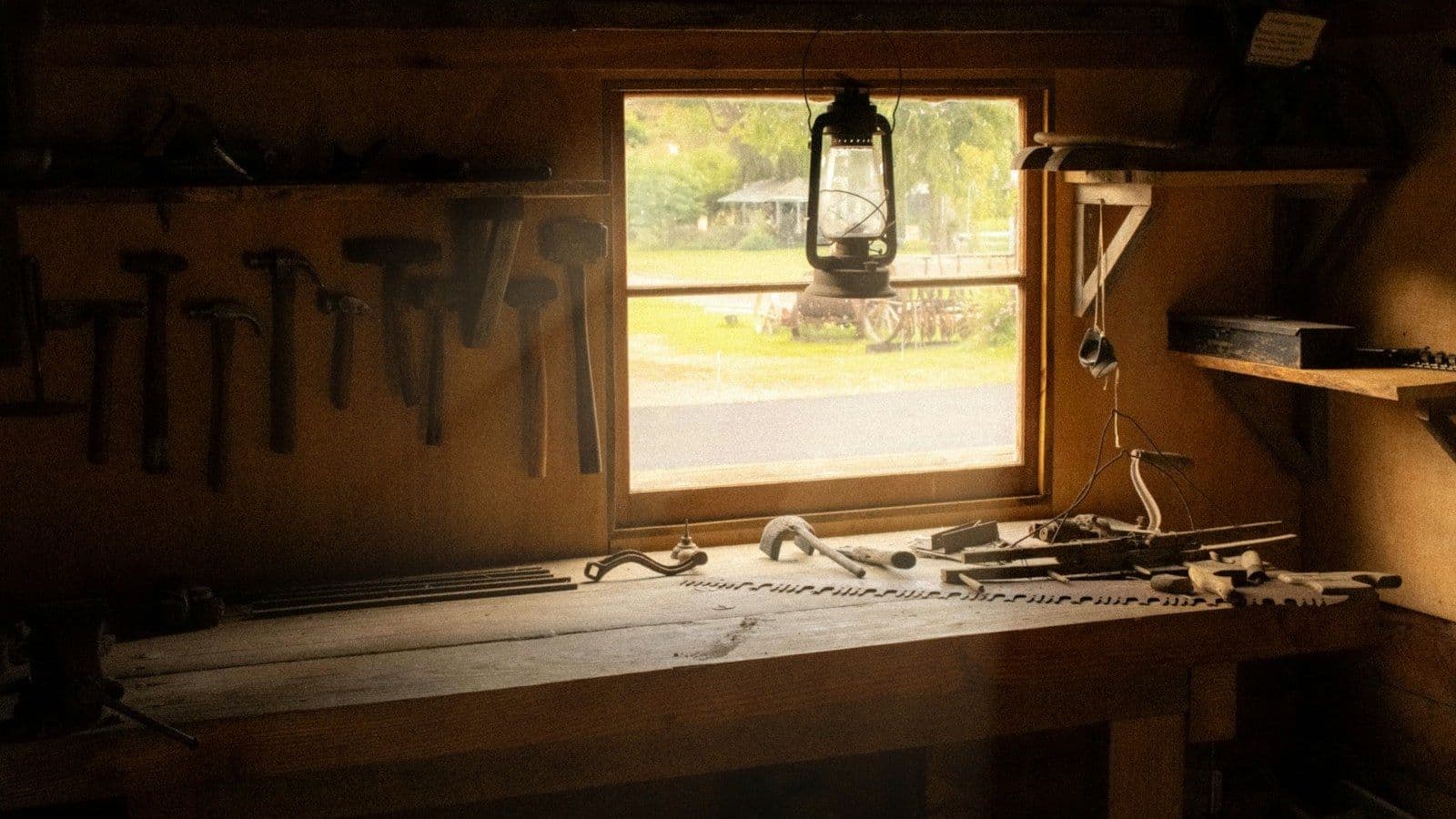
Two clogmakers in the town I've never named. Alder blocks seasoning under the lean-to, a stock knife swung on its hook, clog irons in a keg and a tin of nails gone warm from the stove. Uppers cut from hide the tanner brought up on a Thursday. Both soled for the mill hands, the carters and anybody whose feet were wet six days a week, and both kept a stall on the Saturday market. Neither made the worse clog, and nobody in that town would have told you which.
The difference was in a tin, and in what each did on a Saturday night. The first man's money went out as fast as it came in, and all of it to sensible places: leather bought when leather was cheap, a second bench, a lad's wages, the rent paid a quarter forward because the landlord liked it so. Ask him what he had by him and the answer was next week's leather. Money in a tin earns nothing, he would say, and a shop is a better place for it than a drawer.
The second man had made a rule in a lean year and never broken it. Before the leather, before the lad, before anything, one shilling in every six went into a tin, and the tin was not his. He counted it not in pounds but in weeks: what it would cost to keep the shop open with the door shut and nothing coming in. Nine weeks, when the agent called.
The agent came in the first week of a thin April: a mill being fitted out, three hundred pairs wanted for the hands, a shilling under the usual figure on account of the quantity, and payment at Lady Day when the mill's own accounts were settled. He called on both men in the same week with the same offer.
The first man took it, and his reasons were good ones. Work in a thin season, a name on the books, the chance of three hundred more, and a full shop looks like a prosperous one. The bench filled with mill work for four months, and two of his own households, told to come back in a fortnight, went up the street instead. His leather ran short in June and the tanner carried him until Lady Day at a price that quietly made up for the waiting. Then Lady Day came, the mill's accounts were not settled, and the money arrived five weeks after that. He had worked a hard summer for less than his ordinary trade would have paid, and three regular households had got out of the habit of him.
The second man had the figures read to him twice, did the arithmetic on the back of a pattern, and said no. Not grandly, and not out of any principle about large orders. He said no because he could. Nine weeks in a tin made April a slow month rather than a crisis, and a slow month lets a man look at an offer and see only the offer. He kept his bench for his own customers at his own figure, took the two households the other man had sent away, and in September, when the mill wanted a hundred pairs in a hurry, supplied them at his full price with a third down.
Be fair to the first man. Nothing he did was foolish. Every penny he had was working, which is what money is for, and he took a large order in a thin month, which is what a tradesman is supposed to do. He was not beaten by want of sense or of nerve, but because the decision reached him in a week when he had no choice in it, and a decision with no choice in it is not a decision at all.
The Lesson, Since You've Earned It
Money set by is not a cushion against disaster, it is the price of being able to say no, and nearly every bad bargain in a small trade is signed in a week when no was not available. The tin earns nothing. What it buys is the right to answer an offer on its merits.
Look at the terms you have agreed to these two years and the worst of them form a pattern of dates rather than of character. The long payment terms, the tenth off given before anybody properly asked, the work folded in to steady a wobbling customer, the man you knew would cost more than he paid: the judgement was sound in nearly every case and was overruled, because something had to go out on the Friday and the only money that could do it was attached to that bargain. A thin drawer does not make you weak. It makes you quick to agree, and agreeing quickly is expensive.
There is a second effect, and a worse one. The buyer learns your position from what you accept. Nobody can smell a nervous man across a counter, but everybody can read one who takes Lady Day without a murmur, asks nothing down and comes off his figure unpressed, and you are offered worse next year because you accepted worse this year. The man with nine weeks by him is not the better negotiator; he is simply not being asked the same question. His no also sorts his customers, which is work the wrong customer never lets you do when you cannot afford to refuse him.
The sum is less fearsome than it sounds, once you say what it is a sum of. Count in weeks, not pounds. Take what must go out whether a single pair is sold or not, the rent, the wages, the standing charges and your own household, and that is one week of your shop. Four of them stops you taking the worst bargain in a thin month; twelve lets you choose your customers. The distance between what you hold and what would free you is usually three months of dull discipline rather than a windfall, and it is cheapest covered in a full month, since the trough is a decision rather than a season.
Two cautions. First, a reserve is money with nothing written against it. If the sum in the tin is also January's tax, the cart you have promised yourself and the leather you mean to buy when leather is cheap, you have no reserve, you have three bills in a heap, and you will find it out in the week you need the opposite. Put it where it is a nuisance to reach, and write in one line what it is for. Let the line say refusals rather than emergencies, because emergency is a word that stretches to fit any bargain in oak at a good price. Second, build it from a proportion taken first and never from what is left at the end, since nothing is ever left at the end. A shilling in six, moved on the same day each week before anything else is paid, is the whole method.
Three questions, and the first wants doing tonight with the bank book open:
- What does one week of your shop cost? Add up only what must go out whether you sell anything or not, and divide by fifty-two. Until you have that figure you cannot say whether you hold two weeks or eleven, and most owners, asked without warning, guess wrong by half.
- Which bargains of the last twelvemonth would you have refused with nine weeks in the tin? Name them and put a figure against each. That total is what the empty tin has already cost you, and it is usually larger than the sum you are trying to set aside.
- What proportion goes out first, and on which day? Decide the fraction, fix the day, and move the first of it before you read anything else tonight. A named proportion and a fixed date is a reserve. An intention to put something by when things ease off is not, because things do not ease off.
The Answer to the Riddle
Why did the order leave one of them poorer and the other exactly as he was?
Because only one of them was in a position to refuse it. The other had his answer settled months earlier by the way he handled his Saturdays, long before the agent set his hat on the bench. The same offer was a trap to the man who had to take it and plain arithmetic to the man who did not, and the difference was neither courage nor skill. It was nine weeks in a tin.
The verse:
One had his money all at work and one kept nine weeks still,
The same alder, the same irons, the same agent at the door.
The order went to the man who could not afford to let it go,
And a trade that cannot say no is priced by whoever walks in.
Until next time. Go and work out what one week of your shop costs to keep open with the door shut, and move the first tenth of this week's takings somewhere you cannot easily reach.
The Best Time for Trying was Yesterday...
Ben B. Tilley
P.S. The same tin works on your time as well as your money. A diary with nothing spare in it accepts every rushed job on whatever terms are offered, for the same reason an empty drawer does, and the man who keeps one day a week unpromised is the one who can quote properly for Thursday's emergency. Reserves of either kind are unimpressive to look at and do none of their work in public. They are the difference between choosing and being chosen for.
Also in the archive: The Rent Already Paid, Never Once Refused and Five Months and Two Days.